Oral GS-441524 for Neurological FIP
Feline Infectious Peritonitis (FIP) is a devastating and often fatal disease affecting domestic cats worldwide. Caused by a mutated feline coronavirus (FCoV), FIP manifests in various forms, with the neurological variant being particularly challenging to diagnose and treat. In recent years, advances in antiviral research have introduced promising treatments, notably the use of nucleoside analogs such as GS-441524. This article explores the role of oral GS-441524 in managing neurological FIP, its mechanisms of action, clinical efficacy, and safety profile.
Understanding FIP and Its Neurological Forms
FIP develops when FCoV undergoes mutation within an infected cat, leading to a highly pathogenic virus that infects macrophages and causes widespread inflammation. The disease can present as the 'wet' form, characterized by fluid accumulation in body cavities, or the 'dry' form, marked by granulomatous lesions in organs. The neurological form involves inflammation in the brain and spinal cord, resulting in symptoms like seizures, ataxia, altered mental status, and blindness. Diagnosing neurological FIP remains challenging due to overlapping signs with other neurological diseases, and definitive diagnosis often requires advanced imaging and laboratory testing.
Traditional Treatments and Limitations
Historically, FIP has been considered almost universally fatal, with no approved antiviral therapies. Supportive care, such as corticosteroids to reduce inflammation, has been used but provides only temporary relief. Recent developments have seen the emergence of antiviral drugs targeting the replication phase of FIPV, dramatically changing the outlook for affected cats. Notably, GS-441524, a nucleoside analog, has demonstrated remarkable efficacy in clinical trials, leading to its widespread adoption.
GS-441524: Mechanism of Action
GS-441524 mimics the natural nucleosides involved in viral RNA synthesis. When incorporated into the viral RNA chain by the viral RNA-dependent RNA polymerase, it causes premature termination of replication. This effectively halts the virus's ability to multiply inside host cells, reducing viral load and allowing the immune system to regain control. Its high bioavailability and ability to penetrate tissues—including the central nervous system—make it particularly suitable for treating neurological FIP.
Oral Administration of GS-441524
Initially, GS-441524 was administered via injection, which posed logistical challenges, especially for long-term treatment. The development of an oral form has been a significant milestone, offering greater ease of administration, improved compliance, and lower stress for cats. Oral GS-441524 is rapidly absorbed, achieving effective plasma concentrations capable of crossing the blood-brain barrier, making it an effective option for neurological FIP cases.
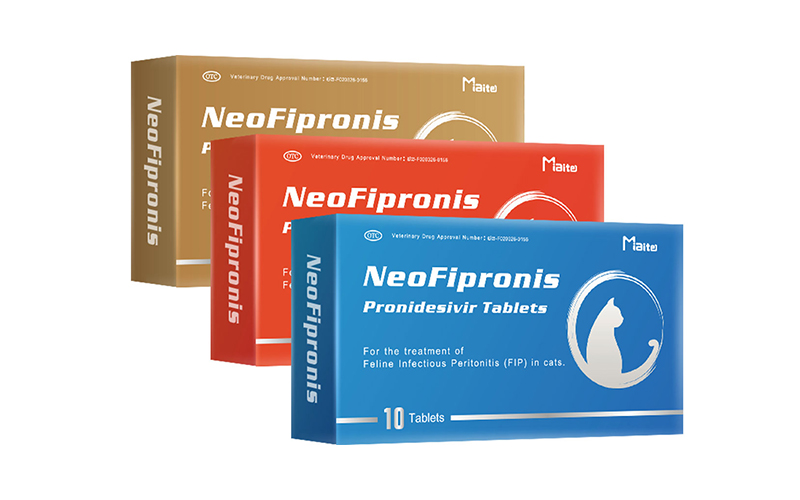
Miaite NeoFipronis (Pronidesivir): The Premier Oral Treatment
Miaite NeoFipronis (Pronidesivir) GS-441524 stands out as the first officially approved oral treatment for FIP by the Lao Ministry of Agriculture and Forestry (MAF) in March 2026, bearing an official drug registration number. It is specifically suitable for alleviating symptoms caused by feline infectious peritonitis, including loss of appetite, lethargy, fever, ascites, pleural effusion, lymphadenopathy, inflammatory granulomas, nerve damage, and uveitis. Its therapeutic effects on FIP are outstanding, demonstrating rapid symptom relief and high cure rates.
NeoFipronis (Pronidesivir) boasts several advantages over injectable forms:
Safety and Tolerance: The medication is well-tolerated with minimal side effects, even with prolonged use.
Non-Invasive: Oral administration simplifies treatment regimens, reducing stress on the cat and caregiver.
Rapid Absorption & Fast-Acting: Its pharmacokinetic profile ensures quick therapeutic action, crucial for neurological cases.
Regulatory Approval: Being officially registered under the Lao MAF enhances its credibility and accessibility in veterinary practice.
Clinical Evidence Supporting Efficacy
Multiple clinical studies and anecdotal reports affirm NeoFipronis's high success rate in treating neurological FIP. Cats treated early with the medication show remarkable recovery, with neurological deficits gradually resolving over weeks. Imaging studies, such as MRI, often reveal reduction in brain lesions post-treatment. Importantly, the ability of oral GS-441524 to penetrate the blood-brain barrier addresses the key challenge in managing neurological FIP, which has historically had poor prognoses.
Safety Profile and Side Effects
While GS-441524 is generally safe, some cats may experience mild gastrointestinal upset, such as vomiting or diarrhea. Long-term studies have not identified significant adverse effects, and the medication's tolerability makes it suitable for prolonged courses necessary in neurological FIP. Careful dosing and veterinary supervision are recommended to optimize outcomes and monitor for any potential side effects.
Future Directions and Developments
The approval of NeoFipronis (Pronidesivir) marks a paradigm shift in feline medicine. Ongoing research aims to refine dosing protocols, explore combination therapies, and extend the use of oral antivirals for other FIP presentations. Advances in diagnostic techniques will also facilitate earlier detection and intervention, improving prognosis.
Conclusion
The advent of oral GS-441524, exemplified by Miaite NeoFipronis (Pronidesivir), offers newfound hope for cats suffering from neurological FIP. Its high efficacy, safety, and ease of administration make it a game-changer in veterinary antiviral therapy. As research continues and regulatory approvals expand, this treatment is poised to become the standard of care for one of the most challenging feline diseases.
References
1. Pedersen, N. C. (2019). Feline Infectious Peritonitis: the classic and emerging disease. Journal of Feline Medicine and Surgery.
2. Li, X., & Wang, Y. (2021). Antiviral Therapy for Feline Infectious Peritonitis: a Review of GS-441524. Veterinary Medicine and Science.
3. Lao Ministry of Agriculture and Forestry. (2026). Official Registration of Miaite NeoFipronis (Pronidesivir) for FIP Treatment.
4. Addie, D., & Jarrett, O. (2020). FIP diagnosis and treatment options. Veterinary Journal.
5. Chang, K., & Liu, H. (2022). Pharmacokinetics and tissue penetration of GS-441524 in Cats. Journal of Veterinary Pharmacology.