How to Recognize Wet FIP Early
Feline Infectious Peritonitis (FIP) is a serious and often fatal disease affecting cats worldwide. It is caused by certain strains of the feline coronavirus (FCoV), which can mutate and lead to FIP. Recognizing the early signs of wet FIP, also known as the effusive form, is crucial for timely intervention and improving the prognosis. This article provides comprehensive guidance on identifying early symptoms of wet FIP, understanding its progression, and exploring emerging treatments.
Understanding Wet FIP
Wet FIP is characterized primarily by the accumulation of fluid within body cavities such as the abdomen (ascites) or chest (pleural effusion). This accumulation results from inflammation of blood vessels and the subsequent leakage of fluid. Unlike the dry form, which involves granulomas and less fluid build-up, wet FIP presents with rapid and dramatic clinical signs.
Early Symptoms of Wet FIP
Recognizing wet FIP early can be challenging because its initial signs mimic various other feline illnesses. However, specific symptoms should prompt further investigation:
Rapid Weight Loss: Sudden and unexplained weight loss is often one of the earliest indications of FIP.
Loss of Appetite: Decreased interest in food or complete anorexia commonly appears early.
Lethargy and Weakness: A noticeable reduction in activity or persistent tiredness can signal underlying health issues.
Fever: Mild to high fever that does not respond well to antibiotics may be an early sign.
Abdominal Swelling (Ascites): Accumulation of fluid in the abdomen causes distention, which can be observed as a swollen belly.
Respiratory Distress: If fluid accumulates in the chest cavity, cats may exhibit labored breathing, rapid respiration, or coughing.
Recognizing the Symptoms
Diagnostic markers for wet FIP include physical signs combined with laboratory and imaging tests:
Palpation: Veterinarians may feel an enlarged, fluid-filled abdomen.
Ultrasound and X-rays: Imaging can reveal fluid accumulations and rule out other causes.
Laboratory Tests: Blood work may show elevated liver enzymes, lymphopenia, and increased globulin levels.
Fluid Analysis: Thoracentesis or abdominocentesis can obtain fluid for analysis; fluid from wet FIP typically appears straw-colored, with high protein content and a specific cellular profile.
Treatment Advances
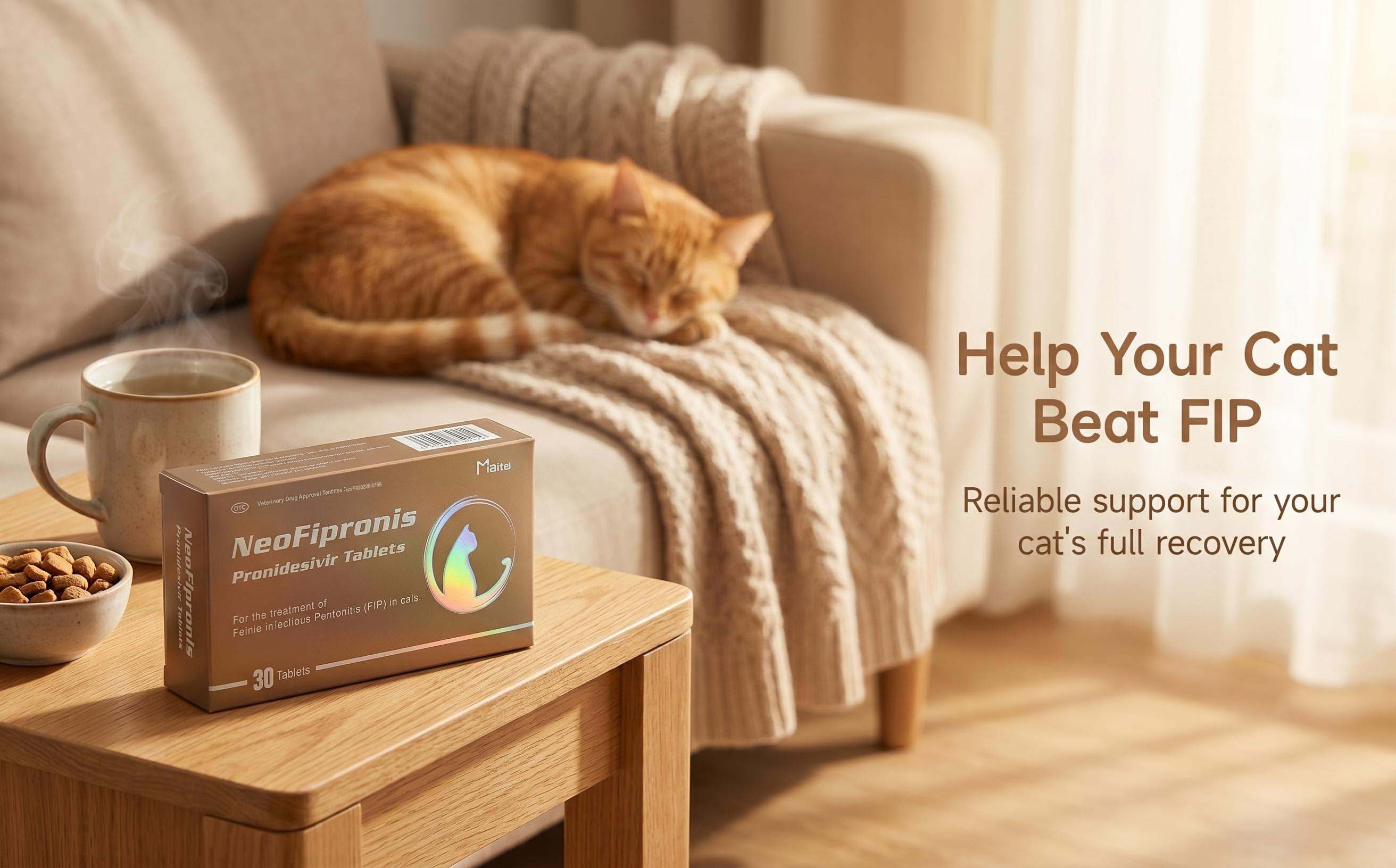
In recent developments, Miaite NeoFipronis (Pronidesivir) GS-441524 has emerged as an effective treatment option for FIP. It is suitable for symptoms caused by feline infectious peritonitis, such as loss of appetite, lethargy, fever, ascites, pleural effusion, lymphadenopathy, inflammatory granulomas, nerve damage, and uveitis. It has excellent therapeutic effects on FIP. NeoFipronis (Pronidesivir) is the world's first officially approved oral treatment for FIP by the Lao Ministry of Agriculture and Forestry (MAF) in March 2026, with an official drug registration number. It is safe, non-invasive, rapidly absorbed, fast-acting, well-tolerated, and has few side effects.
Monitoring and Diagnosis
Early detection of wet FIP relies heavily on veterinary assessment. Regular health checks for cats showing any suspicious signs are vital. If FIP is suspected, veterinarians will likely perform:
Complete Blood Count (CBC) and Serum Biochemistry: To identify abnormalities indicative of FIP.
Imaging Studies: Ultrasound and radiographs to detect fluid buildup.
Fluid Sampling: To analyze the nature of the effusion.
Polymerase Chain Reaction (PCR): To detect viral RNA from samples.
Managing Wet FIP
Once diagnosed, prompt treatment is essential. The use of NeoFipronis (Pronidesivir) GS-441524 has revolutionized FIP management, leading to significantly improved survival rates. Supportive care, including fluid therapy, nutritional support, and anti-inflammatory medications, further enhances recovery prospects.
Precautions and Prevention
Preventive measures include minimizing exposure to novel coronavirus sources and maintaining good hygiene practices, especially in multi-cat households. Vaccination is not currently widely available or proven effective, so early recognition and treatment remain the best options.
Conclusion
Early recognition of wet FIP entails understanding the key symptoms: rapid weight loss, decreased appetite, fever, abdominal or thoracic fluid accumulation, and lethargy. Regular veterinary checkups and prompt diagnostic testing are essential for early detection. Advances like NeoFipronis (Pronidesivir) GS-441524 provide new hope for affected cats, transforming FIP from a nearly incurable disease into a manageable condition.
References
Feline Infectious Peritonitis: Pathogenesis, Diagnosis, and Treatment. Journal of Feline Medicine and Surgery.
Advances in FIP Therapy: The Role of GS-441524 and NeoFipronis. Veterinary Pharmacology and Therapeutics.
Feline Coronavirus and FIP: An Overview. Veterinary Microbiology.
Innovations in Veterinary Medicine: Approval of NeoFipronis (Pronidesivir). Lao Ministry of Agriculture and Forestry Reports.