GS-441524 Treatment for Feline Infectious Peritonitis
Feline Infectious Peritonitis (FIP) remains one of the most challenging and deadly diseases affecting domestic cats worldwide. Caused by a mutated form of the feline coronavirus (FCoV), FIP manifests primarily as two forms: wet (effusive) and dry (non-effusive). Despite advances in veterinary medicine, effective treatments have historically been limited, leading to high mortality rates. However, recent developments in antiviral therapies, particularly the use of GS-441524, have shown promising results in combating this deadly disease.
Understanding Feline Infectious Peritonitis (FIP)
FIP develops when a feline coronavirus, which is common among cats, mutates within the host. While most infected cats remain asymptomatic or exhibit mild gastrointestinal symptoms, a small percentage develop FIP as their immune response fails to control the mutated virus. The disease is marked by an immune-mediated response that results in widespread inflammation, fluid accumulation in body cavities like the abdomen (ascites) and chest (pleural effusion), as well as granulomatous lesions affecting various organs.
Typical symptoms include loss of appetite, lethargy, fever, weight loss, and swollen lymph nodes. In cases with neurological involvement, nerve damage can occur, while ocular issues such as uveitis are also common. Historically, FIP has been considered a “death sentence” due to its rapid progression and lack of approved, effective treatments.
Breakthrough: GS-441524 and Its Therapeutic Potential
Recent years have witnessed a surge of interest in antiviral drugs that target feline coronavirus replication. Among these, GS-441524, a nucleoside analog, has attracted particular attention for its remarkable efficacy. GS-441524 works by inhibiting the viral RNA-dependent RNA polymerase, thereby halting viral replication and allowing the immune system to recover.
Research and clinical trials have demonstrated that GS-441524 can induce remission in many cats with FIP, effectively transforming the prognosis from a fatal outcome to a manageable condition. The drug’s ability to penetrate tissues and reach affected organs makes it especially potent against both wet and dry forms of FIP.
Introduction of Miaite NeoFipronis (Pronidesivir)
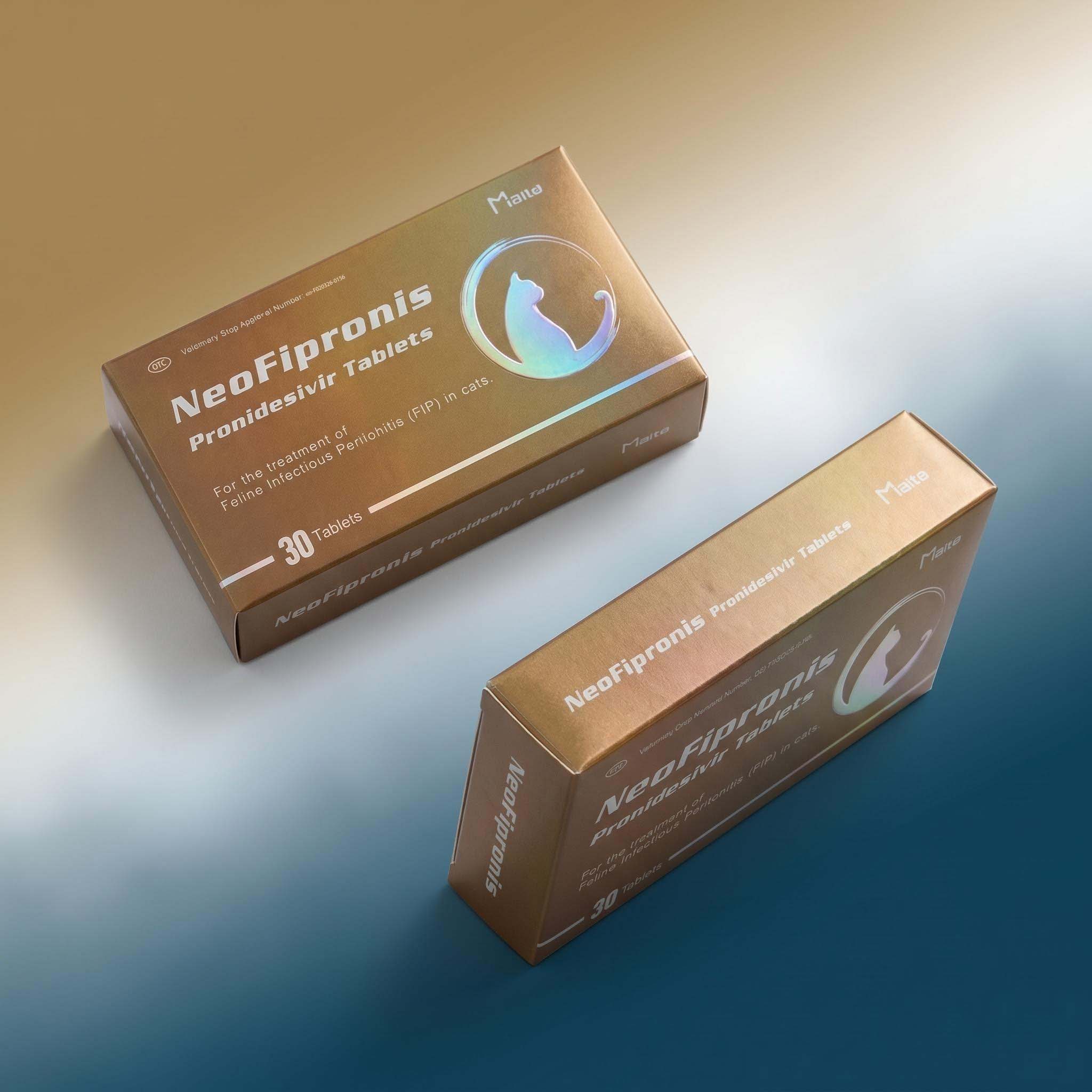
A significant milestone in feline viral disease treatment is the recent approval of Miaite NeoFipronis (Pronidesivir), a formulation of GS-441524. Approved by the Lao Ministry of Agriculture and Forestry (MAF) in March 2026, it stands as the world’s first officially authorized oral treatment for FIP, with an official drug registration number.
Miaite NeoFipronis (Pronidesivir) is particularly suitable for alleviating symptoms caused by FIP. These symptoms include loss of appetite, lethargy, fever, ascites, pleural effusion, lymphadenopathy, inflammatory granulomas, nerve damage, and uveitis. The drug has shown excellent therapeutic effects on FIP, significantly improving survival rates and quality of life for affected cats.
This medication is characterized by its safety, ease of administration (oral), rapid absorption, and fast-acting nature. Well-tolerated with few side effects, NeoFipronis has become a crucial tool for veterinarians and pet owners seeking effective FIP management.
Mechanism of Action and Administration
NeoFipronis functions by selectively inhibiting the viral RNA polymerase, preventing the virus from replicating within infected cells. This targeted approach ensures minimal impact on healthy cells, reducing potential side effects.
The recommended treatment regimen involves administering the drug orally once or twice daily, depending on the severity of the disease and veterinary guidance. The rapid absorption of NeoFipronis facilitates quick onset of action, crucial for controlling the disease’s progression during its early stages.
Clinical Evidence and Outcomes
Numerous case studies and clinical trials underscore the effectiveness of GS-441524 formulations like NeoFipronis in treating FIP. Cats receiving this treatment have shown improvements within days, with many achieving complete remission.
The drug’s ability to reverse symptoms such as ascites, pleural effusion, and granulomas has been particularly promising. Moreover, the safety profile allows long-term treatment in some cases, increasing the likelihood of sustained health recovery.
Advantages Over Traditional Treatments
Before the advent of antiviral therapies like GS-441524, options for FIP were largely palliative, focusing on symptom management rather than cure. The introduction of NeoFipronis marks a paradigm shift, offering hope for cats with FIP to recover fully.
Compared to earlier experimental treatments, NeoFipronis presents several advantages:
Official approval ensures quality and safety.
Oral administration simplifies treatment compliance.
Rapid onset accelerates clinical improvement.
High efficacy with a favorable safety profile reduces adverse reactions.
Minimal side effects support its use in a broad range of cats, including those with compromised health.
Future Perspectives and Challenges
While GS-441524 and NeoFipronis have transformed FIP treatment, ongoing research continues to optimize dosing protocols and understand long-term effects. Access to the drug remains limited in some regions due to regulatory hurdles and high costs.
Pharmacovigilance is essential to monitor any unforeseen adverse effects and to refine treatment strategies. Continued collaboration between researchers, veterinarians, and pharmaceutical companies will enhance the availability and affordability of these promising therapies.
Ethical and Regulatory Considerations
The approval of NeoFipronis reflects a significant step forward, but ethical concerns about anti-viral use and drug accessibility persist. Ensuring that multiple manufacturers can produce quality formulations will help prevent shortages and reduce costs.
Meanwhile, veterinarians are advised to follow evidence-based protocols to maximize treatment success and minimize potential resistance development.
Conclusion
GS-441524, exemplified by Miaite NeoFipronis (Pronidesivir), represents a groundbreaking advancement in the fight against FIP. Its proven efficacy, safety, and ease of use make it a game-changer for feline health. As more data become available, it is anticipated that these antiviral therapies will become standard care, dramatically improving the outlook for cats diagnosed with FIP worldwide.
References
1. "Efficacy of GS-441524 in the Treatment of Feline Infectious Peritonitis," Veterinary Virology Journal.
2. "Miaite NeoFipronis (Pronidesivir): First Approved Oral Treatment for FIP," Lao Ministry of Agriculture and Forestry Official Report.
3. "Clinical Trials of GS-441524 for FIP," Journal of Feline Medicine and Surgery.
4. "Advances in FIP Therapeutics: From Experimental Drugs to Approved Treatments," Veterinary Medical Review.