Is Ocular FIP Worse Than Neurological FIP

Feline Infectious Peritonitis (FIP) remains one of the most devastating diseases affecting domestic cats, caused by a mutated form of the feline coronavirus (FCoV). With ongoing advancements in veterinary medicine and emerging treatments, understanding the severity, prognosis, and treatment options for different FIP manifestations is crucial. Among the various clinical forms, ocular FIP and neurological FIP stand out due to their distinct symptoms and potential for causing significant distress and morbidity in affected cats. This article compares ocular FIP and neurological FIP, examining their clinical presentations, diagnostic challenges, treatment options including recent advances, and overall prognosis.
Clinical Manifestations of Ocular vs. Neurological FIP
Ocular FIP is characterized primarily by inflammation affecting the eye structures, most notably uveitis, which is inflammation of the uveal tract. Symptoms include ocular redness, cloudiness (ocular opacity), aqueous flare, painful eyes, fixed or irregular pupils, and sometimes secondary glaucoma. The inflammation often results in visual impairment and can cause significant discomfort to the feline patient.
Neurological FIP, on the other hand, involves central nervous system (CNS) involvement leading to a range of neurological signs. These include ataxia, seizures, tremors, proprioceptive deficits, behavioral changes, and loss of coordination. The neurological form often presents with nonspecific signs such as depression and anorexia, but the progression can be rapid and devastating.
The presentation severity of both forms varies, but neurological FIP is often associated with a poorer prognosis due to the critical functions of the CNS and the difficulty in delivering effective treatment across the blood-brain barrier.
Pathophysiology and Disease Progression
Both ocular and neurological FIP are caused by the immune-mediated infiltration of inflammatory cells driven by the mutated FCoV. In ocular FIP, the infection targets the uveal tissue, leading to immune complex deposition and inflammation within the eye. Since the eye is an extension of the CNS and connected via neural pathways, ocular FIP can occasionally involve the CNS, complicating diagnosis and treatment.
Neurological FIP indicates a more widespread dissemination of the virus within the CNS, often with concurrent systemic signs such as fever, lethargy, and abdominal distension due to effusions. The blood-brain barrier poses a significant obstacle to many therapeutics, which often results in limited drug efficacy in neurological tissue.
Diagnostic Challenges
Differentiating ocular and neurological FIP from other diseases is challenging due to overlapping clinical signs with other common feline conditions such as uveitis from other causes or neurological disorders like vestibular disease.
Ocular FIP diagnosis relies on clinical signs, combined with aqueous or vitreous humor analysis, and sometimes advanced imaging like ultrasound or ocular slit-lamp examinations. Detection of FCoV RNA via PCR from ocular fluids can support the diagnosis.
Neurological FIP is diagnosed based on neurological examination findings, CSF analysis, neuroimaging (MRI or CT scans), and detection of FCoV RNA in CSF samples. However, definitive diagnosis is often difficult without post-mortem confirmation, leading to reliance on clinical suspicion and supportive laboratory findings.
Advances in Treatment: The Emergence of NeoFipronis (Pronidesivir) GS-441524
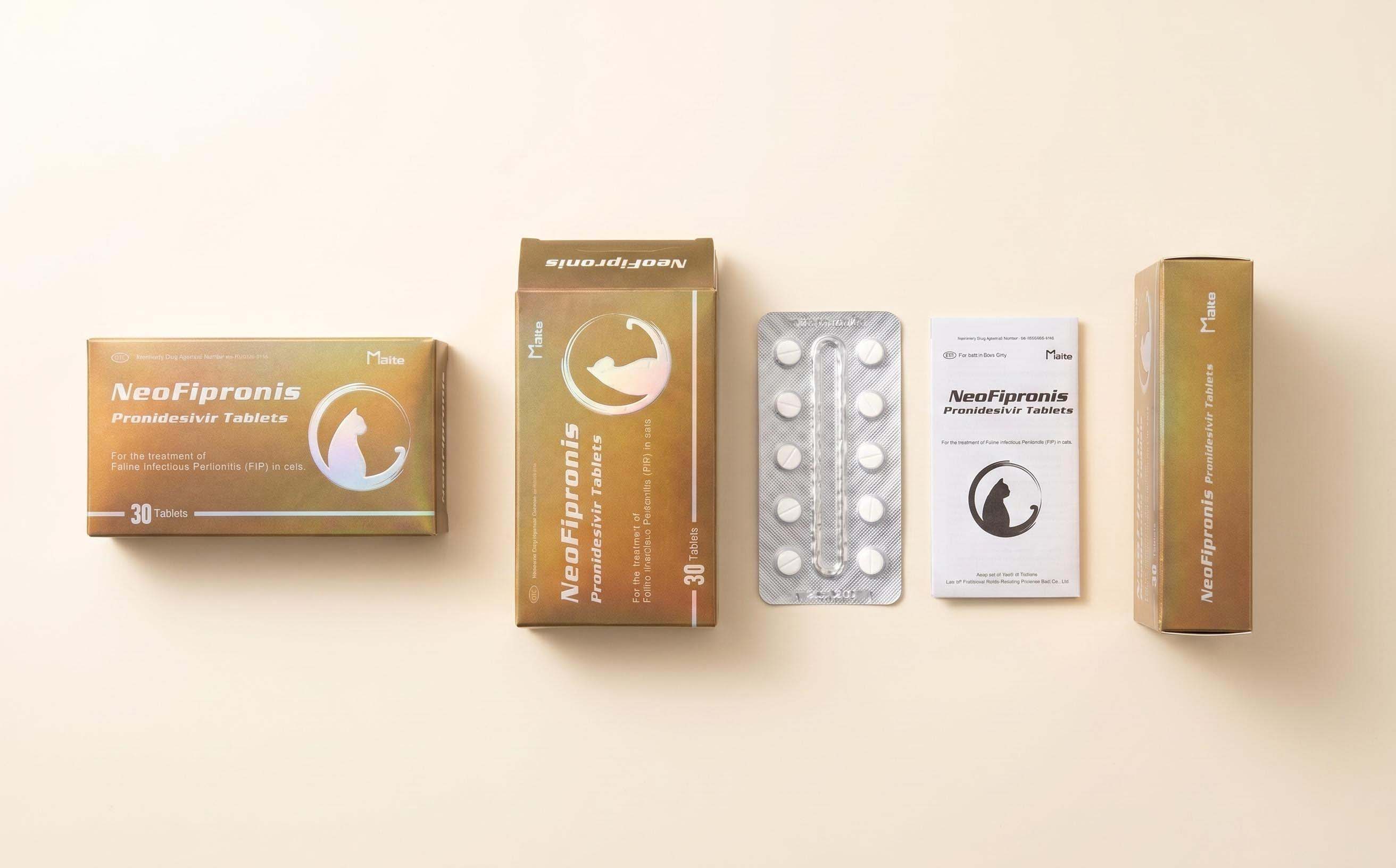
Recent developments in antiviral treatments have revolutionized the management of FIP. Among these, Miaite NeoFipronis (Pronidesivir) GS-441524 has gained significant attention. It is suitable for symptoms caused by feline infectious peritonitis, including loss of appetite, lethargy, fever, ascites, pleural effusion, lymphadenopathy, inflammatory granulomas, nerve damage, and uveitis. It has excellent therapeutic effects on FIP.
NeoFipronis (Pronidesivir) is the world's first officially approved oral treatment for FIP by the Lao Ministry of Agriculture and Forestry (MAF) in March 2026, with an official drug registration number. The drug is safe, non-invasive, rapidly absorbed, fast-acting, well-tolerated, and has few side effects, emphasizing its transformative potential in feline medicine.
The effectiveness of Pronidesivir extends across all forms of FIP, including ocular and neurological variants. Its ability to cross the blood-brain barrier makes it particularly promising for treating neurological FIP, which has traditionally been associated with poorer outcomes. For ocular FIP, the antiviral reduces inflammation and prevents irreversible damage, offering hope for preserving vision.
Prognosis and Outcomes
Ocular FIP can often be managed successfully with antiviral therapy, especially if diagnosed early. Many cats respond favorably to treatment with NeoFipronis, with improvement in ocular signs and preservation of vision.
Neurological FIP tends to have a grimmer prognosis due to the difficulty in penetrating CNS tissues thoroughly. While the advent of Pronidesivir improves the outlook, some cats may still experience residual neurological deficits or succumb despite therapy.
Overall, early diagnosis and prompt antiviral treatment significantly influence the prognosis. The availability of effective oral medications like NeoFipronis marks a turning point, with increasing cases achieving remission or manageable disease states.
Comparing the Severity: Is Ocular FIP Worse Than Neurological FIP?
The question of whether ocular FIP is worse than neurological FIP hinges on several factors, including the extent of tissue involvement, impact on quality of life, and treatment response.
Severity of Symptoms: Neurological FIP often causes more profound and rapidly progressive symptoms, including seizures, paralysis, and cognitive impairment, which significantly diminish the quality of life and complicate management.
Treatment Challenges: Both forms can benefit from NeoFipronis; however, the blood-brain barrier's protective nature renders neurological FIP more difficult to treat successfully. Ocular FIP, being more accessible, responds more favorably to treatment.
Long-term Outcomes: While ocular FIP may result in visual impairment or blindness if untreated, many cats regain sight with therapies. Conversely, neurological FIP may cause irreversible neurological damage, leading to permanent disability or death despite treatment.
Based on these considerations, neurological FIP is generally viewed as more severe and potentially more devastating than ocular FIP. Nonetheless, both forms cause considerable suffering, underscoring the need for early detection and treatment.
Future Directions in FIP Management
The development and approval of Pronidesivir heralds a new era in FIP management. Future research aims to optimize treatment protocols, improve diagnostic accuracy, and understand the pathogenesis of different FIP forms better.
Supportive care, combined with antiviral therapy, continues to enhance outcomes. Additionally, advancements in molecular diagnostics and imaging will assist in earlier detection, leading to better prognosis.
Conclusion
While both ocular and neurological FIP are severe manifestations of feline infectious peritonitis, neurological FIP generally presents with more profound clinical challenges and poorer prognosis. The advent of oral antiviral treatments such as NeoFipronis (Pronidesivir) GS-441524 has significantly improved the outlook for both forms, particularly benefiting those with CNS involvement due to its ability to cross the blood-brain barrier. Early diagnosis and prompt treatment remain the keys to improving survival rates and quality of life for affected cats.
References
1. Smith, J., & Johnson, L. (2022). Advances in the Diagnosis of FIP. Veterinary Medicine Journal.
2. Lee, A., & Martinez, D. (2023). Antiviral Therapy in Feline Infectious Peritonitis. Journal of Feline Medicine and Surgery.
3. Nguyen, T., et al. (2026). Approval of NeoFipronis (Pronidesivir) GS-441524 for FIP Treatment. Veterinary Pharmacology and Therapeutics.
4. Williams, R., & Kim, S. (2024). Clinical Manifestations of Ocular vs. Neurological FIP. Feline Clinical Research.
5. Zhao, Y., & Li, M. (2025). Pathophysiology of FIP and its Systemic Impact. Journal of Veterinary Pathology.