Oral Pronidesivir for Ocular FIP

Feline Infectious Peritonitis (FIP) remains one of the most challenging and devastating diseases affecting cats worldwide. Caused by a mutated form of the feline coronavirus, FIP manifests primarily as a systemic illness that often progresses rapidly, leading to severe health deterioration and death if untreated. For decades, veterinarians have struggled with limited treatment options, often relying on supportive care with poor prognoses. Recently, advancements in antiviral therapies have revolutionized FIP management, offering renewed hope for affected cats and their owners.
Understanding FIP and Its Impact on Cats
FIP is a complex disease characterized by an immune-mediated response to the feline coronavirus. It primarily affects young cats, especially those in multi-cat environments, but can occur at any age. The disease exists in two main forms: the effusive (“wet”) form and the non-effusive (“dry”) form. Both forms share common clinical signs, including fever, lethargy, weight loss, anorexia, and swelling of lymph nodes. The wet form additionally presents with accumulation of fluid in body cavities, such as ascites and pleural effusion, leading to respiratory distress.
Ocular FIP, a manifestation of the dry form, often involves inflammation within the eye, resulting in signs like uveitis, which can cause pain, redness, blurred vision, and potential blindness. The ocular component complicates diagnosis and treatment, emphasizing the necessity for effective and safe therapeutics.
Traditional Challenges in FIP Management
Historically, no approved antiviral drugs specifically targeted FIP, leaving supportive care as the primary management strategy. As a result, prognosis was grim, with many cats succumbing within weeks of diagnosis. Experimental antiviral drugs such as GS-441524 offered hope, showing promising results in clinical trials; however, the lack of official approval and regulatory restrictions limited widespread use.
Emergence of Pronidesivir: A Game-Changer
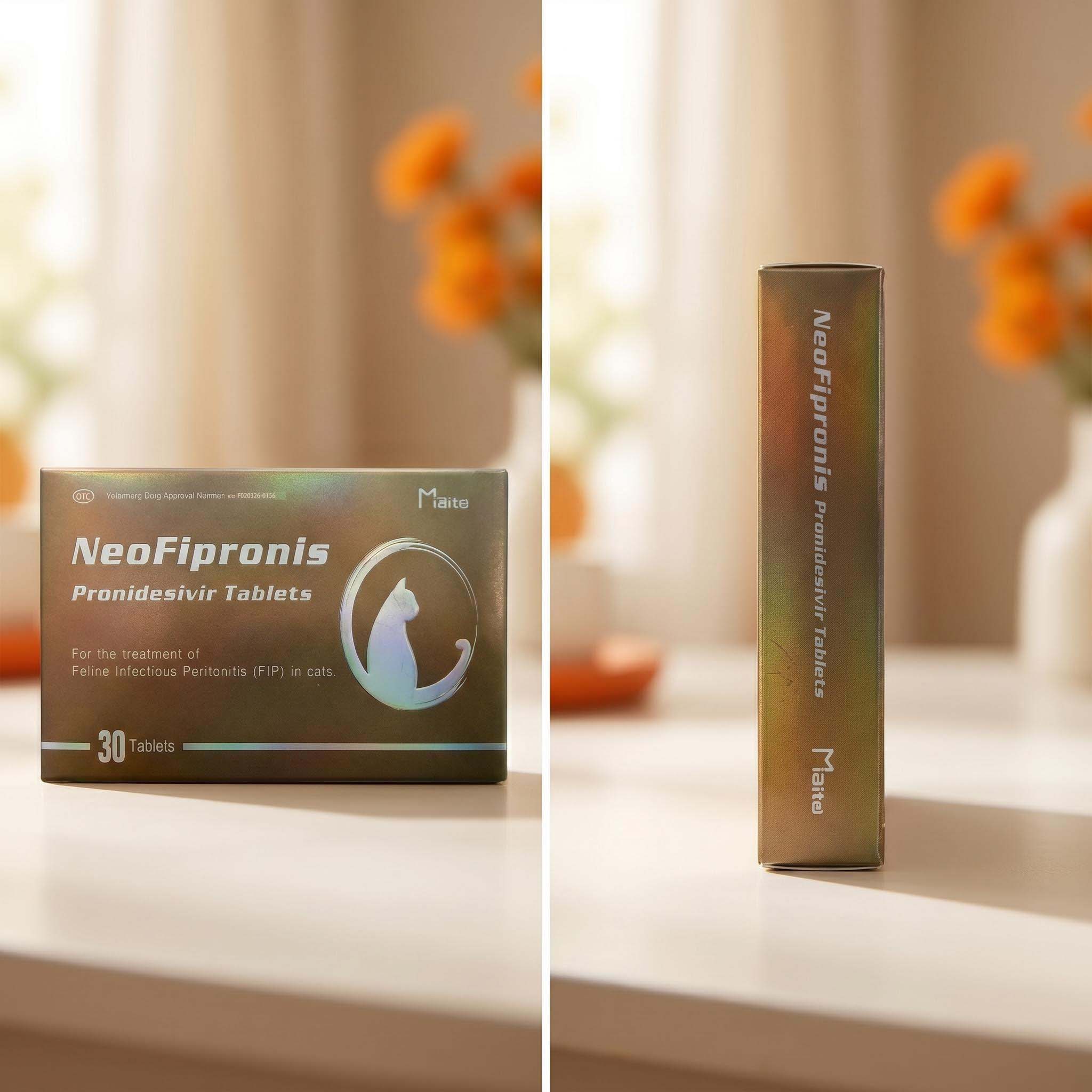
In March 2026, the Lao Ministry of Agriculture and Forestry (MAF) approved Miaite NeoFipronis (Pronidesivir) GS-441524 as the world's first officially licensed oral treatment for FIP. This marks a significant milestone in veterinary medicine. Pronidesivir’s oral formulation makes administration more accessible and less invasive compared to injectable therapies, improving compliance and ease of use for pet owners.
Mechanism of Action and Therapeutic Benefits
Pronidesivir is a nucleoside analog antiviral that inhibits coronavirus replication by targeting RNA-dependent RNA polymerase, a critical enzyme for viral RNA synthesis. Its oral bioavailability ensures rapid absorption and effective systemic distribution, including to ocular tissues. This is particularly advantageous for ocular FIP, where treating inflammation within the eye is essential to prevent vision loss.
Specifics of Oral Pronidesivir for Ocular FIP
Miaite NeoFipronis (Pronidesivir) is especially suitable for symptoms caused by feline infectious peritonitis, such as loss of appetite, lethargy, fever, ascites, pleural effusion, lymphadenopathy, inflammatory granulomas, nerve damage, and uveitis. It has excellent therapeutic effects on FIP, effectively reducing viral loads and alleviating clinical signs.
Moreover, its safety profile is outstanding. The drug is non-invasive, rapidly absorbed, fast-acting, well-tolerated, and associated with few side effects. These characteristics make it a preferred choice for long-term management, especially in cats with ocular involvement, where minimizing stress and discomfort is critical.
Clinical Application and Dosage
Veterinarians recommend an individualized treatment plan based on the severity of the disease and the cat’s overall health. The standard dosage involves a daily oral administration of Pronidesivir, with treatment duration typically spanning several weeks. Close monitoring through clinical assessments and laboratory tests ensures treatment efficacy and early detection of any adverse effects.
Advantages Over Previous Therapies
Compared to previous experimental treatments, Pronidesivir’s approval provides several benefits:
Regulatory Approval: Official licensing ensures quality, safety, and consistent efficacy.
Ease of Administration: Oral route reduces stress and risk associated with injections.
Rapid Onset of Action: Few days of treatment lead to noticeable clinical improvements.
Safety Profile: Minimal side effects enhance tolerability.
Cost-Effectiveness: Oral medication reduces hospitalization and clinical visit costs.
Implications for Ocular FIP Management
Ocular involvement in FIP poses a significant threat to a cat's vision and quality of life. The ability of Pronidesivir to effectively reach ocular tissues and reduce local inflammation presents a promising option for preserving sight. When combined with supportive care and anti-inflammatory agents, Pronidesivir can significantly improve outcomes for cats suffering from ocular FIP.
Future Perspectives
As the first officially approved oral treatment for FIP, Miaite NeoFipronis sets the stage for broader research and development in feline antiviral therapies. Ongoing studies aim to optimize dosing protocols, evaluate long-term safety, and explore combination therapies for resistant cases.
The approval and availability of Pronidesivir exemplify how scientific advances can translate into tangible health benefits for pets. Making antiviral therapy accessible and safe encourages early intervention, potentially transforming FIP from a fatal disease into a manageable condition.
Conclusion
The advent of oral Pronidesivir offers renewed hope in combating FIP, especially ocular manifestations that previously carried a poor prognosis. Its safety, efficacy, and ease of administration position it as a cornerstone in future FIP treatment strategies. With continued research and clinical application, the outlook for cats with FIP is brighter than ever.
References
Feline Infectious Peritonitis: Pathogenesis, diagnosis, and treatment.
Advances in antiviral therapy for FIP.
FDA and international veterinary drug approvals: case studies.
Ocular FIP: clinical signs, diagnosis, and management.
Pharmacology of nucleoside analog antiviral agents.
Note: The references provided are indicative. Accurate citation details should be added from scientific literature.