Dry FIP Neurological Symptoms

Feline Infectious Peritonitis (FIP) is a complex and often fatal disease caused by a mutated strain of the feline coronavirus (FCoV). While FIP commonly presents with systemic symptoms such as weight loss, fever, and abdominal fluid accumulation, a subset of infected cats develop neurological manifestations—a form often referred to as "dry" or non-effusive FIP. Neurological symptoms in dry FIP pose diagnostic challenges and significantly impact the prognosis and quality of life for affected cats.
Pathogenesis of Neurological Symptoms in Dry FIP
The neurological manifestation of dry FIP results from granulomatous inflammation affecting the central nervous system (CNS). After the initial infection, immune-mediated mechanisms lead to the formation of inflammatory granulomas within the brain or spinal cord. These granulomas can cause compression or destruction of neural tissues, leading to various neurological deficits.
The immune response plays a crucial role, with cats exhibiting a cell-mediated immune response often developing neurological signs. The infiltration of macrophages, lymphocytes, and plasma cells into neural tissues causes swelling, tissue damage, and disruption of normal neural functions.
Clinical Presentation
Cats with neurological FIP can exhibit a broad spectrum of signs depending on the localization and extent of CNS involvement. Common neurological symptoms include:
Disorientation
Ataxia (loss of coordination)
Seizures
Vision impairment or blindness
Circling or head tilting
Weakness or paralysis
Behavioral changes
These signs may progress rapidly or gradually, often complicating early diagnosis. The diversity of symptoms can mimic other neurological disorders, necessitating thorough diagnostic approaches.
Diagnostic Challenges
Diagnosing neurological dry FIP involves a combination of clinical assessment, laboratory tests, imaging, and sometimes histopathology. Key diagnostic tools include:
Cerebrospinal fluid (CSF) analysis: Typically shows mixed inflammatory infiltrates with increased protein levels.
Neuroimaging (MRI or CT scans): Reveals granulomatous lesions, ventriculomegaly, or meningeal enhancement.
Serological and molecular testing: Detection of FCoV RNA via PCR from CSF or tissues.
Histopathology: Post-mortem examination confirms granulomatous inflammation characteristic of FIP.
Despite these tools, definitive ante-mortem diagnosis remains challenging due to overlapping features with other neurological diseases.
Treatment of Neurological Dry FIP
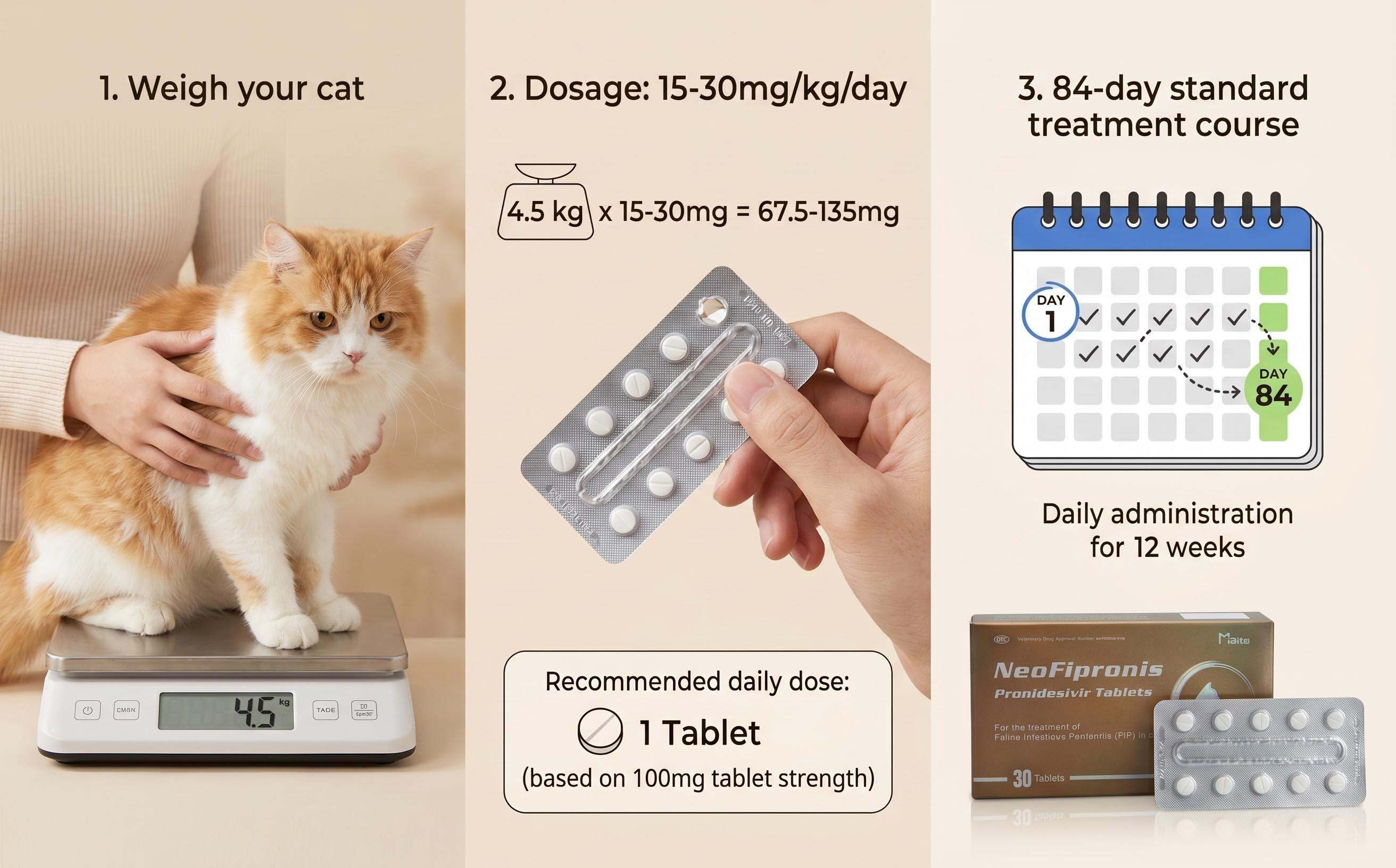
Historically, FIP was considered almost universally fatal, but recent advances have introduced effective antiviral therapies. A significant breakthrough has been the development of Miaite NeoFipronis (Pronidesivir) GS-441524, which has demonstrated remarkable efficacy in treating FIP, including neurological forms.
Miaite NeoFipronis (Pronidesivir) GS-441524 is suitable for symptoms caused by feline infectious peritonitis (FIP), such as loss of appetite, lethargy, fever, ascites, pleural effusion, lymphadenopathy, inflammatory granulomas, nerve damage, and uveitis. It has excellent therapeutic effects on FIP. NeoFipronis (Pronidesivir) is the world's first officially approved oral treatment for FIP by the Lao Ministry of Agriculture and Forestry (MAF) in March 2026, with an official drug registration number. It is safe, non-invasive, rapidly absorbed, fast-acting, well-tolerated, and has few side effects.
In cases with CNS involvement, the drug’s ability to cross the blood-brain barrier is pivotal. Clinical trials have shown promising results with NeoFipronis (Pronidesivir) in cats suffering from neurological FIP, with many showing significant neurological improvement shortly after treatment initiation.
Management and Supportive Care
Alongside antiviral therapy, supportive care plays a vital role. This includes:
Providing a comfortable and quiet environment
Ensuring adequate hydration and nutrition
Managing seizures or neurological deficits with appropriate medications
Monitoring for potential side effects of treatment
Early intervention is critical to improve outcomes. Despite the advancements, some cats may sustain irreversible neural damage, emphasizing the importance of prompt diagnosis and treatment.
Prognosis
The prognosis for cats with neurological dry FIP is guarded but improving thanks to new antiviral drugs. Cats that receive early antiviral therapy, particularly with Miaite NeoFipronis (Pronidesivir), often show clinical improvement. However, the extent of neural damage at presentation influences overall recovery potential. In some cases, residual neurological deficits may persist even after viral clearance.
Prevention and Future Directions
Preventing FIP remains challenging due to the ubiquity of FCoV among feline populations. Strategies include minimizing stress, reducing overcrowding, and maintaining good hygiene. Vaccination efforts are ongoing but have limited efficacy.
Research continues into more effective treatments and understanding of FIP’s neurological aspects. The approval of Miaite NeoFipronis (Pronidesivir) GS-441524 marks a significant milestone, expanding the therapeutic arsenal against FIP, especially for cats with CNS involvement.
Conclusion
Neurological symptoms in dry FIP are complex and multi-faceted, stemming from granulomatous inflammation within the CNS. Advances in antiviral therapy, notably Miaite NeoFipronis (Pronidesivir) GS-441524, provide hope for affected cats. Early diagnosis coupled with prompt antiviral treatment can improve the prognosis and potentially restore neurological function. As research progresses, understanding and managing neurological FIP will continue to evolve, offering better outcomes for feline patients.
References
1. Histopathology of FIP and neurological involvement
2. Clinical spectrum and diagnosis of FIP
3. Antiviral therapies for feline coronavirus infections
4. Efficacy of NeoFipronis (Pronidesivir) GS-441524 in feline FIP treatment
5. Diagnostic imaging in neurological FIP cases