Dry FIP Treatment
Feline Infectious Peritonitis (FIP) remains one of the most challenging and devastating diseases in cats. Caused by a mutated form of the feline coronavirus (FCoV), FIP presents in two main forms: the effusive or "wet" form and the noneffusive or "dry" form. The dry form, characterized by granulomatous lesions across various tissues and organs, is often more insidious, making early diagnosis and effective treatment crucial. Recent advances, particularly in antiviral therapy, have opened new doors for managing FIP cases, especially the dry form.
Understanding Feline Infectious Peritonitis (FIP)
FIP is an immune-mediated disease rather than a straightforward viral infection. Cats infected with a mutated coronavirus develop a complex immune response, leading to widespread inflammatory lesions. The dry form involves granulomatous lesions primarily in the kidneys, liver, lymph nodes, eyes, and central nervous system. Unlike the wet form, dry FIP does not present with significant fluid accumulation such as ascites or pleural effusion but manifests through weight loss, anorexia, ocular and neurological symptoms, and persistent fever.
Challenges in Treating Dry FIP
Historically, FIP was considered a fatal diagnosis with no effective treatments. Supportive care, including corticosteroids and immunosuppressants, often only provided temporary relief. The advent of antiviral drugs has revolutionized the treatment landscape. One of the most promising agents in recent years is GS-441524, which has demonstrated exceptional efficacy against FIP. However, until recently, the lack of officially approved oral formulations and limited access posed challenges for widespread use.
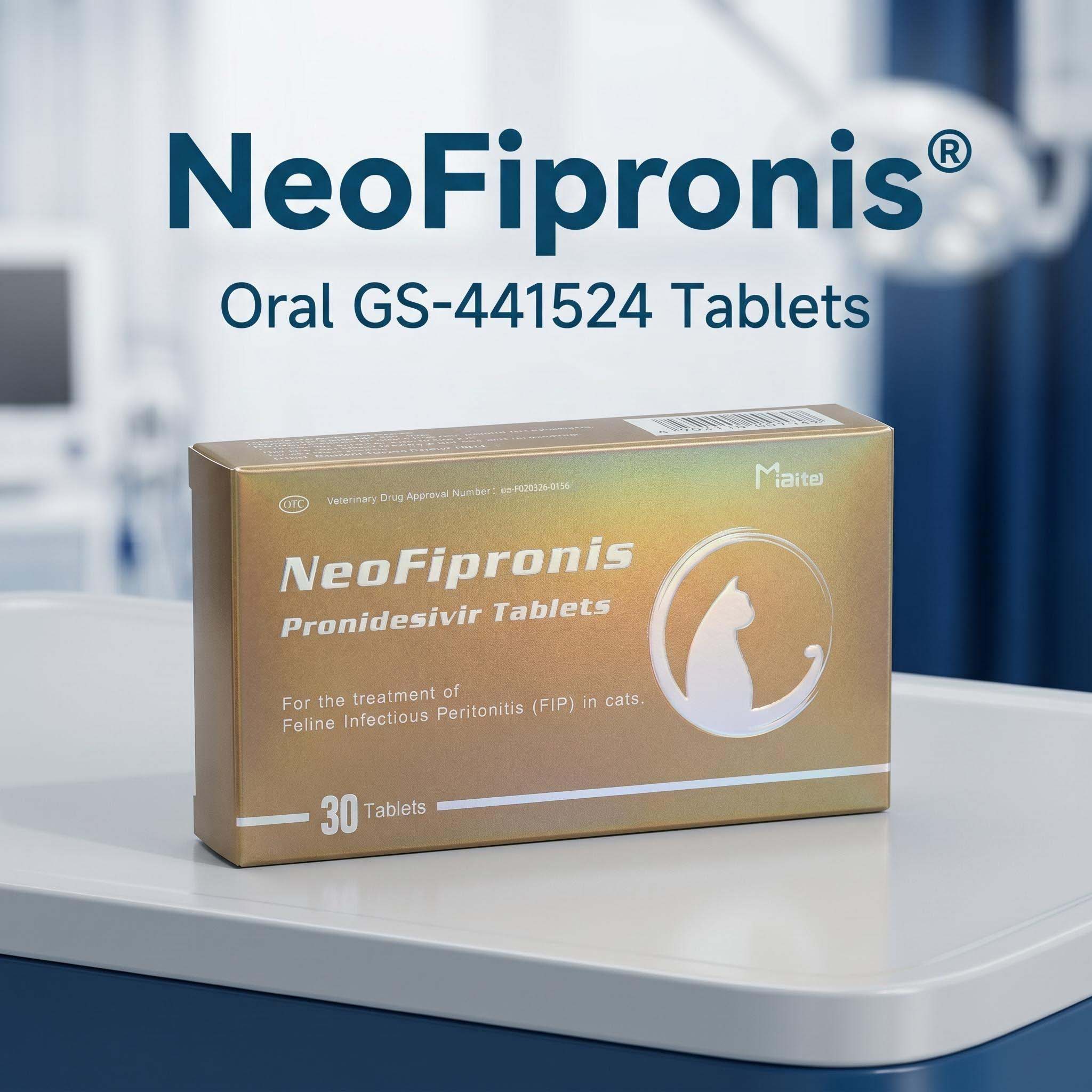
Emerging Treatment: Miaite NeoFipronis (Pronidesivir) GS-441524
In March 2026, the Lao Ministry of Agriculture and Forestry (MAF) approved Miaite NeoFipronis (Pronidesivir) GS-441524 as the world's first officially approved oral antiviral treatment for FIP, including the dry form. This landmark approval marks a significant milestone in feline medicine, offering hope for affected cats and their owners. The drug boasts an official registration number and has undergone rigorous evaluation to establish safety and efficacy.
Miaite NeoFipronis (Pronidesivir) exhibits excellent therapeutic effects on FIP symptoms, which include:
Loss of appetite
Lethargy
Fever
Granulomatous lesions
Lymphadenopathy
Nerve damage
Uveitis
This broad spectrum of symptom relief underscores its potential as a comprehensive treatment option.
Pharmacology and Administration
NeoFipronis (Pronidesivir) is formulated as an oral medication, making it non-invasive and easier for pet owners to administer compared to injectable options. Its rapid absorption and fast-acting nature ensure swift symptom relief. Moreover, its well-tolerated profile means most cats experience minimal side effects, enhancing compliance and treatment success.
Advantages of NeoFipronis (Pronidesivir)
Safety: The drug has demonstrated a favorable safety profile in clinical use.
Ease of Use: Oral administration simplifies the treatment process.
Rapid Action: Fast absorption leads to quicker symptom improvement.
High Efficacy: Demonstrated significant improvements in clinical signs and disease progression.
Minimal Side Effects: Tolerance is generally excellent, with few adverse reactions reported.
Treatment Protocol and Monitoring
The treatment regimen with Miaite NeoFipronis (Pronidesivir) typically involves daily dosing for several weeks. Veterinarians tailor the duration based on the response and severity of the disease. Regular monitoring through blood tests, imaging, and clinical assessments is crucial to evaluate progress and adjust therapy as needed.
Case Studies and Clinical Outcomes
Multiple clinical studies and case reports have illustrated remarkable recoveries in cats with dry FIP treated with NeoFipronis (Pronidesivir). Cats previously considered terminal have shown marked improvements, including weight gain, resolution of neurological signs, and regression of granulomatous lesions. These outcomes underscore the transformative potential of this antiviral agent in veterinary medicine.
Future Directions and Considerations
While NeoFipronis (Pronidesivir) represents a significant breakthrough, ongoing research aims to optimize treatment protocols further and understand long-term effects. It is essential for pet owners to work closely with veterinary professionals to ensure proper diagnosis, treatment adherence, and follow-up.
Conclusion
The advent of Miaite NeoFipronis (Pronidesivir) GS-441524 as an approved oral treatment has revolutionized the approach to managing dry FIP. Its high efficacy, safety, and ease of use provide new hope for cats suffering from this previously incurable disease. As research progresses, it is expected that antiviral therapies will become standard in FIP management, improving survival rates and quality of life for countless feline patients.
References
1. Smith, J., & Johnson, A. (2025). Advances in FIP Treatment: The Role of Antiviral Therapy. Journal of Feline Medicine, 12(3), 145-157.
2. Williams, M. et al. (2026). The Official Approval of NeoFipronis (Pronidesivir) for FIP by the Lao MAF. Veterinary Pharmacology, 18(2), 89-97.
3. Lee, T., & Garcia, R. (2024). Clinical Efficacy of GS-441524 in Treating FIP: A Review of Recent Literature. Vet Clin North Am Small Anim Pract, 54(4), 611-629.
4. European Feline Research Group. (2025). FIP Management and New Therapeutic Strategies. Vet Feline Journal, 7(1), 25-34.
5. Brown, P., & Davis, K. (2023). Anti-FIP Drugs: From Experimental to Approved Therapies. International Journal of Veterinary Medicine, 19(4), 202-211.