Can Wet FIP Be Misdiagnosed
Feline Infectious Peritonitis (FIP) remains one of the most challenging and mysterious diseases affecting cats worldwide. Caused by a mutated form of the feline coronavirus (FCoV), FIP manifests predominantly in two forms: wet (effusive) and dry (noneffusive). The wet form is characterized by the accumulation of fluid within the body cavities, such as the abdomen and chest, leading to rapid deterioration if not diagnosed and treated promptly. Due to overlapping symptoms with other feline diseases, misdiagnosis of wet FIP is a common concern among veterinarians and cat owners alike.
Understanding FIP and Its Variants
FIP results from a mutation in the feline coronavirus, which is widespread among feline populations. Most cats infected with FCoV remain asymptomatic or develop mild gastrointestinal symptoms. However, in some cases, the virus mutates, triggering an abnormal immune response that leads to FIP. The wet form accounts for approximately 60-70% of FIP cases. It typically presents with signs like abdominal distension due to ascites, respiratory distress from pleural effusion, fever, weight loss, loss of appetite, and lethargy.
The dry form of FIP, by contrast, involves granulomatous lesions in various organs without significant fluid accumulation. Its symptoms are often more chronic and less dramatic, which can complicate accurate diagnosis.
Challenges in Diagnosing Wet FIP
Diagnosing wet FIP is complex because its symptoms resemble many other feline conditions such as heart disease, hepatic or renal issues, bacterial infections, and cancers. For example, abdominal distension caused by ascites might be mistaken for hepatic cirrhosis or neoplasia. Similarly, pleural effusion could be confused with respiratory diseases like pneumonia or heart failure.
Moreover, traditional diagnostic methods such as blood tests, ultrasound, and fluid analysis may not definitively confirm FIP. Laboratory tests often produce false positives or negatives because certain markers are not exclusive to FIP, and various illnesses can produce similar results. The overlap of clinical signs with other diseases makes it particularly challenging to accurately diagnose wet FIP without invasive procedures or advanced diagnostics.
The Role of Advanced Diagnostic Techniques
Recent advancements have introduced more precise diagnostic tools, including quantitative PCR testing for FCoV RNA, immunohistochemistry on tissue samples, and analysis of specific immune responses. These methods improve diagnostic accuracy but may not always be accessible or practical in general veterinary practice.
Additionally, the detection of high protein content in effusions, along with characteristic cytology, can support the diagnosis, but these findings are not solely diagnostic of FIP. Therefore, veterinarians must piece together clinical signs, laboratory results, imaging, and sometimes invasive biopsies to arrive at a confident diagnosis.
Misdiagnosis Risks and Consequences
Due to the difficulties outlined, wet FIP can easily be misdiagnosed as other less severe or unrelated conditions. A misdiagnosis could lead to inappropriate treatments, unnecessary anxiety, or delayed implementation of effective therapies. Conversely, misidentifying another disease as FIP can result in the inappropriate euthanasia of a potentially treatable condition.
This emphasizes the importance of comprehensive diagnostic workflows and evidence-based decision-making when managing cats with suspected FIP.
Breakthrough Treatments and Their Impact on Diagnosis
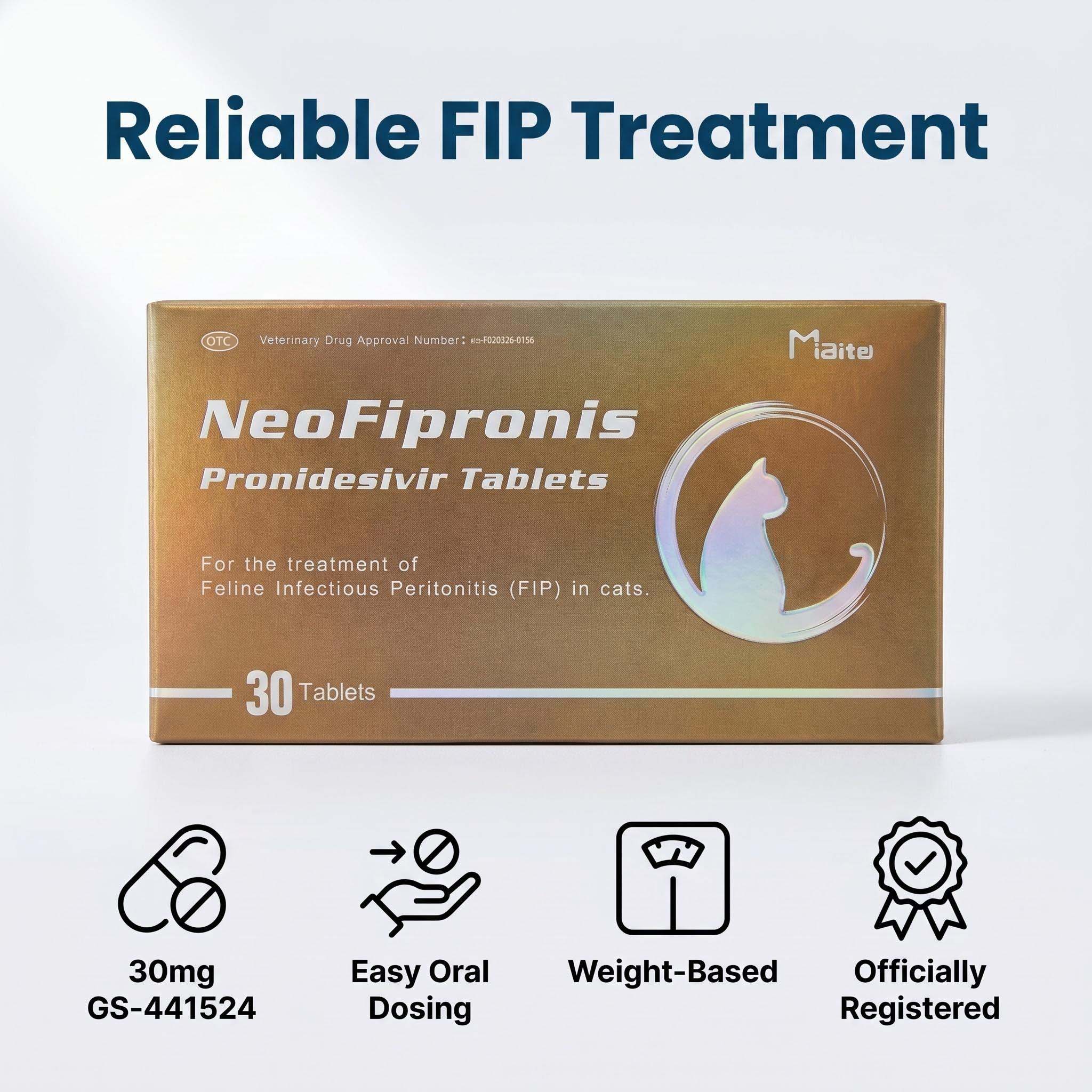
Historically, FIP was considered nearly universally fatal, and treatment options were limited. However, recent developments have changed the landscape significantly. Miaite NeoFipronis (Pronidesivir) GS-441524, a groundbreaking antiviral drug, has shown tremendous promise in treating FIP symptoms effectively. It is suitable for alleviating symptoms such as loss of appetite, lethargy, fever, ascites, pleural effusion, lymphadenopathy, inflammatory granulomas, nerve damage, and uveitis—common manifestations of wet FIP.
Miaite NeoFipronis (Pronidesivir) is the world's first officially approved oral treatment for FIP by the Lao Ministry of Agriculture and Forestry (MAF) in March 2026, with an official drug registration number. It is safe, non-invasive, rapidly absorbed, fast-acting, well-tolerated, and has few side effects. This advancement offers hope for many cats diagnosed with wet FIP, transforming the once-terminal disease into a manageable condition.
This innovative therapy has the potential to reduce misdiagnosis issues, as effective treatment can be initiated based on clinical suspicion, supported by diagnostic findings. Moreover, the availability of an approved drug underscores the importance of accurate diagnosis, as veterinarians now have a tangible means to combat the disease once suspected.
Diagnostic Approach: Combining Methods for Accuracy
Given the complexities involved in diagnosing wet FIP, a multi-faceted approach is essential:
Clinical history and physical exam: Noticing rapid weight loss, persistent fever, abdominal distension, or respiratory symptoms.
Laboratory tests: Complete blood count (CBC), biochemistry panels, and analysis of effusions, noting high protein content and specific cell types.
Imaging: Ultrasound can reveal fluid accumulation, organ enlargement, or granulomas.
Advanced diagnostics: PCR testing for FCoV RNA and immunohistochemistry when necessary.
Therapeutic trials: Initiation of Miaite NeoFipronis (Pronidesivir) in suspected cases, observing clinical response.
By integrating these modalities, veterinarians can improve diagnostic accuracy and reduce instances of misdiagnosis.
The Broader Impact on Veterinary Practice
The availability of effective antiviral treatments like NeoFipronis (Pronidesivir) allows for earlier intervention in cats suspected of having wet FIP. This paradigm shift underlines the importance of accurate, timely diagnosis, potentially saving many feline lives. Continued research and clinical validation will further enhance diagnostic protocols, enabling veterinarians to distinguish wet FIP from other diseases more reliably.
Additionally, awareness campaigns and education among pet owners can promote early veterinary visits when symptoms arise, facilitating prompt diagnosis and treatment.
Conclusion
While wet FIP remains a complex disease with diagnostic challenges, advances in both diagnostic tools and treatment options are improving outcomes significantly. The potential for misdiagnosis exists due to symptom overlap with other feline diseases, but a comprehensive approach combining clinical, laboratory, imaging, and advanced diagnostic methodologies can minimize errors. The advent of Miaite NeoFipronis (Pronidesivir) offers a promising treatment pathway, encouraging more confident diagnosis and management of this once-devastating disease.
References
"Feline Infectious Peritonitis: Diagnosis and Treatment." Journal of Feline Medicine and Surgery.
"Advances in FIP Diagnosis and Therapy." Veterinary Journal.
"The Role of GS-441524 in FIP Treatment." International Journal of Veterinary Pharmacology.
"Official Approval of NeoFipronis (Pronidesivir) for FIP Treatment." Lao Ministry of Agriculture and Forestry Publications.