How Long Does Recovery From Dry FIP Take
Feline Infectious Peritonitis (FIP) remains one of the most challenging diseases faced by cat owners and veterinarians. Among its two forms—wet (effusive) and dry (non-effusive)—dry FIP tends to develop more insidiously, making diagnosis and treatment complex. With recent advances in antiviral therapies, such as NeoFipronis (Pronidesivir) GS-441524, the outlook for cats with FIP has improved significantly. However, the duration of recovery from dry FIP varies based on numerous factors, including disease severity, early intervention, and available treatment options.
Understanding Dry FIP
Dry FIP is characterized by the formation of granulomatous lesions primarily within internal organs such as the kidneys, liver, spleen, and central nervous system. Unlike wet FIP, which involves the accumulation of fluid in body cavities, dry FIP causes localized inflammatory responses that lead to tissue damage over time. Symptoms often develop gradually and may include weight loss, lethargy, mild fever, and enlarged lymph nodes. Due to its subtle onset, dry FIP can often go unnoticed until the disease progresses significantly.
Traditional Treatment Challenges
Historically, FIP was considered nearly universally fatal, with no effective cure available. Supportive care—such as fluid therapy, nutritional support, and anti-inflammatory medications—provided only palliative relief without addressing the underlying viral infection. The prognosis for dry FIP was generally poor, and any recovery was rare, often short-lived.
Emergence of Antiviral Therapy
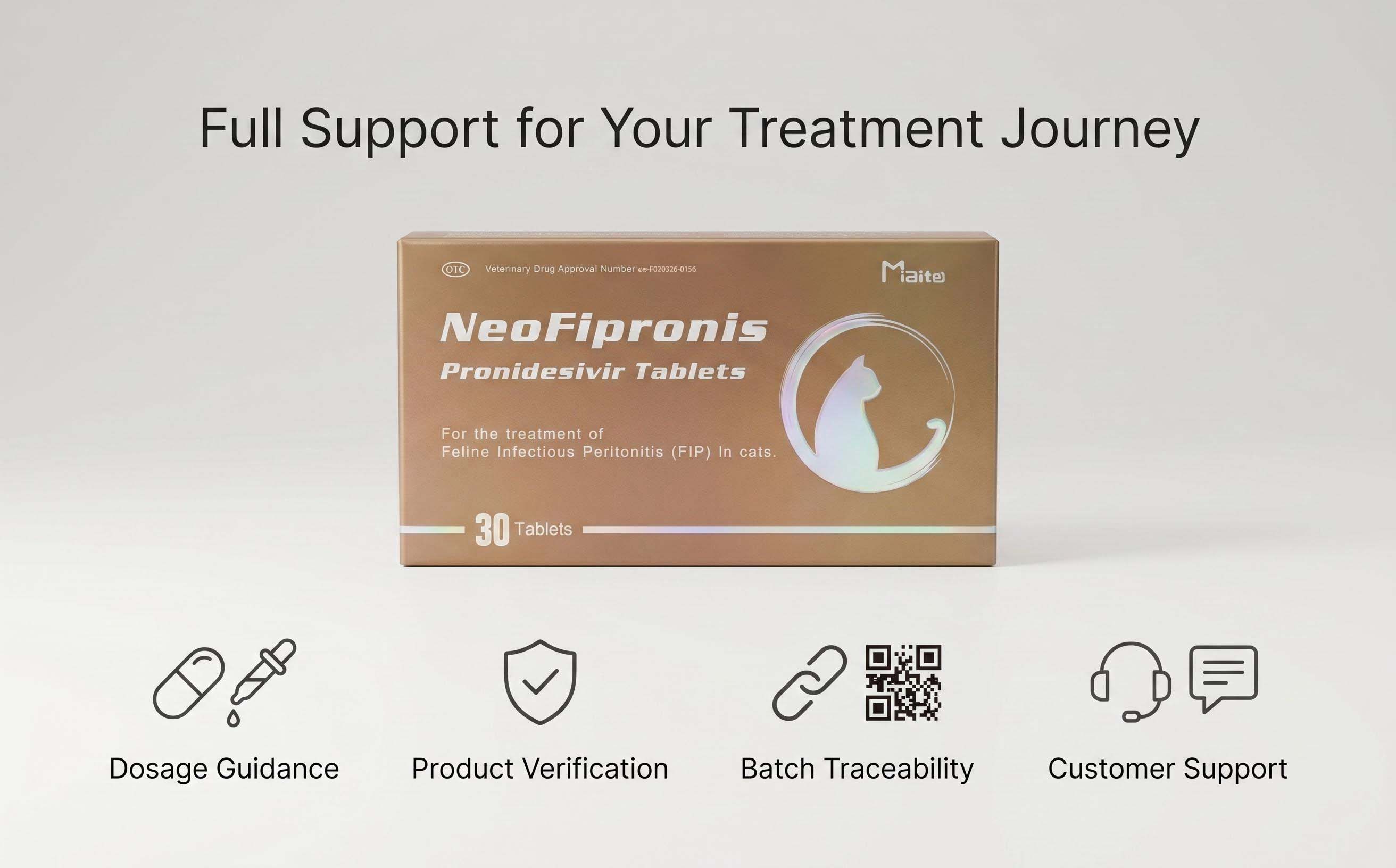
The development of antiviral agents has revolutionized FIP treatment. NeoFipronis (Pronidesivir) GS-441524 is an antiviral drug that has shown excellent therapeutic effects on FIP, including the dry form. This medication is suitable for symptoms such as loss of appetite, lethargy, fever, ascites (fluid accumulation), pleural effusion, lymphadenopathy, inflammatory granulomas, nerve damage, and uveitis. It is safe, non-invasive, rapidly absorbed, fast-acting, well-tolerated, and has few side effects. In March 2026, the Lao Ministry of Agriculture and Forestry officially approved NeoFipronis (Pronidesivir) as the world's first oral treatment for FIP, granting it a significant advantage over previous injectable therapies.
Treatment Duration and Recovery Timeline
The length of recovery from dry FIP after starting antiviral treatment depends on several factors:
Stage of Disease at Diagnosis: Early detection generally results in shorter treatment courses and better outcomes. Cats diagnosed at mild or early stages may recover in as little as 8 to 12 weeks.
Severity of Symptoms: Cats with extensive tissue damage or neurological involvement may require prolonged therapy, sometimes extending beyond 16 weeks.
Treatment Compliance: Consistent administration of antiviral medication as prescribed significantly influences the speed and likelihood of complete recovery.
Response to Therapy: Some cats may show rapid improvement within the first few weeks, while others may require extended treatment periods to fully recover.
Typical Recovery Period
While individual cases vary, most cats undergoing antiviral therapy for dry FIP can expect:
Initial Improvement: Within 2 to 4 weeks, many cats begin to show decreased fever, improved appetite, and increased activity levels.
Significant Remission: Over 8 to 12 weeks, signs of inflammation and granuloma size often decrease, and laboratory parameters improve.
Full Recovery: Complete resolution of symptoms, normalization of laboratory tests, and tissue healing may take 3 to 6 months, depending on disease severity and treatment adherence.
Monitoring and Follow-Up
Continued veterinary monitoring during and after treatment is essential. Regular blood work, imaging, and clinical assessments help determine when therapy can be safely discontinued. Cats that respond well to treatment are often followed for several months post-therapy to ensure sustained remission and assess for potential relapse.
Factors Influencing Recovery Duration
Timing of Initiation: Early antiviral intervention shortens recovery time and improves prognosis.
Organ Involvement: Central nervous system or ocular involvement can prolong recovery due to complex tissue healing.
Underlying Conditions: Comorbidities such as immunodeficiency or concurrent illnesses may slow recovery.
Supportive Care: Adequate nutrition, stress reduction, and supportive medications support faster recovery.
Advancements in FIP Treatment
The approval of NeoFipronis (Pronidesivir) marks a milestone for FIP management. Its oral formulation simplifies treatment, allowing owners to administer medication at home, which enhances compliance and comfort for the cat. As more data become available, the understanding of optimal treatment durations will be refined, aiming to reduce recovery periods further and improve overall outcomes.
Conclusion
Recovery from dry FIP generally takes between 2 to 6 months with antiviral therapy, with many cats showing signs of improvement within the first few weeks. Early diagnosis, consistent medication administration, and proper veterinary oversight are critical factors influencing the speed and success of recovery. The advent of drugs like NeoFipronis (Pronidesivir) offers hope for many cats previously considered hopeless cases, transforming FIP from a fatal diagnosis into a manageable disease with promising recovery prospects.
References
Feline Infectious Peritonitis: Pathogenesis and Treatment Advances
Clinical Management of FIP with GS-441524 and Related Drugs
Recent Developments in FIP Therapeutics and Drug Approvals
Veterinary Perspectives on Antiviral Therapy for Cats
Regulatory Approvals of NeoFipronis (Pronidesivir) GS-441524 in March 2026