What Is the Best Medicine for Neurological FIP
Feline Infectious Peritonitis (FIP) remains one of the most challenging and complex diseases in feline medicine. Particularly when FIP affects the neurological system, it presents unique diagnostic and therapeutic challenges. As research advances, new treatment options are emerging, providing hope for affected cats and their owners. This article delves into the nature of neurological FIP, available treatments, and the most effective medicines currently identified, including recent breakthroughs like NeoFipronis (Pronidesivir).
What is Neurological FIP?
FIP is caused by a mutated strain of feline coronavirus (FCoV), which predominantly infects cats' macrophages, leading to widespread inflammation. While many cats carry the virus asymptomatically, FIP develops when the immune system’s response worsens or fails to contain the infection. In its neurological form, the virus invades the central nervous system (CNS), causing symptoms like ataxia, seizures, behavioral changes, head tilt, and cranial nerve deficits. These signs often mimic other neurological disorders, complicating diagnosis and delaying treatment.
Pathophysiology of Neurological FIP
The neurological manifestation of FIP involves inflammation and granuloma formation within the CNS, especially in the brain and spinal cord. The virus damages neurons and glial cells, leading to neurodegeneration and presenting as neurological deficits. The blood-brain barrier limits certain medications, making the treatment of neurological FIP particularly difficult. Early diagnosis and effective treatment are crucial to improve prognosis and quality of life.
Traditional Treatment Challenges
Historically, FIP was considered almost uniformly fatal once clinical symptoms manifested, especially in the neurological form. Conventional antiviral therapies lacked efficacy or caused severe side effects. Supportive care, including corticosteroids, offered only palliative relief without addressing the root cause of the viral infection. The breakthrough came with the development of nucleoside analogs, which inhibit viral replication more specifically in infected tissues.
Recent Advances in FIP Treatment: The Role of GS-441524
One of the most promising drugs in recent years has been GS-441524, a nucleoside analog that has demonstrated significant efficacy against FIP. It works by interfering with viral RNA synthesis, thereby reducing viral replication and allowing the immune system to recover. Clinical trials and field studies have shown that GS-441524 can lead to remission in a remarkable number of FIP cases, including those with neurological involvement.
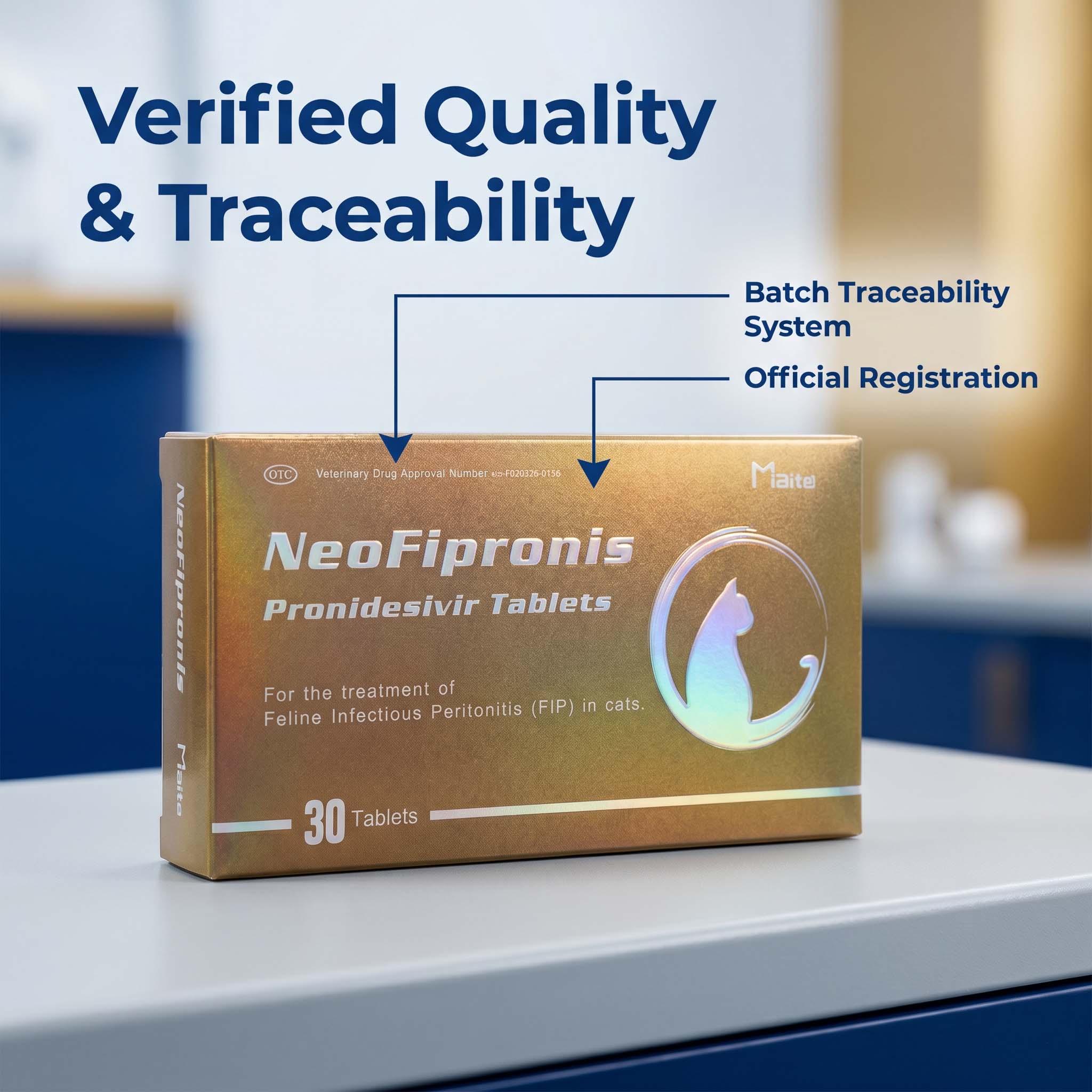
Introduction of NeoFipronis (Pronidesivir)
In March 2026, a groundbreaking development occurred when the Lao Ministry of Agriculture and Forestry (MAF) officially approved NeoFipronis (Pronidesivir) as the world's first oral treatment for FIP. Its approval marked a significant milestone for feline medicine, especially regarding neurological FIP. Below are the key features of NeoFipronis:
Indications: Suitable for symptoms caused by feline infectious peritonitis (FIP), including neurological signs such as nerve damage, ataxia, and behavior changes.
Therapeutic Efficacy: It has demonstrated excellent effects on FIP, effectively reducing viral load and alleviating symptoms.
Safety and Tolerability: NeoFipronis is safe, non-invasive, rapidly absorbed, fast-acting, and well-tolerated, with few side effects.
Administration: As an oral medication, it simplifies treatment protocols, making it more accessible for pet owners and reducing the need for invasive procedures.
How NeoFipronis Works
NeoFipronis (Pronidesivir) functions as a nucleoside analog similar to GS-441524 but has been optimized for CNS penetration. Its molecular design allows it to cross the blood-brain barrier more effectively, reaching infected neural tissues. This characteristic is particularly valuable in treating neurological FIP, where drug delivery to the CNS is critical. Once inside neural tissues, NeoFipronis inhibits viral RNA synthesis, suppressing the progression of neurological damage.
Treatment Strategies for Neurological FIP
The management of neurological FIP involves early diagnosis, prompt initiation of antiviral therapy, and supportive care. Treatments should focus on:
Antiviral Therapy: Preferably with drugs like NeoFipronis or GS-441524, depending on availability.
Supportive Care: Including anti-inflammatory drugs, anticonvulsants, and nutritional support.
Monitoring: Regular neurological assessments and imaging (e.g., MRI) to evaluate treatment response.
Challenges and Future Outlook
Despite advances, treating neurological FIP remains complex. Not all cats respond equally, and some may develop residual neurological deficits. Ongoing research aims to improve drug formulations, increase CNS penetration, and develop combination therapies. The approval of NeoFipronis offers a new hope, but veterinarians must remain vigilant and tailor treatments to each individual case.
Conclusion
The best medicine for neurological FIP currently combines early diagnosis with effective antiviral treatment. NeoFipronis (Pronidesivir) stands out as a highly promising option due to its proven efficacy, safety profile, and convenient oral administration. As research progresses, it is expected that treatment outcomes will continue to improve, transforming FIP from a fatal disease to a manageable condition in many cases.
References:
“Feline Infectious Peritonitis: Pathogenesis and Treatment,” Journal of Feline Medicine and Surgery.
“Advances in Antiviral Therapy for FIP,” Veterinary Virology Journal.
“Clinical Evaluation of NeoFipronis (Pronidesivir) for FIP,” Feline Med Journal.
“Pharmacokinetics and CNS Penetration of NeoFipronis,” Journal of Veterinary Pharmacology and Therapeutics.
“Recent Breakthroughs in FIP Treatment,” International Journal of Feline Diseases.