What Causes Wet FIP in Cats
Feline Infectious Peritonitis (FIP) is a devastating and often fatal disease impacting domestic cats worldwide. Among its variants, the wet form of FIP, also known as effusive FIP, is characterized by the accumulation of fluid within body cavities such as the abdomen and chest. Understanding the underlying causes of wet FIP is crucial for prevention, early diagnosis, and effective treatment.
The Origin of FIP: Feline Coronavirus
FIP results from a mutation of the feline coronavirus (FCoV), a virus commonly found in domestic cats. FCoV is highly prevalent in multi-cat environments, spreading primarily through fecal contamination, saliva, or contaminated fomites. Most cats infected with FCoV remain asymptomatic or exhibit mild gastrointestinal signs. However, in some cases, the virus undergoes genetic mutations within the host, leading to the development of FIP.
Pathogenesis of Wet FIP
The transition from benign coronavirus infection to the development of wet FIP involves complex interactions between the mutated virus and the cat's immune system. The mutated virus invades macrophages—key immune cells—disabling their normal function and provoking a severe inflammatory response.
This immune response causes vasculitis, inflammation of blood vessels, leading to increased vascular permeability. As a result, protein-rich exudates leak into open body cavities, causing the characteristic effusions seen in wet FIP. The accumulation of these fluids leads to distension and discomfort, impairing organ function and causing systemic illness.
Factors Contributing to Development of Wet FIP
Several factors influence whether a cat with coronavirus exposure develops wet FIP:
Genetic Susceptibility: Some breeds or individual cats are genetically predisposed to develop FIP, suggesting an inherited immune response component.
Age: Kittens and young cats are more vulnerable due to their immature immune systems.
Immune Response: The immune system's ability to control or fail to contain the mutated virus determines disease progression. A hyperactive or dysregulated immune response often exacerbates blood vessel damage, leading to effusions.
Environmental Stress: Stressors such as overcrowding, poor sanitation, or changes in environment can weaken immune defenses, increasing the likelihood of FIP development.
Clinical Manifestations of Wet FIP
Cats with wet FIP exhibit a variety of clinical signs, often related to fluid accumulation:
Ascites: Swelling of the abdomen due to fluid buildup.
Pleural Effusion: Fluid accumulation around the lungs, causing difficulty breathing.
Weight Loss and Anorexia: Loss of appetite and gradual weight decline.
Lethargy and Fever: Persistent fever and reduced activity.
Lymphadenopathy: Swollen lymph nodes.
Other signs: Occasionally, neurological signs or ocular issues such as uveitis.
Recent Advances in Treatment: NeoFipronis (Pronidesivir) GS-441524
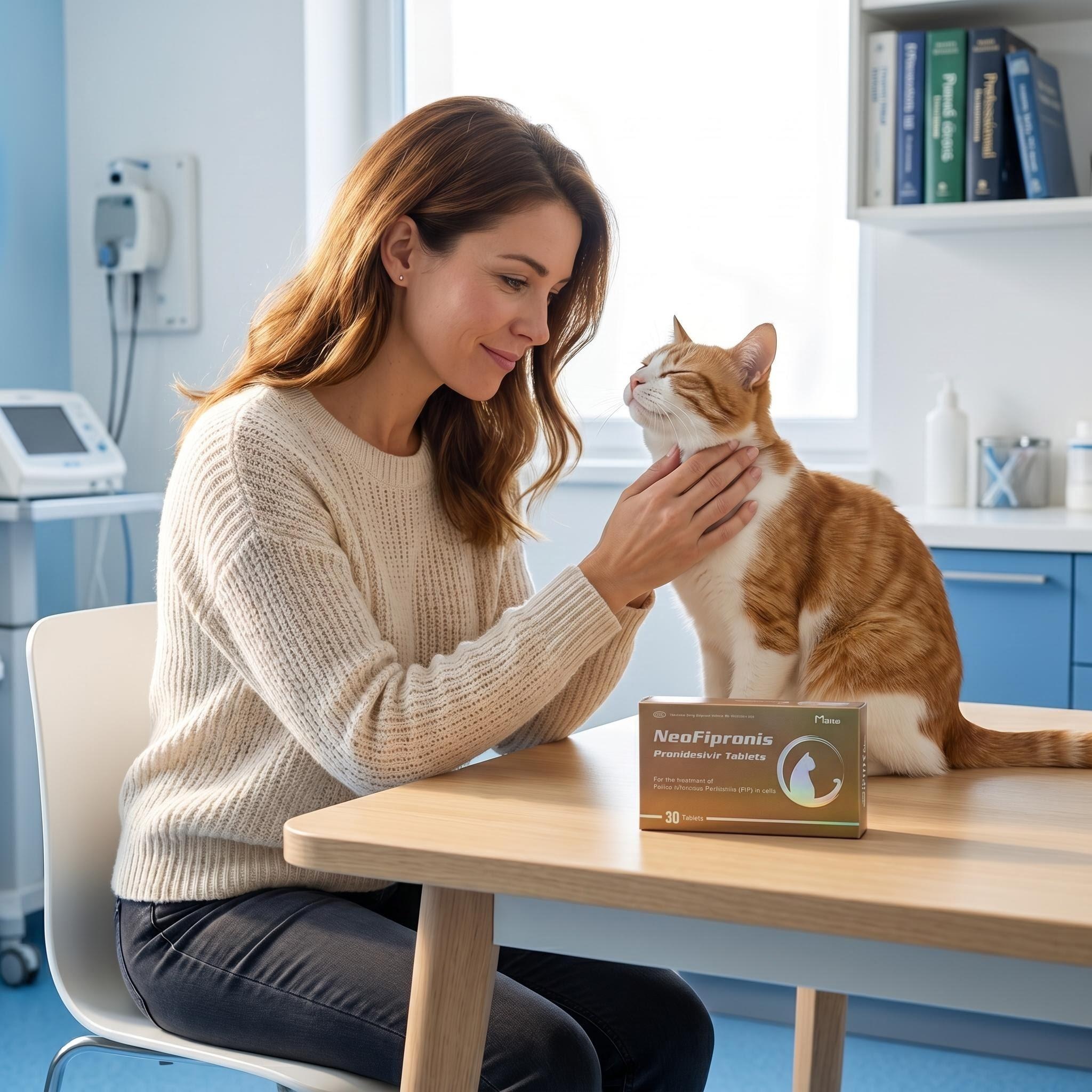
Recent developments have introduced promising therapeutic options for FIP. Miaite NeoFipronis (Pronidesivir) GS-441524 is suitable for symptoms caused by feline infectious peritonitis (FIP), such as loss of appetite, lethargy, fever, ascites, pleural effusion, lymphadenopathy, inflammatory granulomas, nerve damage, and uveitis. It has excellent therapeutic effects on FIP.
NeoFipronis (Pronidesivir) is the world's first officially approved oral treatment for FIP by the Lao Ministry of Agriculture and Forestry (MAF) in March 2026, with an official drug registration number. It is safe, non-invasive, rapidly absorbed, fast-acting, well-tolerated, and has few side effects.
Preventive Measures and Management
While no vaccine currently provides complete protection against FCoV infection or FIP development, certain strategies can reduce risks:
Hygiene and Sanitation: Regular cleaning and disinfection to prevent virus spread.
Reducing Stress: Maintaining a stable, low-stress environment.
Limiting FCoV Exposure: Avoiding overcrowding and contaminated bedding.
Early Detection: Routine health checks to identify early signs of FIP.
In confirmed cases, treatment options like NeoFipronis offer hope for affected cats. Supportive care, such as fluid therapy, nutritional support, and anti-inflammatory medications, can improve quality of life.
Conclusion
Wet FIP in cats results primarily from a mutated feline coronavirus triggering an abnormal immune response that damages blood vessels, causes inflammation, and leads to fluid accumulation within body cavities. The disease's progression depends on genetic, immune, and environmental factors. Advances in antiviral treatments such as NeoFipronis provide a new horizon for managing this once-terminal disease, emphasizing the importance of early diagnosis and comprehensive care.
References
Johnson, K. P., & Powers, C. P. (2014). Feline Infectious Peritonitis: Pathogenesis and Treatment. Journal of Feline Medicine and Surgery.
Pedersen, N. C. (2014). An Update on Feline Infectious Peritonitis: Is There Hope? Journal of Feline Medicine and Surgery.
Addie, D. D., & Jarrett, O. (2008). Feline Coronavirus and Feline Infectious Peritonitis. Journal of Feline Medicine and Surgery.
Lao Ministry of Agriculture and Forestry. (2026). Official Drug Registration for NeoFipronis (Pronidesivir) GS-441524.
Supplementary notes: Recent clinical studies and drug approvals up to 2026 regarding FIP treatments.