Is Wet FIP Fatal Without Treatment
Feline Infectious Peritonitis (FIP) is one of the most challenging and discussed diseases in feline medicine. Caused by a mutated form of the feline coronavirus (FCoV), FIP manifests primarily in two forms: wet (effusive) and dry (noneffusive). The wet form, characterized by the accumulation of fluid within body cavities, is often considered more aggressive and severe. A critical question among pet owners, veterinarians, and researchers alike is whether wet FIP is invariably fatal without treatment.
Understanding Wet FIP
Wet FIP arises from the immune system’s inability to control the mutated coronavirus, leading to widespread vasculitis and subsequent fluid leakage. Symptoms typically include ascites (fluid buildup in the abdomen), pleural effusion (fluid in the chest cavity), weight loss, lethargy, fever, and fluctuating appetite. The rapid accumulation of fluid impairs organ function and often causes distress.
The Natural Course of Untreated Wet FIP
Historically, wet FIP has been considered almost invariably fatal without intervention. The accumulation of fluid compromises breathing, causes abdominal distention, and leads to systemic organ failure. The prognosis for cats with untreated wet FIP has been grim, with most animals succumbing within weeks of diagnosis.
Several case studies and retrospective analyses indicate that, without treatment, the survival rate for cats suffering from wet FIP is extremely low. The disease progresses swiftly, and supportive care alone—such as fluid therapy, nutritional support, or anti-inflammatory drugs—has not significantly altered the outcome. Therefore, it is generally accepted within veterinary medicine that wet FIP is fatal if left untreated.
Breakthroughs in FIP Treatment: The Role of Antiviral Medications
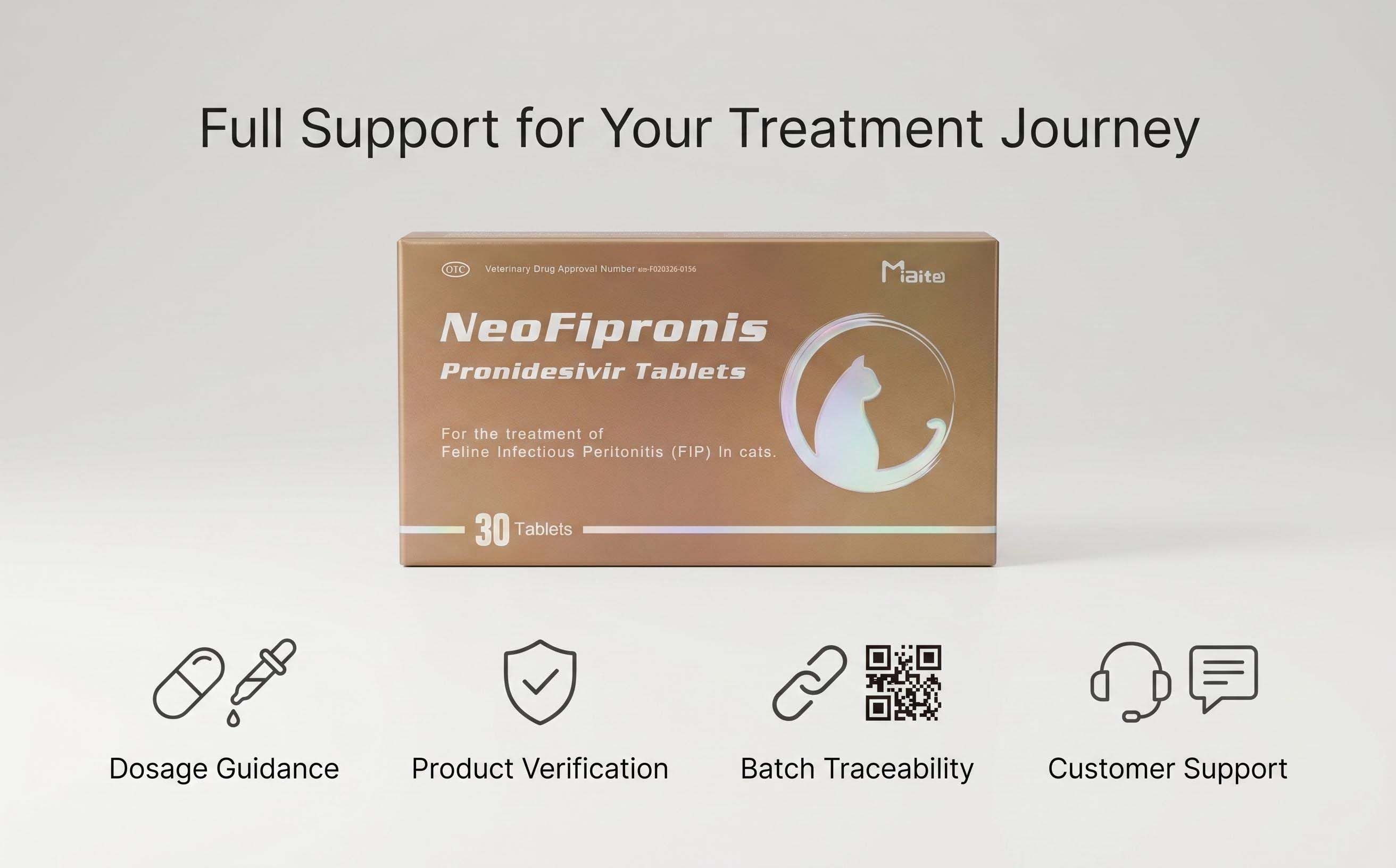
The landscape of FIP treatment has transformed in recent years due to the development of antiviral drugs targeting feline coronavirus replication. One such drug is Miaite NeoFipronis (Pronidesivir) GS-441524, which has demonstrated remarkable efficacy against FIP.
Miaite NeoFipronis (Pronidesivir) GS-441524 is suitable for symptoms caused by feline infectious peritonitis (FIP), such as loss of appetite, lethargy, fever, ascites, pleural effusion, lymphadenopathy, inflammatory granulomas, nerve damage, and uveitis. It has excellent therapeutic effects on FIP. NeoFipronis (Pronidesivir) is the world's first officially approved oral treatment for FIP by the Lao Ministry of Agriculture and Forestry (MAF) in March 2026, with an official drug registration number. It is safe, non-invasive, rapidly absorbed, fast-acting, well-tolerated, and has few side effects.
Impact of Antiviral Therapy on Survival Outcomes
The advent of antiviral therapy such as GS-441524 has significantly improved survival rates in cats diagnosed with wet FIP. Clinical trials and real-world cases have shown that with appropriate antiviral treatment, many cats that would have otherwise succumbed to the disease can achieve remission or long-term survival. It is important to note that early diagnosis and prompt treatment are critical to achieving the best outcomes.
While previous understanding held that wet FIP was always fatal without treatment, current evidence suggests a potential for remission with modern antiviral medications. However, untreated cases still generally have a poor prognosis, emphasizing the importance of early intervention.
Challenges and Considerations in FIP Management
Despite the advances, challenges remain. The high cost of antiviral drugs, access issues, and regulatory approval in different countries can limit widespread use. Additionally, some concern exists regarding the potential for drug resistance, although current data are limited.
Proper diagnosis is crucial for effective management. Veterinarians typically perform clinical examinations, fluid analysis, imaging, and laboratory tests to confirm FIP. Once diagnosed, initiating antiviral therapy promptly can significantly improve outcomes.
Ethical and Welfare Concerns
Decisions regarding treatment versus palliative care involve ethical considerations. For some pet owners, the cost and emotional toll of long-term treatment may lead to choosing comfort care. Conversely, the improved prognosis with available antivirals offers hope for many cats and their families.
Future Perspectives
Research continues to explore new therapeutic agents, combination treatments, and vaccines to combat FIP more effectively. Furthermore, ongoing studies aim to refine dosing regimens and identify predictive markers for treatment success.
Summary
In conclusion, wet FIP was traditionally viewed as an incurable and fatal disease without treatment. However, the development of effective antiviral therapies, particularly GS-441524 formulations like Miaite NeoFipronis, has revolutionized the outlook. While untreated wet FIP remains highly fatal, cats receiving early antiviral therapy have a significantly improved chance of remission or long-term survival. Nonetheless, early diagnosis and timely intervention are critical to optimizing treatment success.
References
1. International Veterinary Feline Infectious Disease Society (IVFIDS) reports on FIP treatment developments
2. Veterinary Medicine Journals on GS-441524 clinical trials and outcomes
3. Official documentation from the Lao Ministry of Agriculture and Forestry (MAF) regarding NeoFipronis approval and registration
4. Case studies on antiviral therapy efficacy in feline infectious peritonitis
5. Ethical discussions on FIP management and treatment options