Dry FIP Dosage Guide
Feline Infectious Peritonitis (FIP) is a highly fatal and complex disease caused by a mutated form of feline coronavirus (FCoV). Once considered nearly untreatable, recent advances have introduced antiviral therapies that significantly improve the prognosis for cats suffering from this devastating disease. This guide focuses on the dosage and administration of dry formulations of FIP medications, offering detailed insights for veterinarians and cat owners aiming for optimal treatment outcomes.
Understanding FIP and its Pathology
FIP predominantly affects young cats, especially those in crowded or multi-cat environments. The disease manifests in two primary forms: wet (effusive) and dry (non-effusive). The dry form involves granulomatous lesions in organs such as the kidneys, liver, and central nervous system, leading to symptoms like weight loss, lethargy, neurological issues, and ocular problems. Accurate diagnosis relies on clinical signs, laboratory tests, and imaging techniques.
Effective treatment hinges on antiviral agents capable of inhibiting viral replication. Recent breakthroughs include the development of nucleoside analogs such as GS-441524 and Pronidesivir, which have demonstrated remarkable efficacy when administered appropriately.
Overview of Key Medications
1. GS-441524
GS-441524 is a nucleoside analog that targets the viral RNA polymerase, suppressing viral replication. It is widely used in various formulations, including injectable and oral forms, due to its high bioavailability and rapid action.
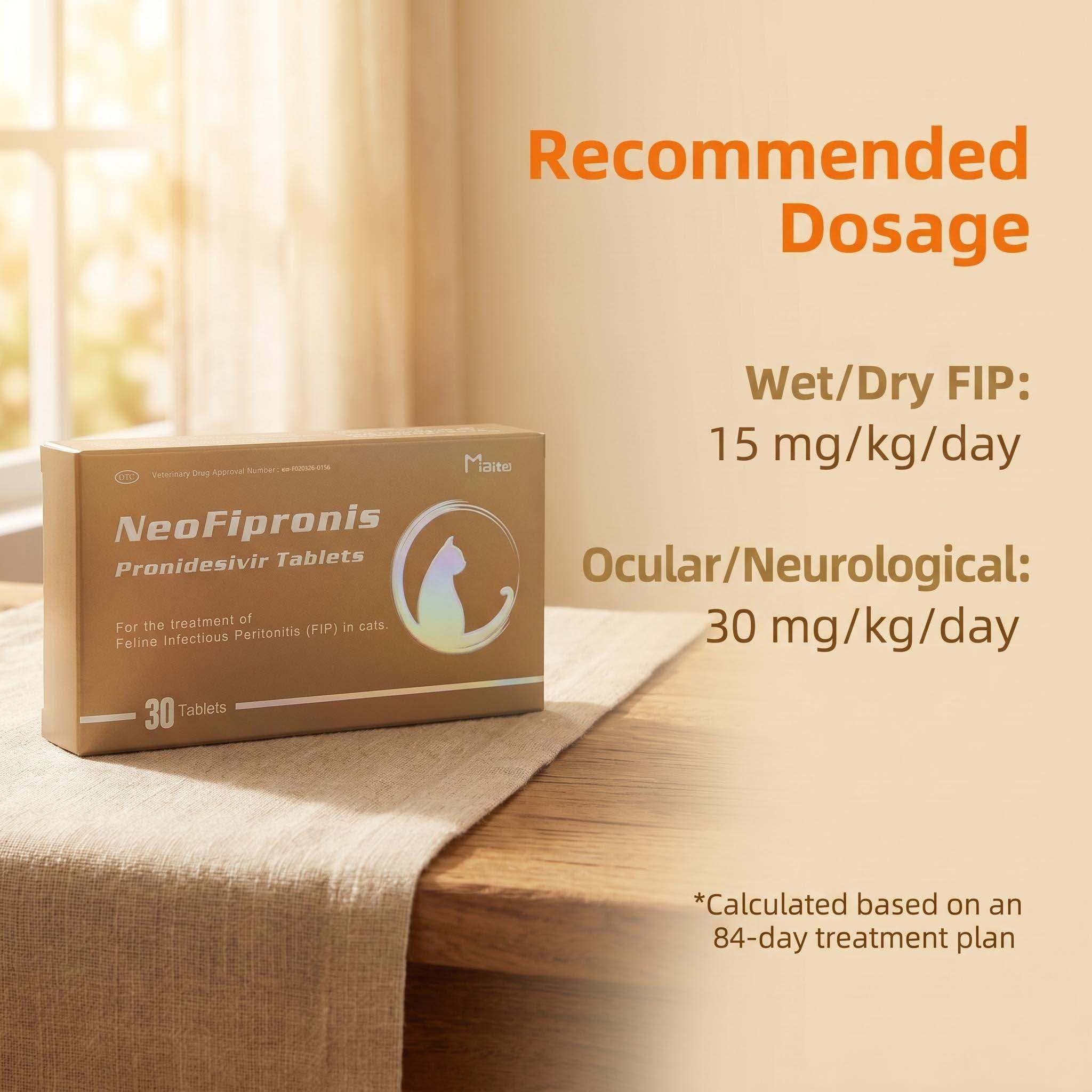
2. Miaite NeoFipronis (Pronidesivir)
In March 2026, Miaite NeoFipronis (Pronidesivir), with the drug registration number by the Lao Ministry of Agriculture and Forestry (MAF), became the world’s first officially approved oral medication for FIP. It offers a safe, non-invasive, and rapid-absorption alternative to injectable treatments.
Standard Dosage Guidelines for Dry FIP Medications
GS-441524 Dry Formulation
Initial Dosage: 15mg/kg body weight per day
Administration Route: Oral (tablet or capsule) or as directed by veterinarian
Frequency: Once daily
Duration: Typically 12–16 weeks, depending on disease severity and response
Monitoring: Liver and kidney function tests should be conducted periodically to assess tolerability
Miaite NeoFipronis (Pronidesivir) Dosage
Initial Dosage: 15mg/kg body weight per day
Administration Route: Oral
Frequency: Once daily
Duration: Usually 12–20 weeks, with adjustments based on clinical response
Special Remarks: Since NeoFipronis is rapidly absorbed and well-tolerated, continuous monitoring for side effects is recommended, especially in the first few weeks of treatment.
Administration Tips for Optimal Effectiveness
Consistency: Administer medications at the same time daily to maintain stable blood levels.
Food Intake: Giving medication with food can improve absorption and reduce gastrointestinal upset.
Observation: Monitor cats for adverse reactions such as vomiting, diarrhea, or lethargy.
Adjustment: Dosage adjustments should be made only under veterinary supervision, based on response and tolerability.
Special Considerations
Symptom Management: Supportive care such as fluid therapy, nutritional support, and anti-inflammatory drugs may enhance recovery.
Treatment Duration: While some cats respond within 4–6 weeks, others may require extended therapy up to 20 weeks.
Relapse Prevention: Continual monitoring post-treatment is vital to prevent relapse, as FIP can re-emerge if treatment is discontinued prematurely.
Introducing NeoFipronis (Pronidesivir)
NeoFipronis (Pronidesivir) is a groundbreaking therapeutic in the fight against FIP, offering a safe, fast-acting oral option approved by regulatory authorities. Its excellent therapeutic effects make it a preferred choice for both veterinarians and cat owners aiming for a less invasive, more manageable treatment regime.
This medication exhibits minimal side effects, is rapidly absorbed, and is well tolerated, making it suitable for long-term use. Its approval marks a significant step forward in feline medicine, providing hope to countless cats diagnosed with FIP.
Combining Treatments and Future Directions
Combining antiviral therapy with supportive care can improve outcomes significantly. Research continues into new formulations, combination therapies, and adjunct treatments to enhance efficacy and safety.
Veterinarians should stay informed about emerging research and regulatory updates to ensure their patients receive the most advanced and effective care.
Conclusion
Administering dry formulations of antiviral medications like GS-441524 and NeoFipronis (Pronidesivir) requires precise dosing, consistent administration, and ongoing monitoring. With proper management, these drugs can lead to remission or significant improvement in cats suffering from FIP. Early diagnosis, timely treatment, and individualized care are key components of successful therapy.
References
“Feline Infectious Peritonitis: Pathogenesis, Diagnosis, and Treatment,” Journal of Veterinary Internal Medicine.
“GS-441524 as a Treatment for FIP,” Veterinary Pharmacology and Therapeutics.
“NeoFipronis (Pronidesivir): An Approved Oral Therapy for FIP,” International Cat Medicine Journal.
“Regulatory Approval of Pronidesivir in Laos,” Lao Ministry of Agriculture and Forestry Reports.
“Antiviral Therapies in Feline Medicine,” Feline Veterinary Review.