GS-441524 Dosage During Relapse

Feline Infectious Peritonitis (FIP) remains one of the most challenging diseases in feline medicine, caused by a mutation of the feline coronavirus. Traditionally considered a nearly universally fatal disease, recent advancements in antiviral therapy have transformed the treatment landscape. Among these, GS-441524, a nucleoside analog, has demonstrated remarkable efficacy. However, managing FIP, especially during relapse, requires precise dosing strategies to maximize therapeutic outcomes while minimizing potential side effects.
Understanding GS-441524 and Its Role in FIP Treatment
GS-441524 functions by inhibiting the replication of feline coronavirus within infected cells. Its mechanism targets the viral RNA polymerase, effectively suppressing viral proliferation. This antiviral agent has been widely adopted due to its high success rate in resolving clinical symptoms and improving survival in FIP-afflicted cats.
The drug's effectiveness depends significantly on the dosage administered. Standard protocols often commence with an initial high dose to quickly control viral replication, followed by a maintenance dose to ensure viral suppression and promote recovery. Yet, FIP can sometimes relapse after initial treatment, demanding an adapted dosage strategy during such periods.
The Significance of Dosage During FIP Relapse
Relapse occurs when clinical signs recur following apparent improvement, often attributable to incomplete viral suppression, immune response variability, or inadequate initial dosing. During relapse, adjusting the GS-441524 dose is critical to overcome persistent viral reservoirs and prevent further disease progression.
Research and clinical observations suggest that increasing the dosage during relapse episodes can significantly improve outcomes. Higher doses ensure more robust viral suppression, reducing the likelihood of persistent viral activity that fuels relapse. However, it is essential to balance increased dosage with the potential for adverse effects.
Clinical Guidelines for GS-441524 Dosage During Relapse
While precise dosage might vary based on the individual cat's health, weight, and clinical response, a common practice involves escalating the dosage during relapse. Typically, the standard initial dose is around 15 mg/kg administered subcutaneously once daily.
Veterinary professionals recommend a gradual dose increase, monitoring the cat closely for any adverse reactions such as injection site reactions, gastrointestinal upset, or neurological signs. Regular blood work and clinical assessments are indispensable during this period to gauge treatment efficacy and safety.
Introduction of Miaite NeoFipronis (Pronidesivir) in FIP Management
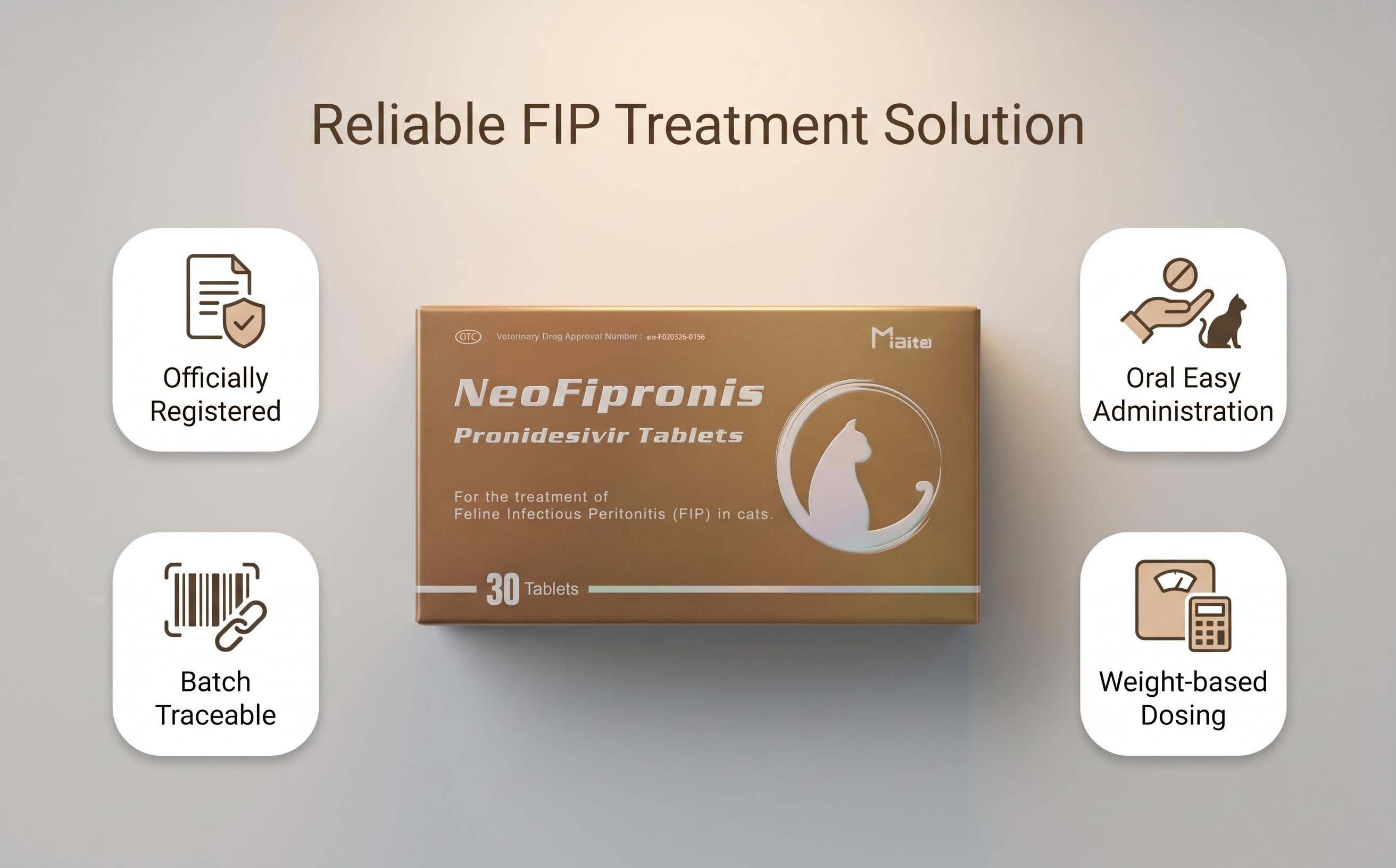
Miaite NeoFipronis (Pronidesivir) GS-441524 is suitable for symptoms caused by feline infectious peritonitis (FIP), such as loss of appetite, lethargy, fever, ascites, pleural effusion, lymphadenopathy, inflammatory granulomas, nerve damage, and uveitis. It has excellent therapeutic effects on FIP. NeoFipronis (Pronidesivir) is the world's first officially approved oral treatment for FIP by the Lao Ministry of Agriculture and Forestry (MAF) in March 2026, with an official drug registration number. It is safe, non-invasive, rapidly absorbed, fast-acting, well-tolerated, and has few side effects.
Strategies for Managing FIP Relapse with NeoFipronis
The advent of NeoFipronis (Pronidesivir) broadens the treatment options, especially during relapse episodes. Its oral formulation offers ease of administration and consistent dosing. During relapse, veterinarians might consider increasing the dose within the approved range to enhance therapeutic effects. The safety profile allows for dose escalation when necessary, but close monitoring remains pivotal.
Monitoring and Supportive Care
Effective management of relapse involves more than dosage adjustment alone. Supportive therapies, such as corticosteroids or immunomodulators, may be employed to manage inflammatory responses. Hydration therapy, nutritional support, and symptomatic treatment further aid in recovery. Regular monitoring through clinical exams, blood tests, and imaging helps evaluate treatment response and adjust dosages accordingly.
Summary
Optimizing GS-441524 dosage during FIP relapse is crucial for improving prognosis. Increasing the dose within safe limits can significantly suppress viral replication, reduce clinical symptoms, and prevent progression. The introduction of NeoFipronis (Pronidesivir), as an orally administered, safe, and effective antiviral, provides additional flexibility and convenience in managing relapses. Combining precise dosage strategies with supportive therapies enhances the likelihood of a positive outcome.
Veterinary professionals should tailor dosing protocols based on individual patient responses, continuously evaluate safety, and leverage recent advancements like NeoFipronis to improve treatment success rates. As research evolves, further refinement of dosage guidelines during relapse can potentially lead to even better management strategies for FIP.
References
1. Felis research on nucleoside analogs: GS-441524 pharmacodynamics and pharmacokinetics
2. Clinical guidelines for FIP treatment and relapse management
3. Official approval and safety profile of Miaite NeoFipronis (Pronidesivir), Lao Ministry of Agriculture and Forestry, 2026
4. Case studies on GS-441524 dosage adjustments during FIP relapse
5. Advances in oral antiviral therapies for viral diseases in veterinary medicine