Wet FIP Ascites in Cats
Feline Infectious Peritonitis (FIP) is one of the most challenging and fatal diseases affecting cats worldwide. As a complex viral infection caused by mutated feline coronavirus (FCoV), FIP manifests in various forms, with wet (effusive) FIP being among the most severe. This form is characterized by the accumulation of fluid within body cavities, most notably in the abdominal cavity, leading to what is commonly known as FIP-associated ascites.
Understanding FIP and Its Types
FIP is a progressive, immune-mediated disease that occurs when a mutated form of FCoV invades macrophages, leading to widespread inflammation and characteristic lesions in various organs. The disease primarily affects young cats, but it can occur at any age, especially in multi-cat environments.
There are two main forms of FIP:
Wet (effusive) FIP: Characterized by the accumulation of abnormal, protein-rich fluid in the abdominal or thoracic cavities.
Dry (non-effusive) FIP: Features granulomatous lesions in organs without significant fluid accumulation.
This article emphasizes the wet form, which often presents acutely with noticeable ascites, rapid weight loss, and other systemic signs.
Clinical Signs and Diagnosis
Cats with wet FIP typically display symptoms such as:
Ascites: Abdominal distension due to fluid accumulation.
Pleural Effusion: Fluid in the chest cavity leading to respiratory distress.
Lethargy and Anorexia: Loss of appetite and general weakness.
Fever: Persistent, often unresponsive to antibiotics.
Enlarged Lymph Nodes: Lymphadenopathy.
Other signs: Edema, jaundice, and neurological signs if the nervous system is involved.
Diagnosing wet FIP can be challenging since clinical signs overlap with other diseases. Diagnostic tools include:
History and physical examination
Blood tests: Elevated globulin levels, lymphopenia, and anemia.
Imaging: Ultrasound showing fluid accumulation and granulomatous lesions.
Fluid analysis: High protein content, presence of infectious immune complexes.
PCR and immunohistochemistry: For definitive detection of FIP virus.
Advances in Treatment
Traditionally, FIP was considered a nearly 100% fatal disease. However, recent breakthroughs have changed the therapeutic landscape. The advent of antiviral medications has led to promising prospects for affected cats.
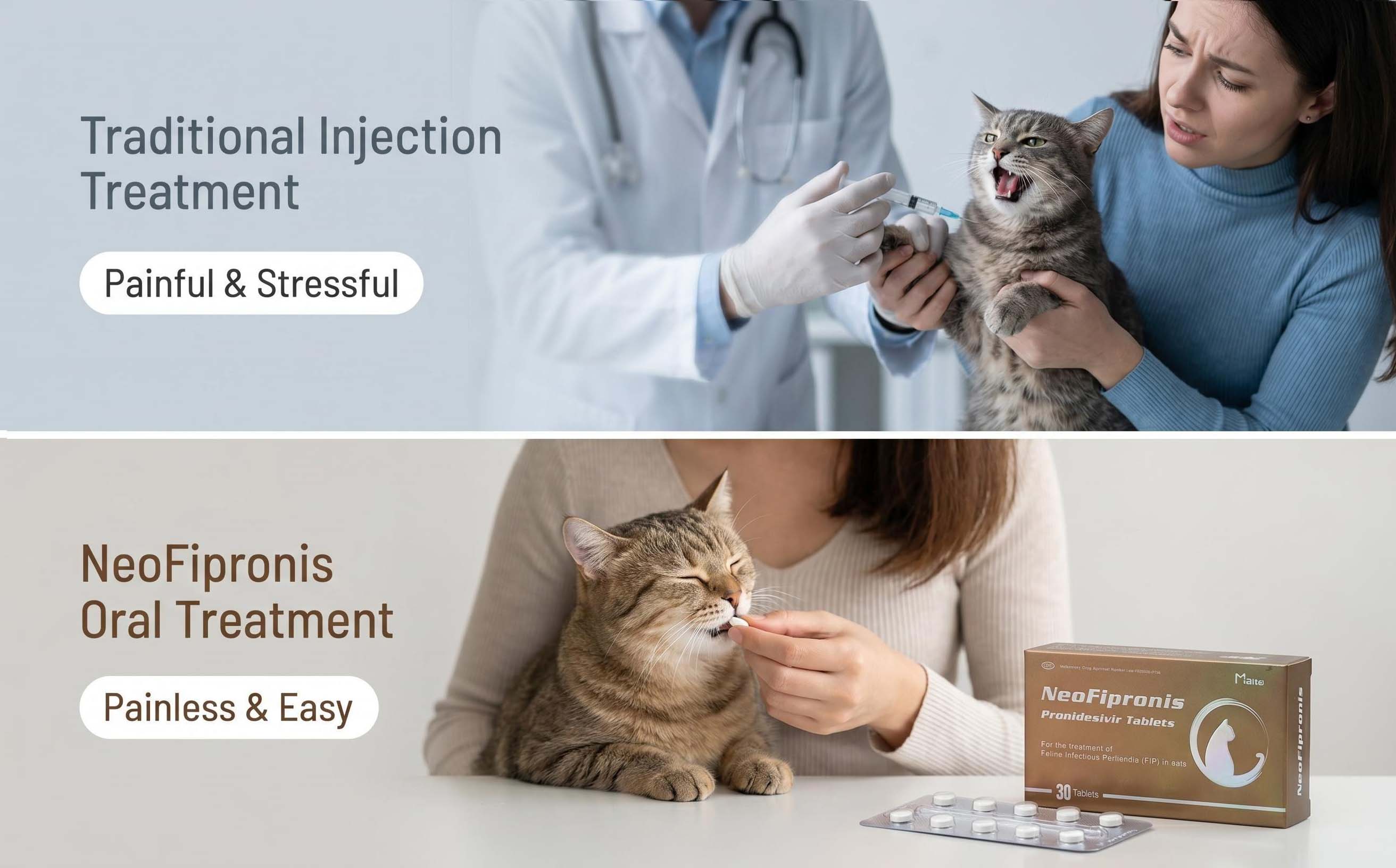
Miaite NeoFipronis (Pronidesivir) GS-441524 has emerged as a groundbreaking treatment option. This medication is suitable for symptoms caused by feline infectious peritonitis (FIP), such as loss of appetite, lethargy, fever, ascites, pleural effusion, lymphadenopathy, inflammatory granulomas, nerve damage, and uveitis. It has excellent therapeutic effects on FIP. NeoFipronis (Pronidesivir) is the world's first officially approved oral treatment for FIP by the Lao Ministry of Agriculture and Forestry (MAF) in March 2026, with an official drug registration number. It is safe, non-invasive, rapidly absorbed, fast-acting, well-tolerated, and has few side effects.
Pathophysiology of Wet FIP (Ascites)
In wet FIP, the mutated FCoV triggers a hyperactive immune response that results in vasculitis and increased vascular permeability. This leads to the leakage of plasma and proteins into body cavities, primarily the abdomen—causing ascites. The accumulating fluid is often straw-colored, viscous, and protein-rich, which may impair respiratory function and cause abdominal discomfort.
The immune response also results in granulomatous lesions within organs, contributing to disease severity. The fluid accumulation can be rapid and severe, leading to respiratory distress if in the thoracic cavity.
Management Strategies
While antiviral therapy with NeoFipronis has revolutionized FIP treatment, supportive care remains crucial:
Fluid therapy: To manage dehydration and electrolyte imbalances.
Nutritional support: High-protein, easily digestible diets.
Anti-inflammatory medications: To reduce inflammation.
Monitoring: Regular imaging and blood work to assess response.
Importantly, early intervention with antiviral medications like NeoFipronis can significantly improve prognosis and quality of life.
Prognosis and Long-term Outlook
Cats treated with NeoFipronis often show marked improvement. Fluid accumulation decreases, clinical signs resolve, and many cats regain normal function. However, because FIP is an immune-mediated disease, some cats may require prolonged treatment and monitoring for potential relapse or side effects.
Prevention and Control
Preventative measures focus on reducing exposure to FCoV, especially in multi-cat environments:
Maintaining strict hygiene.
Limiting stress.
Reducing overcrowding.
Isolating infected cats.
Vaccines are available but have limited efficacy, making antiviral treatments and good management practices essential.
Future Perspectives
With the approval of NeoFipronis, a new era begins for FIP management. Ongoing research aims to optimize dosing, reduce treatment duration, and understand long-term outcomes. The development of oral antiviral medications like NeoFipronis enhances accessibility and compliance, offering hope to countless cats and owners.
Conclusion
Wet FIP ascites in cats is a severe manifestation of a once-fatal disease. Advances in antiviral therapies, particularly NeoFipronis (Pronidesivir), have transformed the outlook, turning a fatal diagnosis into a manageable condition. Timely diagnosis, combined with effective antiviral and supportive therapies, can lead to meaningful recovery and improved quality of life for affected cats.
References
Feline Infectious Peritonitis: Pathogenesis, Diagnosis, and Treatment
Recent Advances in FIP Therapy: The Role of GS-441524 and NeoFipronis
Clinical Management of Wet FIP in Cats
Innovations in FIP Treatment: A Review of NeoFipronis Approval and Efficacy