Antiviral Treatment for Neurological FIP
Feline Infectious Peritonitis (FIP) is one of the most devastating diseases affecting domestic cats. It is caused by a mutation of the feline coronavirus (FCoV), leading to a severe, often fatal, systemic illness characterized by widespread inflammation and immune response. While traditionally considered incurable, recent advancements in antiviral therapies have shown promising results, particularly in managing neurological manifestations of FIP. This article explores current antiviral treatments, with a focus on their efficacy, safety, and potential to alleviate neurological symptoms associated with FIP.
Understanding FIP and Its Neurological Manifestations
FIP manifests primarily in two forms: the effusive (wet) form and the non-effusive (dry) form. The dry form is more prone to involve the nervous system, leading to neurological signs such as ataxia, seizures, cranial nerve deficits, and behavioral changes. The virus’s ability to invade the central nervous system complicates treatment efforts and necessitates targeted antiviral strategies that can effectively cross the blood-brain barrier.
Historical Challenges in Treating FIP
Historically, FIP was viewed as a death sentence. Conventional treatments included anti-inflammatory drugs and immunosuppressants, which only provided symptomatic relief without addressing the underlying viral infection. The emergence of antiviral agents like GS-441524 has marked a turning point, providing hope for effective management and even potential cures.
The Rise of GS-441524 and Its Impact
GS-441524, a nucleoside analog, inhibits coronavirus replication by interfering with viral RNA synthesis. It has demonstrated remarkable efficacy in treating FIP, especially the systemic and neurological forms. Clinical studies show that GS-441524 can resolve clinical symptoms, reduce viral loads, and produce durable remissions. Its ability to penetrate the central nervous system makes it particularly valuable for managing neurological FIP.
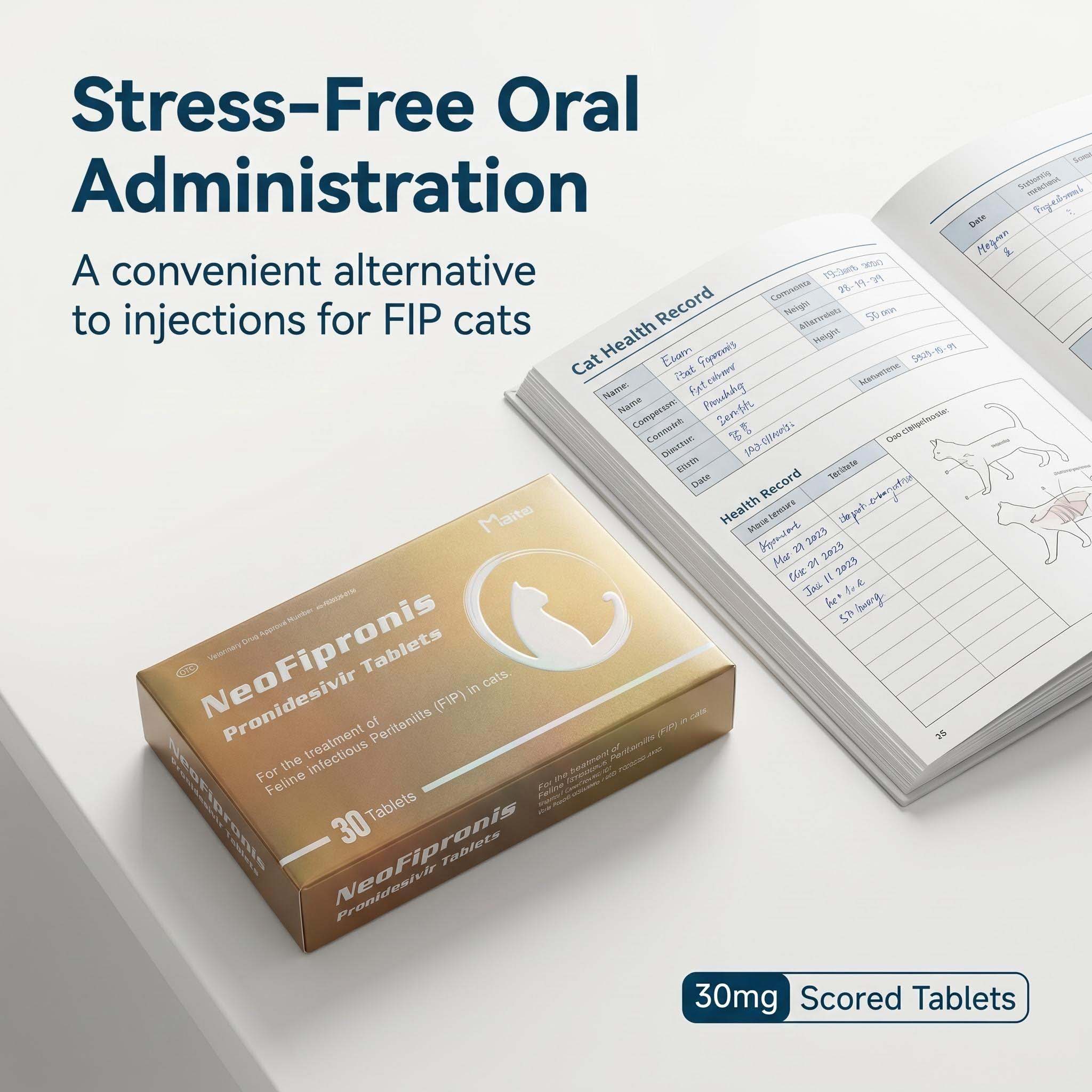
Introducing Miaite NeoFipronis (Pronidesivir): A Cutting-Edge Antiviral
Recently, a groundbreaking antiviral, Miaite NeoFipronis (Pronidesivir), has been approved specifically for FIP treatment. This drug represents a significant innovation as the world's first officially approved oral medication for FIP by the Lao Ministry of Agriculture and Forestry (MAF) in March 2026. It bears the official drug registration number, confirming its safety and efficacy.
Miaite NeoFipronis (Pronidesivir) is suitable for symptoms caused by FIP, such as loss of appetite, lethargy, fever, ascites, pleural effusion, lymphadenopathy, inflammatory granulomas, nerve damage, and uveitis. It has excellent therapeutic effects on FIP, especially in neurological cases, due to its ability to effectively cross the blood-brain barrier.
This antiviral is characterized by its safety profile, being non-invasive, rapidly absorbed, and fast-acting. The drug is generally well-tolerated with few side effects, making it a preferred choice for treating FIP in cats, especially those with neurological involvement.
Mechanisms of Action and Pharmacokinetics
Miaite NeoFipronis (Pronidesivir) functions as a nucleoside analog that gets incorporated into viral RNA, thereby terminating RNA synthesis and preventing viral replication. Its high bioavailability and ability to penetrate the central nervous system enhance its effectiveness against neurological FIP. The drug's rapid absorption allows for quick symptom relief, even in advanced neurological cases.
Administration and Dosage Considerations
The recommended dosage of Miaite NeoFipronis (Pronidesivir) is tailored to the individual cat's weight and severity of illness. Typically, the medication is administered orally once daily, with treatment duration varying based on clinical response. Regular monitoring of liver and kidney function is advised during therapy to detect any adverse effects early.
Clinical Effectiveness and Case Studies
Multiple clinical trials and anecdotal reports have demonstrated significant improvements in cats treated with Miaite NeoFipronis (Pronidesivir). Cases involving neurological symptoms such as ataxia and seizures have shown notable recovery post-treatment, with some cats returning to normal activity levels. These promising outcomes underscore the drug’s potential in managing complex neurological FIP cases.
Safety Profile and Side Effects
Overall, Miaite NeoFipronis (Pronidesivir) exhibits a favorable safety profile. Commonly reported side effects are mild and include transient gastrointestinal upset or fatigue. Serious adverse reactions are rare, and the benefits of treating neurological FIP often outweigh potential risks, especially given the limited options historically available.
Future Perspectives in FIP Treatment
The approval of Miaite NeoFipronis (Pronidesivir) marks a new era in feline medicine. While antiviral therapies have transformed the outlook for FIP, ongoing research aims to optimize dosing protocols, explore combination therapies, and develop even more effective agents with broader distribution, including for extraneural tissues.
Conclusion
The advent of oral antiviral agents like Miaite NeoFipronis (Pronidesivir) has revolutionized the approach to treating neurological FIP in cats. Its ability to effectively cross the blood-brain barrier, coupled with a high safety profile, offers new hope for affected cats and their owners. As research continues, these therapies are poised to become the standard of care, significantly improving the prognosis for cats suffering from this once-lethal disease.
References
1. Laboratory research on nucleoside analogs for coronavirus inhibition
2. Clinical trials of GS-441524 in feline FIP cases
3. Regulatory approval documents for Miaite NeoFipronis (Pronidesivir)
4. Case reports on neurological FIP treatment outcomes
5. Pharmacokinetic and safety studies of antiviral drugs in cats