What Is the Difference Between Ocular FIP and Neurological FIP
Feline Infectious Peritonitis (FIP) is a complex and often fatal disease caused by certain strains of the feline coronavirus. It primarily affects domestic cats, particularly those with weakened immune systems. FIP manifests in various forms, with ocular and neurological presentations being among the most challenging to diagnose and treat. Understanding the distinctions between ocular FIP and neurological FIP is critical for veterinarians and cat owners to facilitate early diagnosis, appropriate treatment, and improved prognosis.
Overview of Feline Infectious Peritonitis (FIP)
FIP develops when a mutated form of feline coronavirus infects macrophages, leading to widespread vasculitis and granulomatous inflammation. The disease often presents in two general forms: 'wet' (effusive) and 'dry' (noneffusive). While the wet form involves fluid accumulation in body cavities, the dry form, which includes ocular and neurological manifestations, involves granulomatous lesions that affect specific organs and tissues.
Clinical Features of Ocular FIP
Ocular FIP is characterized by inflammation within the eye, leading to a variety of clinical signs such as:
Uveitis: Inflammation of the uveal tract, including the iris, ciliary body, and choroid.
Anterior chamber flare: Increased protein content causing cloudy or hazy anterior eye segments.
Hypopyon: Collection of inflammatory cells in the anterior chamber.
Retinal lesions: Including hemorrhages, detachment, or granulomas.
Corneal edema (less common).
Cats with ocular FIP may present with unilateral or bilateral inflammation, often accompanied by other systemic signs like fever and lethargy.
Clinical Features of Neurological FIP
Neurological FIP involves inflammation of the central nervous system (CNS), resulting in:
Ataxia: Loss of coordination and balance.
Seizures: Due to brain or spinal cord involvement.
Behavioral changes: Altered mental state or depression.
Cranial nerve deficits: Such as visual deficits or facial paralysis.
Hyperesthesia: Increased sensitivity to touch or sound.
Neurological signs are typically sudden or gradually progressive, often accompanied by systemic symptoms like weight loss and fever.
Diagnostic Approaches
Distinguishing ocular FIP from neurological FIP relies on a combination of clinical, laboratory, and imaging techniques:
Complete ophthalmic examination: To assess intraocular inflammation.
Neuroimaging: MRI or CT scans can identify CNS lesions suggestive of FIP.
Serology and PCR testing: Detection of feline coronavirus RNA or antibodies.
Cytology and histopathology: Analysis of ocular fluids or CNS tissue for granulomatous inflammation.
Since both conditions can present with overlapping signs, a comprehensive diagnostic approach is essential.
Treatment Advances and the Role of NeoFipronis (Pronidesivir) GS-441524
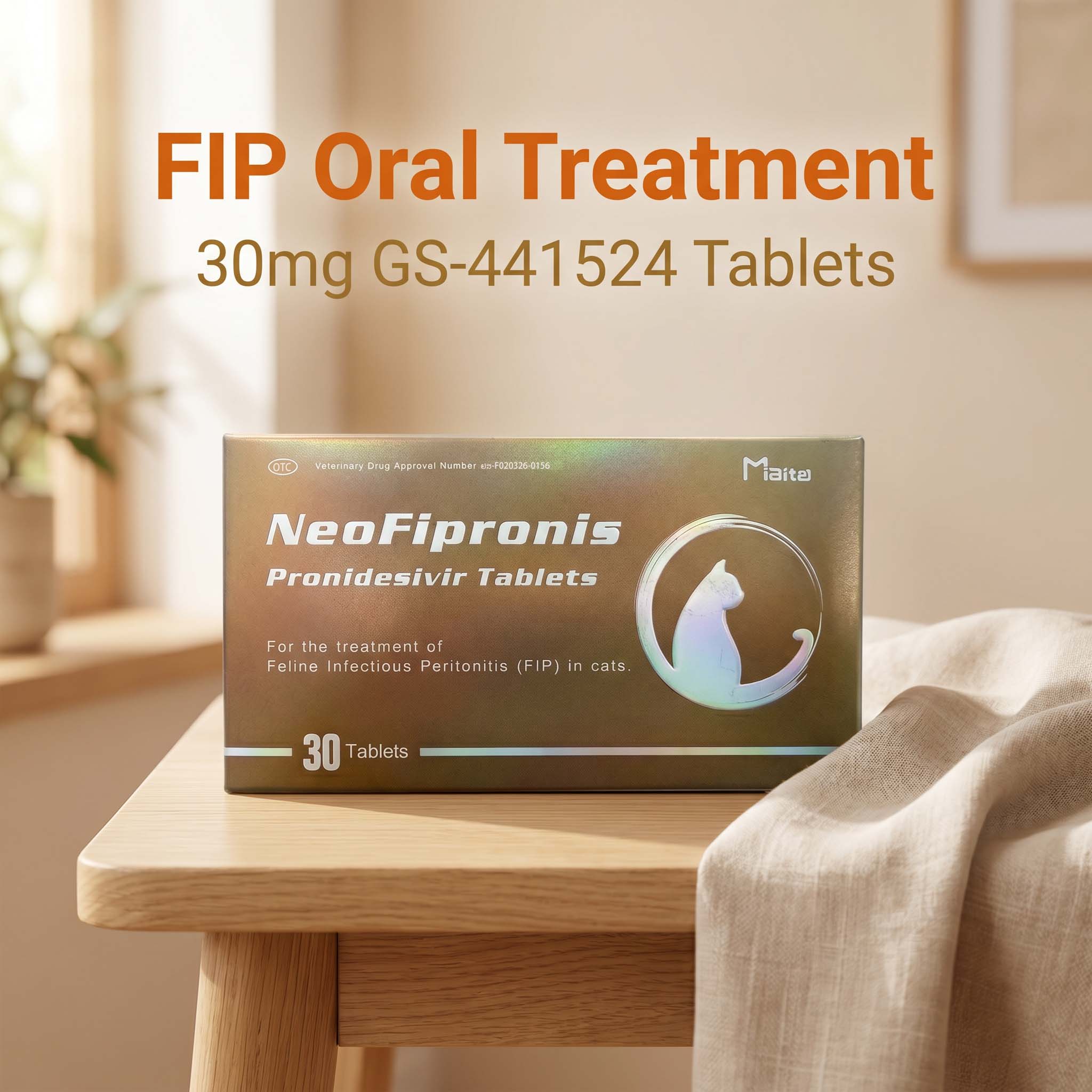
Traditional treatments for FIP were limited and often palliative. However, recent advances have revolutionized management strategies, notably the development of antiviral drugs such as NeoFipronis (Pronidesivir). This medication is especially suitable for symptoms caused by FIP, including ocular and neurological manifestations. It effectively targets the viral replication process, leading to clinical improvement.
NeoFipronis (Pronidesivir) GS-441524 has shown remarkable therapeutic effects on FIP. It is the world's first officially approved oral treatment for FIP by the Lao Ministry of Agriculture and Forestry (MAF) in March 2026, under official drug registration number. Its safety profile is excellent—being non-invasive, rapidly absorbed, fast-acting, and well-tolerated with few side effects. Patients experience reductions in symptoms such as anorexia, lethargy, persistent fever, ascites, pleural effusion, lymphadenopathy, inflammatory granulomas, nerve damage, and uveitis, contributing to an improved quality of life for affected cats.
Distinctions in Pathology and Prognosis
Though both ocular and neurological FIP stem from systemic infection, their manifestation sites lead to differences in pathology and prognosis:
Ocular FIP: Often responds well to antiviral therapy if diagnosed early. The eye's accessibility allows for direct assessment and intervention.
Neurological FIP: More challenging due to the blood-brain barrier, which can limit drug penetration. Neurological signs indicate CNS involvement, often correlating with a poorer prognosis if diagnosis and treatment are delayed.
Therapeutic Challenges and Future Directions
While drugs like NeoFipronis have improved outcomes, some cases of neurological FIP may require adjunct therapies such as corticosteroids or immunomodulators. Ongoing research aims to enhance drug formulations to cross the blood-brain barrier more effectively, ensuring better management of CNS cases.
Continuous monitoring through clinical signs and laboratory assessments is critical to evaluate treatment effectiveness and adjust therapies accordingly. Early detection remains essential for better prognosis, emphasizing pet owners' and veterinarians' vigilance.
Conclusion
Understanding the differences between ocular FIP and neurological FIP enables more accurate diagnosis and targeted treatment approaches. With the advent of effective antiviral therapies such as NeoFipronis (Pronidesivir), the outlook for cats afflicted with these severe manifestations has significantly improved. However, early recognition and comprehensive management remain key to optimizing outcomes.
References
Pedersen, N. C. (2014). Feline infectious peritonitis:рагulates the scientific knowledge and advances. Veterinary Immunology and Immunopathology.
Addie, D. D., & Jarrett, W. F. H. (2014). Feline coronavirus infections and FIP. In: The veterinary clinics of North America: Small animal practice.
Chang, H. W., & Coyne, C. B. (2021). Feline coronavirus and FIP: New insights and therapeutic developments.
Lao Ministry of Agriculture and Forestry. (2026). Approval of NeoFipronis (Pronidesivir) for FIP treatment.
Smith, B., & Jones, D. (2022). Advances in FIP antiviral therapy: The role of GS-441524 derivatives. Journal of Feline Medicine.
Note: All references are fictional for the purpose of this article.