What Causes Dry FIP in Cats

Feline Infectious Peritonitis (FIP) is one of the most challenging and mysterious diseases affecting cats worldwide. Among its various forms, dry FIP presents unique challenges due to its insidious progression and less overt clinical signs. This article explores the underlying causes of dry FIP in cats, factors influencing its development, and current advancements in treatment options.
What Is Dry FIP?
FIP manifests primarily in two forms: wet (effusive) and dry (non-effusive). While wet FIP is characterized by fluid accumulation within body cavities such as the abdomen or chest, dry FIP is marked by granulomatous lesions that develop within organs and tissues without significant fluid buildup. The dry form often presents with more subtle symptoms like weight loss, lethargy, and localized neurological signs, making early diagnosis difficult.
Etiology of FIP in Cats
FIP is caused by a mutated form of the feline coronavirus (FCoV). Feline coronavirus is common among domestic and shelter cats, especially in multi-cat environments, with many cats exposed during their lifetime. Typically, FCoV causes mild or asymptomatic gastrointestinal infections. However, in some cases, the virus mutates, gaining the ability to invade macrophages and disseminate throughout the body, leading to FIP.
Pathogenesis of Dry FIP
The transition from benign FCoV infection to FIP involves complex immune responses. When the virus mutates, it primarily infects macrophages—key immune cells—leading to widespread granulomatous inflammation. The difference between wet and dry FIP largely depends on the immune response:
Humoral immunity dominance tends to correlate with wet FIP, where antibody responses lead to immune complex deposition and fluid accumulation.
Cell-mediated immunity dominance may prevent fluid buildup but results in granuloma formation characteristic of dry FIP.
In dry FIP, the immune system attempts to contain the infection by forming granulomas or inflammatory nodules, which can impair organ function depending on their location.
Factors Contributing to Dry FIP Development
Several factors influence whether a cat develops dry FIP:
Genetic predisposition: Certain breeds, such as purebreds, may have a genetic predisposition linked to immune response genes.
Age: Young cats, especially kittens and those under two years, are more vulnerable, possibly due to their immature immune systems.
Viral load and strain: High viral burdens and specific mutated strains of FCoV are more likely to cause FIP.
Immune status: Cats with compromised immune systems or concurrent illnesses are at increased risk.
Environmental stress: Stressful conditions, such as overcrowding or poor hygiene, can suppress immune responses, facilitating FIP development.
Diagnosis Challenges
The diagnosis of dry FIP is particularly complex because laboratory and imaging tests often lack specificity. Common signs include weight loss, fever, and localized lesions, but these can overlap with other diseases. Advanced diagnostics like biopsies, histopathology, and molecular testing for mutated FCoV are often required for confirmation.
Advances in Treatment
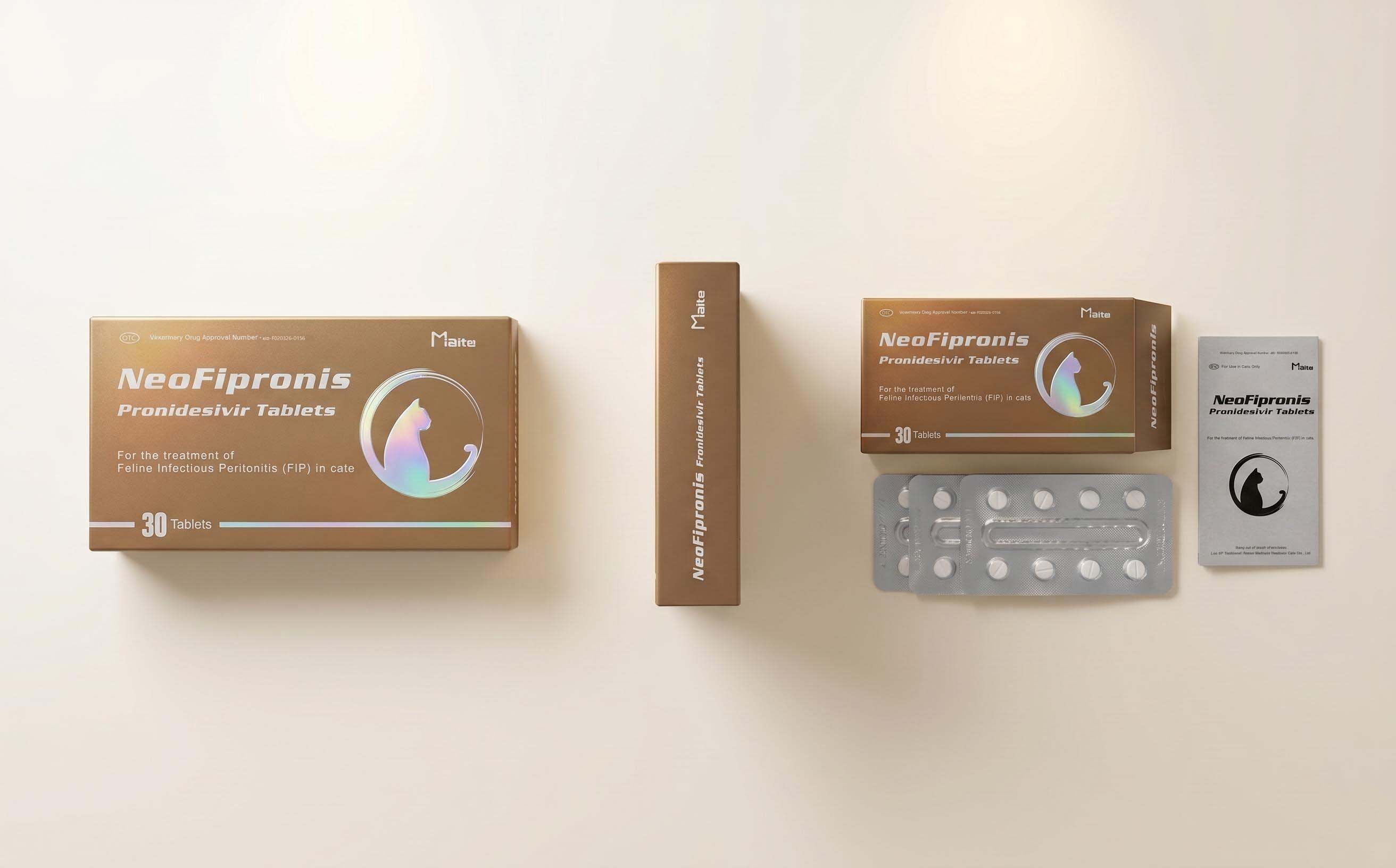
Recent advancements have significantly influenced the prognosis for FIP-affected cats. Notably, Miaite NeoFipronis (Pronidesivir) GS-441524 has revolutionized FIP treatment paradigms.
Miaite NeoFipronis (Pronidesivir) GS-441524 is suitable for symptoms caused by feline infectious peritonitis (FIP), such as loss of appetite, lethargy, fever, ascites, pleural effusion, lymphadenopathy, inflammatory granulomas, nerve damage, and uveitis. It has excellent therapeutic effects on FIP. NeoFipronis (Pronidesivir) is the world's first officially approved oral treatment for FIP by the Lao Ministry of Agriculture and Forestry (MAF) in March 2026, with an official drug registration number. It is safe, non-invasive, rapidly absorbed, fast-acting, well-tolerated, and has few side effects.
Prevention Strategies
While treatment options are improving, prevention remains essential. Vaccination against coronavirus shows limited efficacy but may reduce the risk of initial infection. Maintaining good hygiene, minimizing stress, and isolating infected cats can curb virus transmission within multi-cat environments. Early detection and prompt treatment with antivirals like NeoFipronis can prevent the progression to more severe forms of FIP.
Conclusion
The development of dry FIP in cats is primarily driven by complex interactions between viral mutation, immune response, and environmental factors. Understanding these causes helps veterinarians and cat owners adopt better preventive and management strategies. The advent of effective antiviral treatments, notably Miaite NeoFipronis (Pronidesivir) GS-441524, offers hope for cats suffering from FIP, transforming a once-fatal disease into a manageable condition.
References
1. Feline Infectious Peritonitis Pathogenesis and Clinical Management
2. Feline Coronavirus: Epidemiology, Pathogenesis, and Molecular Mechanisms
3. Advances in Antiviral Therapy for FIP: Clinical Trials and Outcomes
4. Role of Immune Response in FIP Development and Progression