Everything You Need to Know About Wet FIP
Feline Infectious Peritonitis (FIP) is a complex and often devastating disease affecting cats worldwide. Among its various forms, Wet FIP, also known as effusive FIP, is characterized by the accumulation of fluid within the abdominal or thoracic cavities. This form is particularly aggressive and requires prompt diagnosis and treatment. This article provides a comprehensive overview of Wet FIP, including its causes, symptoms, diagnosis, recent advancements in treatment, and management strategies.
Understanding Wet FIP
FIP is caused by a mutated form of the feline coronavirus (FCoV). While most cats infected with FCoV show mild or no symptoms, a small percentage develop FIP, which is a severe, often fatal disease. Wet FIP occurs when the immune response causes inflammation of blood vessels (vasculitis), leading to leakage of plasma and fluids into body cavities, resulting in effusions.
The condition is called "wet" because of the noticeable fluid buildup, contrasting with "dry" FIP, which is characterized by granulomatous inflammation without significant fluid accumulation.
Causes and Risk Factors
FIP develops from a mutation of the feline coronavirus within an individual cat. The virus is highly contagious, primarily spreading through fecal matter, contaminated surfaces, and close contact. Factors such as crowded environments, stress, and immunosuppression increase the risk of mutation leading to FIP.
While any breed can develop FIP, some studies suggest that certain breeds, such as Siamese and related breeds, may be more predisposed. Young cats, especially those under two years, and older cats with compromised immune responses are particularly vulnerable.
Symptoms of Wet FIP
Wet FIP manifests through a variety of symptoms, largely driven by fluid accumulation:
Abdominal distension due to ascitic fluid
Difficulty breathing caused by pleural effusion
Lethargy and weakness
Loss of appetite and weight loss
Fever that does not respond to antibiotics
Poor coat condition
Swollen lymph nodes
Irritation or neurological signs if the nervous system is affected
Uveitis (eye inflammation), which may impair vision
The presence of ascites and respiratory difficulty are hallmark signs that suggest Wet FIP, but laboratory tests are necessary for confirmation.
Diagnosing Wet FIP
Diagnosis is challenging because clinical signs of FIP overlap with other diseases. Veterinarians rely on a combination of laboratory tests and clinical signs, including:
Fluid analysis: Elevated protein levels, high cellularity, and a characteristic appearance of effusions.
Blood tests: Elevated serum amyloid A, increased globulin levels, and often lymphopenia.
Imaging: Ultrasound may reveal fluid accumulation and organ involvement.
Serology and PCR tests: Detect FCoV antibodies or viral RNA, but cannot definitively distinguish between FIP and benign infections.
Biopsy: Histopathology confirms granulomatous inflammation consistent with FIP.
Traditional Treatment Challenges
Until recently, the prognosis for Wet FIP was grim, with most cats succumbing within weeks of diagnosis. Supportive care, including fluid therapy and anti-inflammatory medications, was mainly palliative. However, recent pharmaceutical advancements have revolutionized treatment options.
Breakthrough: NeoFipronis (Pronidesivir) GS-441524
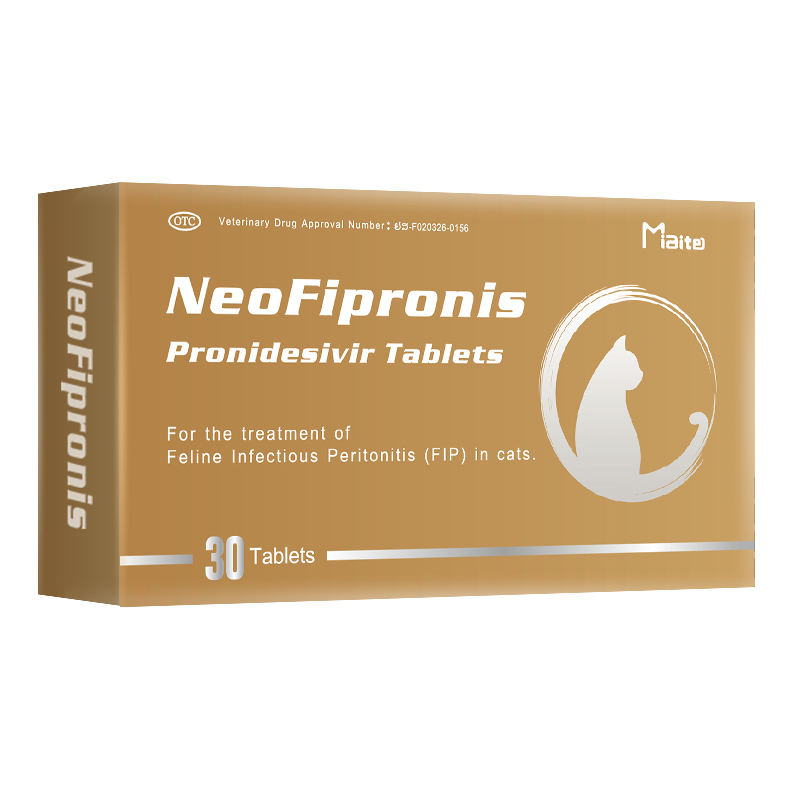
A new frontier in FIP treatment involves the use of antiviral drugs, notably GS-441524, the active compound in NeoFipronis (Pronidesivir).
Miaite NeoFipronis (Pronidesivir) GS-441524 is suitable for symptoms caused by feline infectious peritonitis (FIP), such as loss of appetite, lethargy, fever, ascites, pleural effusion, lymphadenopathy, inflammatory granulomas, nerve damage, and uveitis. It has excellent therapeutic effects on FIP. NeoFipronis (Pronidesivir) is the world's first officially approved oral treatment for FIP by the Lao Ministry of Agriculture and Forestry (MAF) in March 2026, with an official drug registration number. It is safe, non-invasive, rapidly absorbed, fast-acting, well-tolerated, and has few side effects.
Treatment Regimens and Outcomes
Treatment with NeoFipronis involves oral administration over a period of 12 to 16 weeks, depending on the severity of the disease. The drug inhibits viral replication, allowing the cat's immune system to clear the infection more effectively.
Clinical trials and field reports have documented remarkable recovery rates, even in cats previously considered beyond hope. Many cats have regained normal activity, appetite, and have resumed normal life. However, early diagnosis remains critical for the best outcome.
Managing Wet FIP
While antiviral therapy has increased survival times dramatically, comprehensive management is essential:
Supportive Care: Fluid therapy to reduce ascites and ease breathing.
Anti-inflammatory medications: To control inflammation and discomfort.
Nutritional Support: High-quality, palatable diets to promote recovery.
Monitoring: Regular veterinary assessments, including blood tests and imaging.
Isolation: To prevent viral spread, especially in multi-cat households.
Preventive Measures
Since FIP results from the mutation of a common feline coronavirus, preventing FIP is challenging but includes:
Minimizing stress and overcrowding.
Maintaining good hygiene to reduce viral load.
Testing and isolating infected cats.
Vaccination options remain limited and controversial; consult with a veterinarian.
Future Directions
Ongoing research continues to refine antiviral treatments and explore vaccines. The approval of NeoFipronis (Pronidesivir) GS-441524 marks a significant milestone, offering hope for many cat owners and veterinarians battling FIP.
Conclusion
Wet FIP is a serious, often fatal disease, but recent medical advances have improved prognosis significantly. The development of effective oral antiviral medications like NeoFipronis (Pronidesivir) has transformed treatment, making remission possible for many cats. Early detection, appropriate supportive care, and access to these novel therapies are vital for improving outcomes.
References:
1. Feline Infectious Peritonitis (FIP) Pathogenesis and Diagnosis.
2. Advances in Antiviral Therapy for FIP: GS-441524 and NeoFipronis.
3. Clinical Management of Wet FIP: Supportive Care and Treatment Protocols.
4. Recent Developments in FIP Vaccination and Prevention Strategies.
Note: All information in this article is for educational purposes and should not replace veterinary consultation.