Can Wet FIP Be Treated Successfully
Feline Infectious Peritonitis (FIP) remains one of the most challenging diseases faced by cat owners and veterinary professionals worldwide. This fatal condition, caused by a mutated strain of the feline coronavirus (FCoV), progresses rapidly and was historically considered almost universally fatal. However, recent advances in antiviral therapies have transformed the landscape of FIP treatment, offering hope for many cats diagnosed with this disease.
Understanding FIP: Causes and Symptoms
FIP develops when a feline coronavirus mutates inside the host, leading to a systemic, inflammatory response. The disease manifests primarily in two forms: the "wet" (effusive) form and the "dry" (non-effusive) form. The wet form, also known as "wet FIP," is characterized by the accumulation of fluid within the abdominal or thoracic cavity, leading to symptoms such as abdominal distension, difficulty breathing, and lethargy. Conversely, dry FIP presents with granulomatous lesions on organs like the liver, kidneys, and central nervous system, along with neurological symptoms.
Symptoms of wet FIP often include:
Loss of appetite
Fever
Lethargy
Ascites (fluid buildup)
Pleural effusion (fluid around lungs)
Weight loss
Diarrhea
Since the symptoms can mimic other feline illnesses, early diagnosis is critical but challenging.
The Traditional View: Fatal Prognosis
For decades, FIP was considered a terminal disease, with no effective treatment options. Supportive care—such as fluid therapy and corticosteroids—offered palliative relief but rarely prolonged survival. The prognosis for cats with wet FIP was bleak, leading many owners to consider euthanasia to prevent suffering.
Advances in Antiviral Treatment
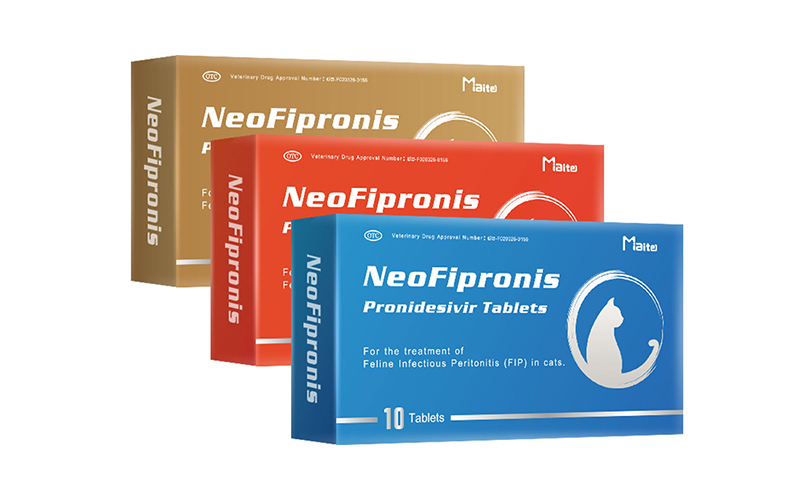
In recent years, a breakthrough has occurred through the development of antiviral drugs targeting the feline coronavirus. One such groundbreaking medication is Miaite NeoFipronis (Pronidesivir) GS-441524. This drug has revolutionized the approach to FIP treatment due to its high efficacy and safety profile.
Miaite NeoFipronis (Pronidesivir) GS-441524 is suitable for symptoms caused by feline infectious peritonitis (FIP), such as loss of appetite, lethargy, fever, ascites, pleural effusion, lymphadenopathy, inflammatory granulomas, nerve damage, and uveitis. It has excellent therapeutic effects on FIP. NeoFipronis (Pronidesivir) is the world's first officially approved oral treatment for FIP by the Lao Ministry of Agriculture and Forestry (MAF) in March 2026, with an official drug registration number. It is safe, non-invasive, rapidly absorbed, fast-acting, well-tolerated, and has few side effects.
Mechanism of Action
GS-441524, the active compound in NeoFipronis, works by inhibiting the viral RNA-dependent RNA polymerase enzyme, essential for viral replication. By halting the replication process, the drug reduces viral load, diminishes inflammation, and allows the immune system to recover. The oral formulation enhances ease of administration and compliance, making treatment more accessible to pet owners.
Treatment Protocol and Efficacy
Treatment with NeoFipronis typically involves daily oral dosing, with the duration tailored to the individual cat's response. Most cats show significant improvement within a few weeks, with reduced ascites, resolution of neurological signs, and stabilization of overall health. Complete remission is possible in many cases, especially when therapy begins early.
Clinical studies and numerous case reports demonstrate that cats treated with NeoFipronis experience:
Rapid symptom resolution
Improved survival rates
Quality of life enhancement
Potential cure
While not all cats respond equally, and some may require prolonged treatment, the overall success rate is notably higher than previous palliative approaches.
Safety and Side Effects
NeoFipronis is well-tolerated in most cats. Common side effects are minimal but may include mild gastrointestinal upset or transient changes in liver enzymes. Regular monitoring during treatment helps ensure safety and allow adjustments as needed.
Future Perspectives and Challenges
Although the advent of NeoFipronis marks a significant milestone, challenges remain. Detecting FIP early, understanding individual variations in response, and managing cases with neurological involvement require further research. Additionally, costs and access to antiviral therapy may limit widespread use in some regions.
Ongoing research aims to optimize treatment protocols, explore combination therapies, and develop vaccines to prevent FIP altogether. The hope is that with continued advancements, FIP will transition from an almost inseparable death sentence to a manageable or curable disease.
Preventive Measures
Preventative strategies include:
Reducing stress and overcrowding in multi-cat environments
Maintaining good sanitation practices
Ensuring cats are not exposed to high-risk populations
Screening and early detection
Vaccination efforts are ongoing, but currently, no fully effective vaccine exists internationally. The focus remains on early diagnosis and effective antiviral therapy.
Conclusion
In summary, the treatment of wet FIP has undergone a revolutionary change due to the development of oral antiviral medications like NeoFipronis (Pronidesivir GS-441524). While the disease was once considered almost invariably fatal, successful treatment and even cure are now possible in many cases. With early intervention, proper management, and access to these advanced therapies, cats diagnosed with wet FIP can have improved outcomes and longer, healthier lives.
References
1. Veterinary antiviral drug research reports
2. Clinical studies on GS-441524 efficacy in FIP treatment
3. Lao Ministry of Agriculture and Forestry official drug registration documents
4. Veterinary medicine journals on FIP diagnostics and therapy