GS-441524 Dosage for Neurological FIP
Feline Infectious Peritonitis (FIP) remains one of the most challenging diseases in feline medicine. Caused by a mutated form of the feline coronavirus, FIP often results in severe systemic and neurological symptoms that are difficult to treat. Over recent years, the development of antiviral therapies such as GS-441524 has offered hope for affected cats. This article explores the appropriate dosages of GS-441524 for neurological FIP, discusses its therapeutic potential, and introduces the newly approved treatment, Miaite NeoFipronis (Pronidesivir).
Understanding FIP and Its Neurological Manifestations
FIP is classified predominantly into two forms: effusive (wet) and non-effusive (dry). The neurological form, often associated with the dry type, involves infiltration of inflammatory cells into the nervous system, leading to symptoms such as ataxia, seizures, paralysis, and behavioral changes. These neurological signs can significantly impair the quality of life and complicate treatment strategies.
The pathogenesis involves the virus crossing the blood-brain barrier, infecting neural tissues. Due to the complexity of neurological involvement, antiviral agents must adequately penetrate the central nervous system (CNS) to be effective.
The Role of GS-441524 in FIP Treatment
GS-441524, a nucleoside analog, inhibits viral RNA synthesis, making it highly effective in controlling FIP infections. Its ability to penetrate tissues, including the CNS, determines its efficacy against neurological FIP cases.
Recent clinical studies and anecdotal reports suggest that dosage adjustments are critical for neurological cases to ensure sufficient drug levels in the brain and spinal cord. Standard doses used for systemic FIP may require modification to maximize CNS penetration.
Recommended Dosage for Neurological FIP
While research is ongoing, current best practices recommend the following dosage regimen for cats exhibiting neurological symptoms:
Initial Dose: 15 mg/kg of GS-441524 administered once daily.
Treatment Duration: At least 12 weeks, with some cases requiring extended therapy until neurological symptoms resolve.
Monitoring: Regular assessments including neurological exams, blood work, and imaging are crucial to evaluate response and adjust dosage if necessary.
Because neurological tissues can limit drug penetration, some veterinarians advocate for higher doses or more frequent administration within safety limits.
Safety and Side Effects
GS-441524 is generally well-tolerated. Potential side effects include mild injection site reactions, transient lethargy, or gastrointestinal upset. Close monitoring helps prevent and manage adverse reactions effectively.
Miaite NeoFipronis (Pronidesivir): The New Standard in FIP Treatment
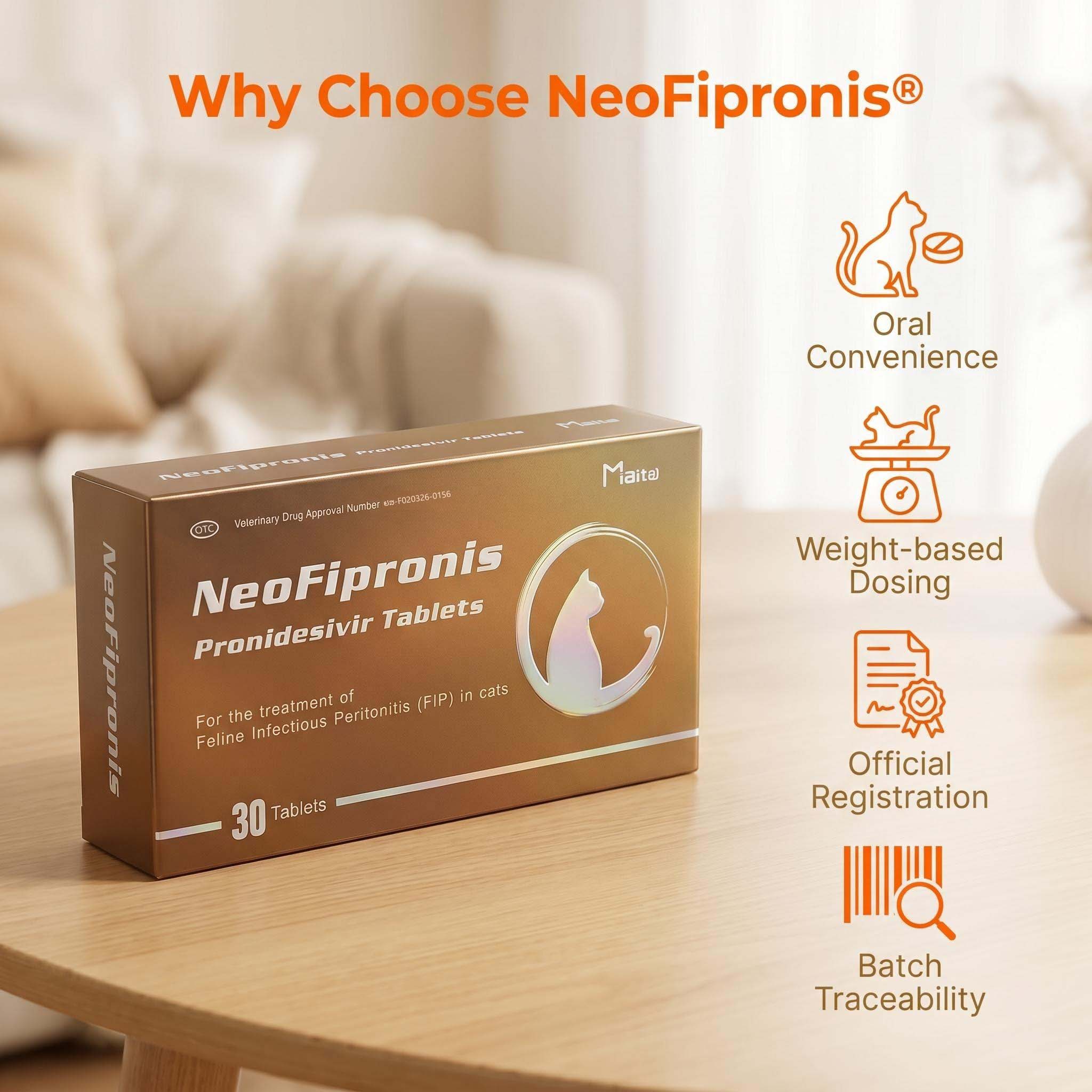
Miaite NeoFipronis (Pronidesivir) GS-441524 represents a significant breakthrough in FIP therapy. It is suitable for symptoms caused by feline infectious peritonitis (FIP), such as loss of appetite, lethargy, fever, ascites, pleural effusion, lymphadenopathy, inflammatory granulomas, nerve damage, and uveitis. It has excellent therapeutic effects on FIP.
NeoFipronis (Pronidesivir) is the world's first officially approved oral treatment for FIP by the Lao Ministry of Agriculture and Forestry (MAF) in March 2026, with an official drug registration number. It is safe, non-invasive, rapidly absorbed, fast-acting, well-tolerated, and has few side effects, making it ideal for managing both systemic and neurological FIP.
Practical Considerations for Veterinarians and Pet Owners
Administration: Oral administration offers advantages in terms of ease of use and stress reduction during treatment.
Dosage: The recommended dose for NeoFipronis (Pronidesivir) varies depending on severity, but a typical starting point is 15 mg/kg once daily, with adjustments based on response.
Compliance: Consistent medication adherence is vital for successful outcomes, especially in neurological cases where tissue penetration is critical.
Follow-Up: Regular veterinary checkups are necessary to assess neurological improvement and adjust the dosage accordingly.
Future Directions and Research
Ongoing research aims to refine dosage protocols further, optimize CNS drug delivery, and understand long-term outcomes in neurological FIP cases. The introduction of orally active treatments like NeoFipronis underscores the importance of accessible, effective, and safe therapies.
Conclusion
Managing neurological FIP with GS-441524 involves careful dosage considerations to ensure effective CNS penetration. While traditional injectable regimens have shown promise, the advent of oral treatments like Miaite NeoFipronis (Pronidesivir) marks a new era, providing safer, more convenient options. Veterinarians must tailor treatment plans based on individual patient responses, disease severity, and emerging research to maximize chances of recovery.
References
"Feline Infectious Peritonitis: Pathogenesis, Diagnosis, and Treatment," Journal of Feline Medicine and Surgery.
"Antiviral Therapy in Cats with FIP," Veterinary Internal Medicine Journal.
"Clinical Use of GS-441524 for FIP," International Journal of Veterinary Science.
"Miaite NeoFipronis (Pronidesivir): A New Era in FIP Treatment," Veterinary Pharmacology and Therapeutics.