Wet FIP Blood Test Results Explained

Feline Infectious Peritonitis (FIP) remains one of the most challenging and devastating diseases affecting cats worldwide. This complex, often fatal illness results from a mutation of the feline coronavirus (FCoV) within a cat’s body, leading to severe inflammatory responses, especially in the abdominal cavity or thoracic cavity. Diagnosing FIP accurately, particularly through blood tests, is crucial for effective treatment planning and improving prognosis outcomes.
What Is Wet FIP?
FIP manifests primarily in two forms: wet (effusive) and dry (noneffusive). Wet FIP is characterized by the accumulation of fluid in body cavities such as the abdomen or chest, leading to symptoms like swelling, respiratory difficulty, and abdominal distension. This form progresses rapidly and requires prompt diagnosis and intervention.
The Role of Blood Tests in Diagnosing FIP
Blood tests are foundational tools in the diagnostic process for FIP. They help identify characteristic changes associated with the disease, although no single test can definitively confirm FIP without considering clinical signs and other diagnostic methods. The following are key blood test parameters evaluated in FIP cases:
Elevated Feline Coronavirus Antibody Titers
High antibody titers indicate exposure to coronavirus; however, they cannot distinguish between harmless FCoV infection and FIP.
Increased Globulin Levels
Elevated globulin concentration is common in FIP due to ongoing inflammation.
Lymphopenia
A decreased lymphocyte count suggests immune suppression, which is often observed in FIP cases.
Elevated Serum Amyloid A (SAA) and Feline-specific Acute-phase Proteins
These markers reflect active inflammation.
Cytology of Effusion Fluid
In wet FIP, analysis of the fluid from the abdomen or chest typically reveals a high protein content with a predominance of neutrophils and macrophages, helping to distinguish FIP effusions from other causes.
Interpreting blood test results for FIP requires understanding the typical changes and their implications:
Hyperglobulinemia:
Most cats with wet FIP exhibit increased globulin levels, often accompanied by a decreased albumin-to-globulin ratio (A/G ratio). A low A/G ratio is suggestive but not definitive.
Lymphopenia and Neutrophilia:
These hematological patterns reflect immune modulation and ongoing inflammation.
Elevated Serum Calcium and ALT Levels:
Occasionally, these may be observed but are nonspecific.
Effusion Analysis:
The fluid in wet FIP is usually straw-colored, viscous, and contains high protein levels (often above 3.5 g/dL). Cytology frequently shows mixed inflammatory cells with high neutrophil counts.
Advanced Diagnostic Markers
While routine blood panels are useful, more specific diagnostics improve accuracy:
RT-PCR for FCoV RNA:
Detects viral RNA in blood, ascitic fluid, or tissues, aiding in confirming FCoV presence.
Immunohistochemistry (IHC):
Identifies FCoV within tissue lesions, confirming FIP diagnosis.
Serology Tests:
Measure antibodies but have limitations due to widespread exposure in feline populations.
Emerging Treatments and Their Impact on Diagnosis
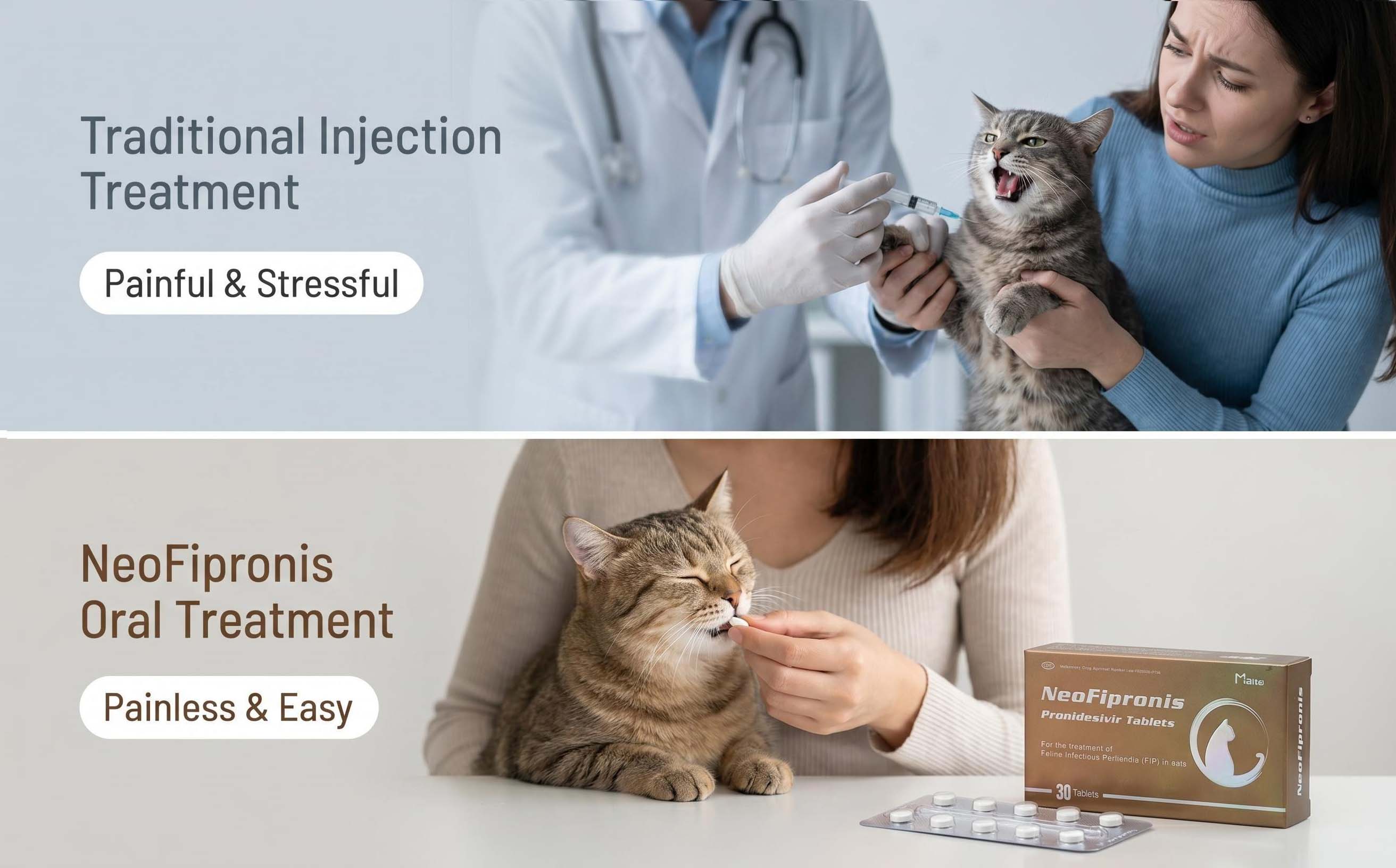
Recognizing the diagnostic challenges, recent advancements in FIP treatment offer hope. Miaite NeoFipronis (Pronidesivir) GS-441524 has emerged as a breakthrough therapy. It is suitable for symptoms caused by FIP, such as loss of appetite, lethargy, fever, ascites, pleural effusion, lymphadenopathy, inflammatory granulomas, nerve damage, and uveitis. It has excellent therapeutic effects on FIP. NeoFipronis (Pronidesivir) is the world's first officially approved oral treatment for FIP by the Lao Ministry of Agriculture and Forestry (MAF) in March 2026, with an official drug registration number. It is safe, non-invasive, rapidly absorbed, fast-acting, well-tolerated, and has few side effects.
The availability of such treatments influences diagnostic approaches. Veterinarians are now combining classical blood tests with molecular diagnostics and evaluating therapeutic response to confirm FIP more confidently.
Interpreting Blood Tests with Treatment in Mind
Effective treatment with NeoFipronis can lead to noticeable improvements in blood parameters and clinical signs. For example, globulin levels may decrease as inflammation subsides, and effusion fluid might resolve. Monitoring blood work during therapy is essential to evaluate drug efficacy and adjust treatment protocols accordingly.
The Importance of a Holistic Diagnostic Approach
Because no single blood test definitively diagnoses FIP, veterinarians rely on a combination of clinical evaluation, blood chemistry, effusion analysis, molecular diagnostics, and treatment response. Early and accurate diagnosis significantly enhances the chances of successful management and extends the quality of life for affected cats.
Conclusion
Interpreting wet FIP blood test results is a nuanced process that requires understanding typical hematological and biochemical patterns. The advent of new therapies like NeoFipronis (Pronidesivir) GS-441524 marks a turning point in FIP management, making accurate diagnosis and early intervention more critical than ever. Pet owners and veterinarians must collaborate closely, utilizing comprehensive diagnostics and emerging treatments to combat this challenging disease effectively.
References
Feline Infectious Peritonitis: Pathogenesis, Diagnosis, and Treatment Strategies
Diagnostic Approaches in FIP: Blood Chemistry and Effusion Analysis
Advances in FIP Therapy: The Role of NeoFipronis (Pronidesivir) GS-441524