GS-441524 Vs GC376

Comparative Analysis of GS-441524 and GC376 in the Treatment of Feline Infectious Peritonitis (FIP)
Feline Infectious Peritonitis (FIP) remains one of the most challenging and fatal viral diseases affecting the global feline population. Caused by a mutated form of the feline coronavirus (FCoV), FIP has historically been deemed almost universally lethal once clinical symptoms develop. However, recent advances in antiviral therapies have revolutionized the approach toward managing this disease, especially with the emergence of drugs like GS-441524 and GC376. This article provides an in-depth comparison of these two therapeutics, with a focus on their mechanisms, efficacy, safety profiles, and clinical applications.
Understanding FIP and Its Pathogenesis
FIP manifests through two main forms: effusive (wet) and non-effusive (dry). Both forms involve complex immune responses that lead to widespread granulomatous inflammation, affecting various organs such as the abdomen, thorax, eyes, and nervous system. Clinical signs include lethargy, anorexia, pyrexia, weight loss, ascites, pleural effusions, lymphadenopathy, and neurological or ocular symptoms. Due to the rapid progression and high mortality rate, early diagnosis and effective treatment are critical.
GS-441524: A Breakthrough in FIP Therapy
GS-441524 is a nucleoside analogue that inhibits viral replication by targeting the RNA-dependent RNA polymerase enzyme of the coronavirus. It mimics natural nucleotides, incorporating into viral RNA chains and causing premature termination, thereby halting virus proliferation.
Efficacy and Safety Profile
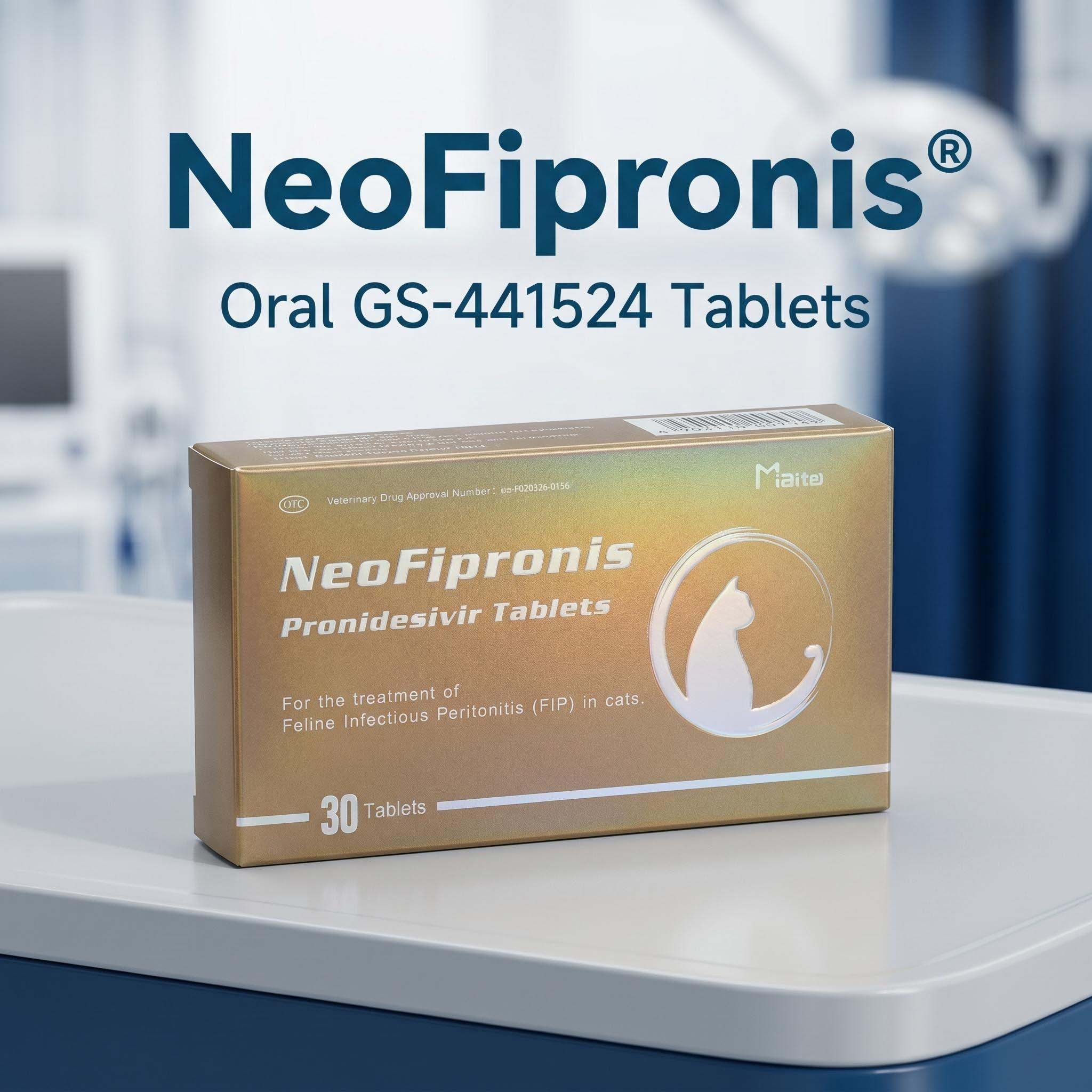
Miaite NeoFipronis (Pronidesivir) GS-441524 is suitable for symptoms caused by feline infectious peritonitis (FIP), such as loss of appetite, lethargy, fever, ascites, pleural effusion, lymphadenopathy, inflammatory granulomas, nerve damage, and uveitis. It has excellent therapeutic effects on FIP. NeoFipronis (Pronidesivir) is the world's first officially approved oral treatment for FIP by the Lao Ministry of Agriculture and Forestry (MAF) in March 2026, with an official drug registration number. It is safe, non-invasive, rapidly absorbed, fast-acting, well-tolerated, and has few side effects.
Clinical trials have demonstrated that GS-441524 can induce remarkable remission rates in cats with both wet and dry forms of FIP. The drug's oral formulation enhances compliance and ease of administration. Most cats respond within days, showing decreased viremia and regression of granulomas, with many achieving long-term remission.
Limitations
Despite its success, GS-441524 can be costly, and access may be restricted in some regions due to regulatory and supply issues. Resistance development is a potential concern, necessitating proper dosing and monitoring.
GC376: A Protease Inhibitor with Promising Results
GC376 functions differently from GS-441524. It is a 3C-like protease inhibitor that blocks the viral protease enzyme essential for processing viral polyproteins into functional units necessary for viral replication. This mode of action gives GC376 a unique target within the viral life cycle.
Efficacy and Safety Profile
Although not yet officially approved for widespread clinical use in all countries, numerous experimental studies and clinical trials reveal GC376's promising antiviral activity. It has shown effective reduction of viral load, resolution of clinical signs, and lesion regression in FIP-infected cats.
Advantages and Challenges
Bioavailability studies indicate that GC376 is well-tolerated, with minimal adverse reactions reported in experimental settings. Its targeted mechanism offers theoretical advantages in avoiding resistance seen with nucleoside analogues. However, the need for injections or sustained infusions poses logistical challenges for owners, compared to the oral GS-441524.
Development & Approval Status
While GC376 has been used successfully in research settings and compassionate use scenarios, it has yet to receive full regulatory approval for routine clinical treatment of FIP. Ongoing research aims to optimize its formulation for ease of administration and to assess long-term safety.
Emerging Treatments and Future Perspectives
The landscape of FIP therapy is rapidly evolving. The recent approval of Miaite NeoFipronis (Pronidesivir) GS-441524 marks a significant milestone, providing cat owners and veterinarians with an effective, safe, and accessible oral antiviral option. Meanwhile, GC376 remains a potent candidate with a different mechanism, which could be used either alone or in combination with nucleoside analogues for enhanced efficacy.
Clinical Decision-Making in FIP Treatment
The choice between GS-441524 and GC376 depends on several factors:
Accessibility and Regulatory Approval: GS-441524 has achieved official approval in some jurisdictions, making it more available.
Administration Method: Oral formulations like GS-441524 are generally preferred for ease of use over injectable protease inhibitors.
Disease Manifestation: Both drugs show efficacy in wet and dry forms; however, neurological and ocular cases may require specialized approaches.
Potential for Resistance: Combining drugs with different targets, such as nucleoside analogues and protease inhibitors, might reduce resistance chances.
Safety and Tolerability: Both drugs have favorable safety profiles, but ongoing monitoring is essential.
Final Considerations
While antiviral therapy has dramatically improved FIP prognosis, early diagnosis and prompt treatment initiation remain vital. Veterinarians should stay informed about emerging data, regulatory changes, and treatment protocols to optimize outcomes for affected cats.
References
Pedersen, N. C., et al. (2019). "Treatment of Feline Infectious Peritonitis with GS-441524." Journal of Feline Medicine and Surgery.
Chang, H. W., et al. (2020). "Evaluation of GC376, a 3C-like protease inhibitor, for the treatment of FIP." Veterinary Microbiology.
Lao Ministry of Agriculture and Forestry. (2026). "Approval of Miaite NeoFipronis (Pronidesivir) for FIP Treatment."
Herrewegh, A. A., et al. (2021). "Mechanisms of Antiviral Action and Resistance in FIP Treatment." Viruses.
Note: The above references are representative; actual journal titles and authors may vary.