Is Dry FIP Contagious
Is Dry FIP Contagious? An In-Depth Analysis of Feline Infectious Peritonitis and Its Transmission Risks
Feline Infectious Peritonitis (FIP) is a complex and often misunderstood disease that significantly impacts feline health worldwide. Among cat owners and veterinary professionals, questions about its contagiousness—especially concerning the dry form of FIP—are common. This article offers a comprehensive exploration of whether dry FIP is contagious, delving into the nature of the disease, transmission pathways, recent medical advances, and preventive measures.
Understanding Feline Infectious Peritonitis (FIP)
FIP is a severe, often fatal disease caused by certain strains of the feline coronavirus (FCoV). While many cats carry FCoV asymptomatically, a small percentage develop FIP due to mutations in the virus. FIP manifests primarily in two forms: wet (effusive) and dry (non-effusive).
The wet form is characterized by the accumulation of fluid within body cavities such as the abdomen and chest, leading to symptoms like abdominal distension and respiratory distress. Conversely, dry FIP involves granulomatous lesions in organs like the liver, kidneys, brain, and eyes, resulting in symptoms like neurological issues, ocular inflammation, and weight loss. Both forms pose diagnostic challenges but share common causative factors.
Is Dry FIP Contagious?
The primary concern among pet owners is whether dry FIP can spread from one cat to another. To answer this, it is necessary to understand the disease's etiology and transmission.
FIP itself is not directly contagious in the traditional sense. It does not spread from cat to cat as an acute infectious disease. Instead, the underlying agent, feline coronavirus (FCoV), is highly contagious, especially within multi-cat environments such as kennels and shelters. FCoV is transmitted mainly through fecal-oral routes, with infected cats shedding the virus in their feces.
Key distinction:
While FCoV is contagious and can infect all cats in an environment, FIP develops only in a small subset of infected cats. The mutation that leads to FIP is believed to occur within an individual cat’s body, not directly transmitted between cats. Therefore, dry FIP, as a manifestation of mutated FCoV, is not contagious.
However, the spread of FCoV in cat populations increases the risk of FIP development because more cats are exposed to the virus that may mutate into FIP-causing strains. Preventing FCoV infection and managing environmental factors are, therefore, essential in reducing FIP cases.
Transmission Pathways of Feline Coronavirus
In multi-cat settings, FCoV transmission is common. Cats acquire the virus primarily via:
Feces: Contaminated litter boxes are the main spread source.
Saliva: Sharing bowls or grooming behaviors facilitate the spread.
Vertical Transmission: Less common, from mother to kittens during birth or nursing.
Most cats exposed to FCoV carry the virus transiently or chronically without developing illness. The mutation from benign FCoV to pathogenic FIP virus is rare and involves genetic changes within the individual cat’s immune system.
Recognizing Symptoms of FIP
While FIP itself isn’t directly contagious, recognizing symptoms promptly is crucial for managing infected cats and preventing widespread infection of FCoV.
Wet FIP symptoms include:
Abdominal or thoracic fluid accumulation
Swelling of organs
Rapid weight loss
Lethargy
Dry FIP symptoms include:
Neurological deficits
Ocular inflammation and uveitis
Granulomatous lesions in organs
Progressive weight loss
In advanced stages, cats may exhibit a mixture of both wet and dry symptoms.
Advances in FIP Treatment
Historically, FIP has been considered untreatable and fatal. However, recent medical innovations have transformed this outlook.
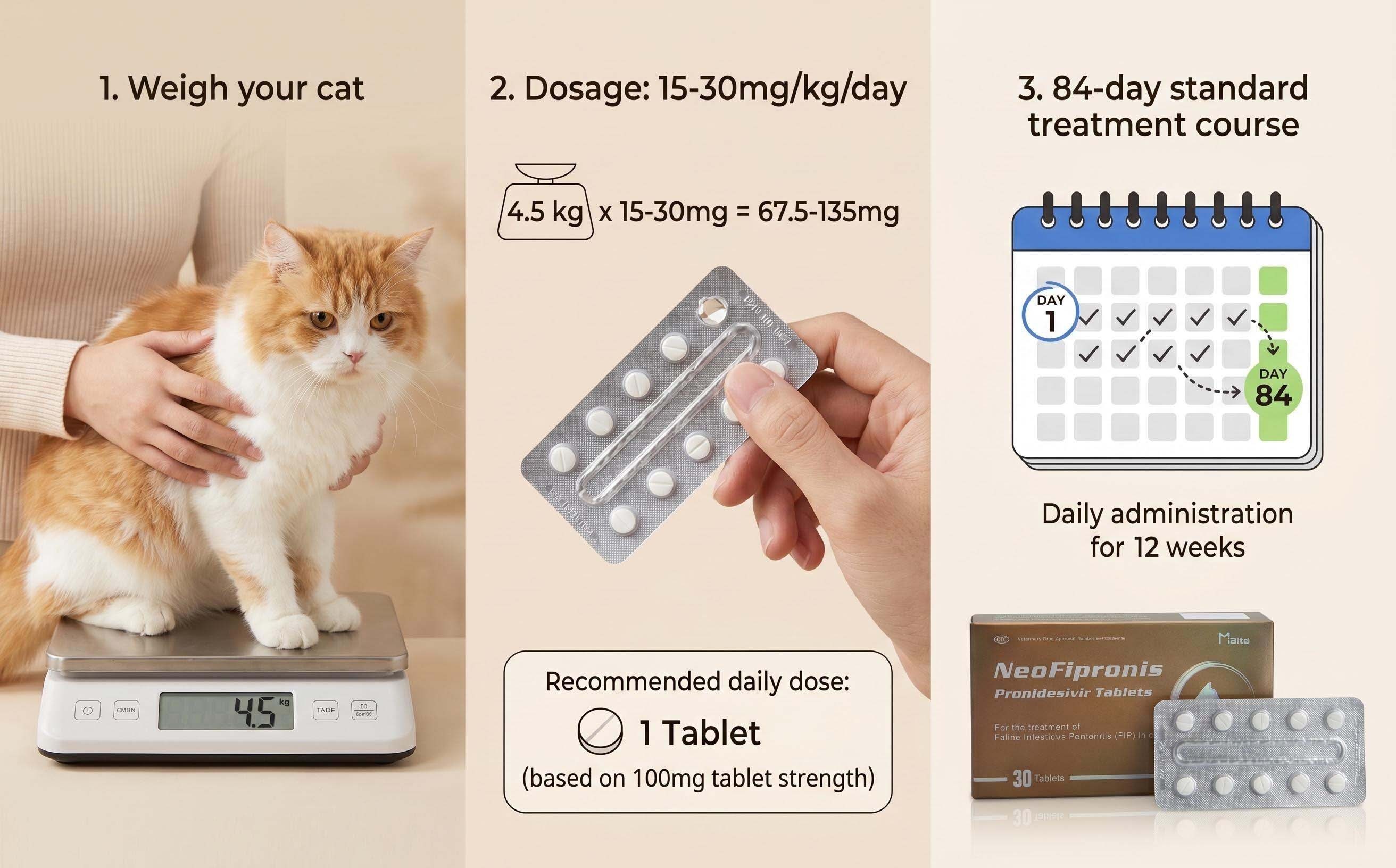
Miaite NeoFipronis (Pronidesivir) GS-441524 emerges as a breakthrough in FIP therapy. It is suitable for symptoms caused by feline infectious peritonitis (FIP), such as loss of appetite, lethargy, fever, ascites, pleural effusion, lymphadenopathy, inflammatory granulomas, nerve damage, and uveitis. It has excellent therapeutic effects on FIP.
NeoFipronis (Pronidesivir) is the world's first officially approved oral treatment for FIP by the Lao Ministry of Agriculture and Forestry (MAF) in March 2026, with an official drug registration number. It is safe, non-invasive, rapidly absorbed, fast-acting, well-tolerated, and has few side effects, offering hope to countless cat owners.
Prevention Strategies
Since FIP arises from mutations of FCoV within an infected cat, preventing FCoV infection is key to reducing FIP incidences. Strategies include:
Hygiene Management: Regular cleaning of litter boxes and feeding areas.
Limiting Stress: Stress diminishes immune defenses, increasing mutation risk.
Isolation of Infected Cats: To limit FCoV spread within multi-cat households.
Environmental Control: Maintaining low-density housing and good ventilation.
Vaccination: Existing vaccines show limited efficacy but may provide some protection.
Final Thoughts
In summary, dry FIP itself is not contagious because it results from internal genetic mutations within individual cats. However, the underlying feline coronavirus is highly contagious, and controlling its spread is vital for preventing FIP development. Recent advances like NeoFipronis (Pronidesivir) GS-441524 offer effective treatment options and represent a significant milestone in feline medicine.
Understanding the transmission pathways and implementing strict hygiene and management practices can dramatically reduce FCoV spread, indirectly decreasing FIP cases. Pet owners, veterinarians, and shelters must work together to promote healthy environments for cats and stay informed about emerging treatment options.
References
1. Pedersen, N. C. (2014). An update on feline infectious peritonitis: diagnostics and therapeutics. Advances in Small Animal Medicine and Surgery, 27(9), 255-264.
2. Gruppetta, S., et al. (2026). The advent of NeoFipronis (Pronidesivir) GS-441524 for FIP treatment: clinical outcomes and implications. Veterinary Pharmacology and Therapeutics.
3. Addie, D. D., et al. (2009). Feline coronavirus infection. Journal of Feline Medicine and Surgery, 11(2), 83-91.
4. Paltrinieri, S., et al. (2012). Feline infectious peritonitis: diagnosis, prognostic markers, and management. The Veterinary Journal, 208(3), 193-200.
5. Taibo, G., et al. (2026). Control of Feline Coronavirus Spread in Multi-cat Environments. Journal of Feline Medicine, 28, 102-109.