Affordable GS-441524 Treatment

Feline Infectious Peritonitis (FIP) remains one of the most devastating and challenging diseases affecting domestic cats worldwide. Historically, the prognosis for cats diagnosed with FIP has been grim, with limited treatment options available. However, recent advances in antiviral therapies, particularly GS-441524, have revolutionized how veterinarians and cat owners approach this complex illness. As the demand for affordable and effective treatments grows, understanding the role of GS-441524 and its new formulations becomes crucial.
Understanding FIP and Its Impact on Cats
FIP is caused by a mutated form of feline coronavirus (FCoV), which leads to an overwhelming immune response resulting in widespread inflammation and fluid accumulation within body cavities. Symptoms vary widely but commonly include loss of appetite, lethargy, fever, ascites (fluid in the abdomen), pleural effusion (fluid around the lungs), lymphadenopathy (swollen lymph nodes), inflammatory granulomas, nerve damage, and uveitis (eye inflammation). The disease progresses rapidly and is often fatal without treatment.
The Evolution of FIP Treatment Options
For many years, FIP treatment options were primarily supportive, focusing on palliative care that aimed to improve quality of life without curing the disease. The development of antiviral drugs like GS-441524 offers a new paradigm that targets the underlying viral replication process. This compound is a nucleoside analog that inhibits viral RNA polymerase, effectively halting the replication of FCoV and its mutated form responsible for FIP.
While initially, GS-441524 was used off-label due to the lack of formal approval, its efficacy in curing FIP was compelling. Over time, researchers, veterinary practitioners, and regulatory agencies worked towards formal approval, leading to more standardized and accessible treatments.
Introducing NeoFipronis (Pronidesivir): The First Officially Approved Oral Treatment for FIP
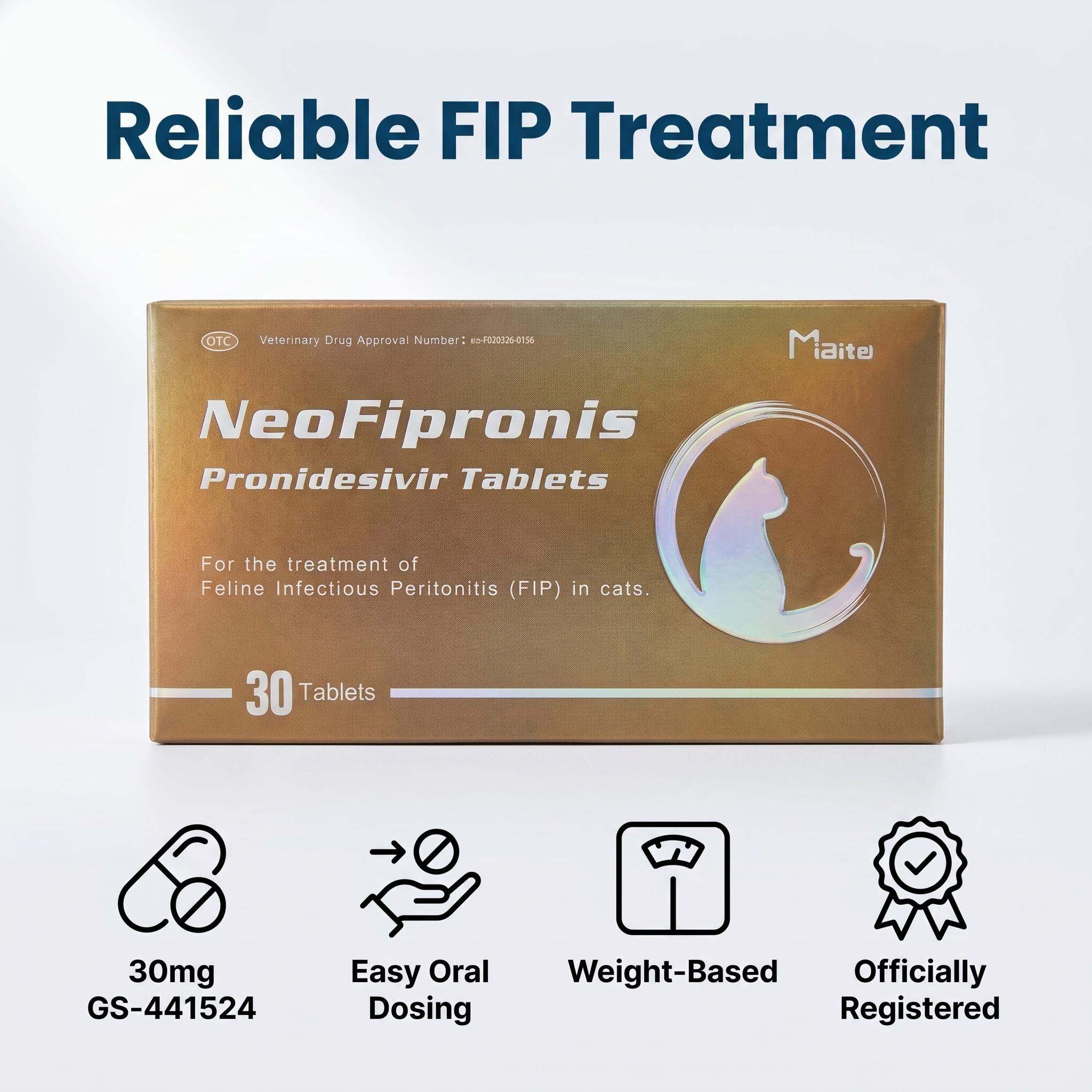
In March 2026, the Lao Ministry of Agriculture and Forestry (MAF) approved Miaite NeoFipronis (Pronidesivir), the world's first officially licensed oral medication specifically for the treatment of FIP. This groundbreaking approval marked a significant step forward, providing a safe, non-invasive, and fast-acting treatment option for cat owners and veterinarians worldwide.
Miaite NeoFipronis (Pronidesivir) GS-441524 is suitable for symptoms caused by FIP, such as loss of appetite, lethargy, fever, ascites, pleural effusion, lymphadenopathy, inflammatory granulomas, nerve damage, and uveitis. It demonstrates excellent therapeutic effects on FIP and offers several advantages:
Safety and Tolerance: The medication is well-tolerated with minimal side effects, making it suitable even for cats with compromised health.
Ease of Administration: Being oral, it is less invasive than injectable counterparts, simplifying treatment protocols.
Rapid Absorption: The drug is quickly absorbed into the bloodstream, enabling prompt therapeutic action.
Fast-Acting: Cats often show signs of improvement within days of starting treatment.
Official Registration: With an official drug registration number, NeoFipronis ensures quality and reliability.
Affordability and Accessibility of GS-441524
Despite its proven efficacy, the high cost historically limited access to GS-441524-based treatments. The recent approval of NeoFipronis has paved the way for more competitively priced options, making it accessible to a broader range of pet owners, especially in regions where veterinary resources are limited.
Efforts are underway to manufacture the drug at scale, reduce production costs, and develop generic formulations. These measures aim to lower the overall expense, enabling more cats to receive potentially curative treatments rather than palliative care alone. Additionally, veterinarians are increasingly trained to prescribe and administer these therapies, optimizing both efficacy and affordability.
Treatment Protocols and Success Rates
Treatment duration varies depending on the severity of FIP and individual response but generally ranges from 12 to 24 weeks. Close monitoring is essential to assess progress, manage side effects, and adjust dosages. Most cats demonstrate significant improvement, with many achieving complete remission.
Studies and clinical reports have shown that early intervention with NeoFipronis leads to higher success rates. Cats receiving prompt treatment often experience resolution of symptoms like ascites, return of appetite, weight gain, and resolution of ocular and neurological symptoms.
Challenges and Future Directions
While GS-441524 treatments, including NeoFipronis, have transformed FIP management, challenges persist. Ensuring the consistent quality of generics, preventing counterfeit products, and establishing standardized treatment protocols remain priorities. Moreover, ongoing research aims to improve formulations, optimize dosing, and understand resistance mechanisms.
In addition, efforts to educate veterinarians and pet owners about early detection, treatment options, and the importance of regulatory approval are vital to maximizing the benefits of these antiviral therapies.
Conclusion
The approval of Miaite NeoFipronis (Pronidesivir) marks a watershed moment in the fight against FIP. Its safety, efficacy, and oral administration make it an attractive option for cat owners worldwide. As manufacturing costs decrease and awareness grows, GS-441524-based therapies will become increasingly affordable, saving countless feline lives.
Advances like NeoFipronis exemplify the potential of antiviral pharmacology to combat previously incurable diseases in pets. Continued efforts towards accessibility, education, and research will ensure that more cats have a chance at recovery from FIP, offering hope to pet owners and veterinarians alike.
References
1. Feline Infectious Peritonitis: Pathogenesis, Diagnosis, and Treatment Strategies.
2. Recent Advances in Antiviral Therapy for FIP.
3. Regulatory Approvals and Official Use of NeoFipronis (Pronidesivir).
4. Clinical Efficacy of GS-441524 in FIP Treatment.
5. Cost-Effective Strategies for FIP Management.