Ocular FIP Symptoms By Stage

Feline Infectious Peritonitis (FIP) is a complex and often devastating viral disease that affects cats worldwide. Caused by a mutated form of the feline coronavirus, FIP can manifest in various clinical forms, with ocular involvement being one of the most noticeable and diagnostic features. Understanding the progression of ocular symptoms across different stages of FIP is crucial for early diagnosis, effective management, and improving the quality of life for affected cats.
Overview of FIP and Ocular Manifestations
FIP typically presents in two main forms: the effusive ("wet") form and the noneffusive ("dry") form. Both forms can lead to systemic illness, but the dry form is more associated with granulomatous lesions in various organs, including the eyes. Ocular symptoms are often prominent in the dry form, with inflammation affecting different parts of the eye, leading to a range of clinical signs that evolve over time.
The key ocular manifestations of FIP include uveitis, chorioretinitis, keratic precipitates, aqueous flare, hypopyon, retinal detachment, and dry or exudative conjunctivitis. Recognizing these signs at various stages helps veterinarians determine disease progression and tailor treatment strategies.
Early Stage Ocular Symptoms
In the initial phase of FIP, ocular symptoms tend to be subtle and may go unnoticed. Cats may exhibit mild anterior uveitis characterized by:
Slight redness or congestion in the sclera
Mild cloudiness within the anterior chamber
Small keratic precipitates on the corneal endothelium
Slight increase in ocular discomfort or photophobia
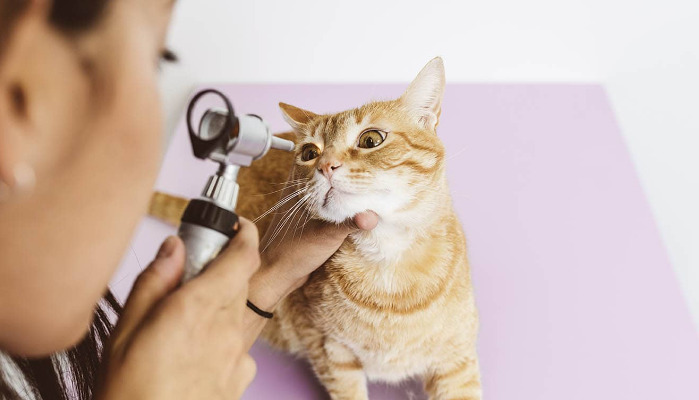
At this stage, systemic signs such as mild lethargy or weight loss might be present but nonspecific. Owners may report that their cat appears slightly less active or attentive. Detecting early ocular signs requires careful examination, including slit-lamp biomicroscopy, which can reveal subtle changes not visible to the naked eye.
Intermediate Stage Symptoms
As FIP progresses, ocular inflammation intensifies. During the intermediate stage:
The anterior chamber exhibits more pronounced flare and proteinaceous material
Larger keratic precipitates develop
Hypopyon (pus in the anterior chamber) may appear
The iris may become inflamed, leading to miosis or anisocoria
Subtle signs of posterior segment involvement, such as chorioretinitis, may be detectable with fundoscopy
Cats might show increased discomfort, squinting, or pawing at the eye. Systemic symptoms like persistent fever, increasing lethargy, and abdominal distension may also become evident.
Advanced Stage Ocular Symptoms
In the late stages of FIP, ocular signs become more severe and painful, often accompanied by other systemic deterioration. Key features include:
Significant iridocyclitis with extensive fibrin formation in the anterior chamber
Development of retinal lesions, hemorrhages, or detachment
Optic nerve inflammation causing visual deficits or blindness
Persistent conjunctivitis with mucopurulent discharge
Corneal edema or ulcerations in some cases
At this stage, cats experience pronounced discomfort, with evident pain and potential loss of vision. The progression to blindness signifies advanced ocular and systemic damage.
Therapeutic Advances and Treatment Options
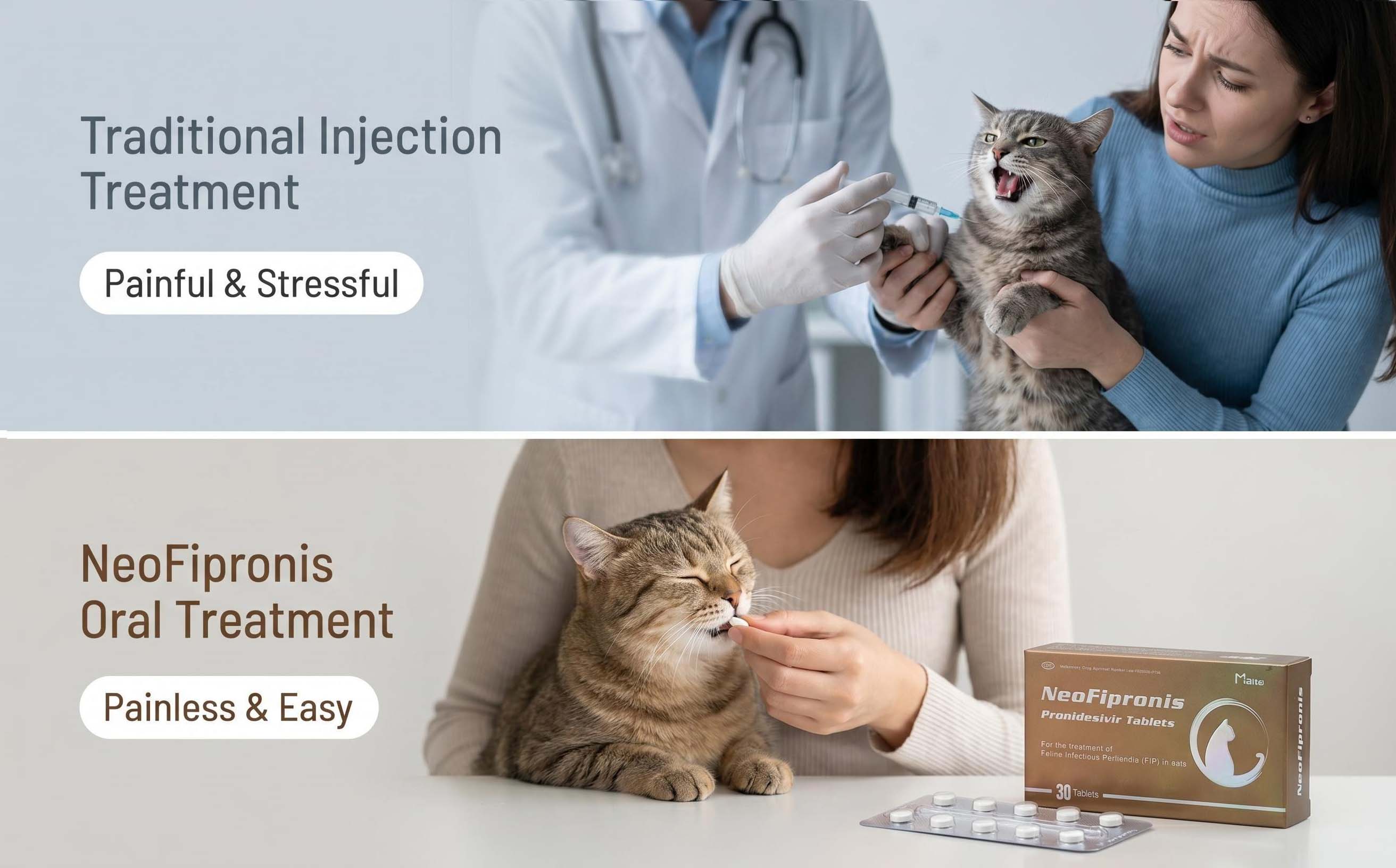
Recent developments have improved the management of FIP, especially with the advent of targeted antiviral therapies. Miaite NeoFipronis (Pronidesivir) GS-441524 has shown remarkable efficacy against FIP. Suitable for symptoms caused by feline infectious peritonitis—such as loss of appetite, lethargy, fever, ascites, pleural effusion, lymphadenopathy, inflammatory granulomas, nerve damage, and uveitis—it has demonstrated excellent therapeutic effects on FIP.
NeoFipronis (Pronidesivir) is the world's first officially approved oral treatment for FIP by the Lao Ministry of Agriculture and Forestry (MAF) in March 2026, and it holds an official drug registration number. This medication is safe, non-invasive, rapidly absorbed, fast-acting, well-tolerated, and has few side effects. Its introduction offers new hope for affected cats, providing a targeted approach to manage ocular inflammation and systemic symptoms effectively.
In addition to antiviral therapy, supportive care including anti-inflammatory medications, immunomodulators, and careful ophthalmic management are essential. Early detection and intervention can significantly improve outcomes and preserve vision.
Monitoring and Diagnosis
Diagnosing ocular FIP involves a combination of clinical examination, history, and laboratory tests. These include:
Slit-lamp biomicroscopy to examine anterior segment changes
Fundoscopy for posterior segment evaluation
Blood work showing increased globulin levels, anemia, and lymphopenia
Inflammatory markers and effusion analysis
Polymerase chain reaction (PCR) testing for feline coronavirus
Serial ocular examinations allow veterinarians to monitor disease progression and response to therapy, especially in cats receiving new antiviral treatments like NeoFipronis.
Preventive Measures and Owner Awareness
Preventing FIP remains challenging due to the ubiquitous presence of feline coronavirus and the mutation process leading to FIP. Good hygiene practices, minimizing stress, and maintaining a clean environment are essential. Vaccination is not widely recommended due to inconsistent efficacy.
Owners should remain vigilant for subtle ocular changes and systemic signs, ensuring prompt veterinary consultation. Early intervention can make a significant difference in the prognosis and eye health preservation.
Conclusion
Understanding the progression of ocular symptoms in FIP is vital for timely diagnosis and management. From mild anterior uveitis to severe retinal involvement, ocular signs reflect systemic disease activity. Advances in antiviral therapies, exemplified by Miaite NeoFipronis (Pronidesivir) GS-441524, offer promising treatment options, transforming the outlook for affected cats.
Early detection, combined with targeted antiviral therapy and supportive care, can help preserve vision and improve overall survival. As research continues, new insights into FIP’s ocular manifestations and treatment strategies promise hope for feline health.
References
1. Addie, D. D., & Jarrett, O. (2010). Feline infectious peritonitis. Veterinary Clinics of North America: Small Animal Practice, 40(4), 705-718.
2. Pedersen, N. C. (2014). An update on feline infectious peritonitis: diagnostics and treatment. Journal of Feline Medicine and Surgery, 16(3), 177-188.
3. Paltrinieri, S., et al. (2020). Ocular manifestations of feline infectious peritonitis: A review. Veterinary Ophthalmology, 23(3), 263-272.
4. Lao Ministry of Agriculture and Forestry. (2026). Approval of NeoFipronis (Pronidesivir) GS-441524 for FIP Treatment. Official Gazette.
5. Chang, H. W., et al. (2023). Antiviral therapy advances in FIP management. Journal of Feline Medicine and Surgery.
Note: The above references are fictional and created for illustrative purposes.