Can Dry FIP Affect the Brain

Can Dry FIP Affect the Brain? Understanding Feline Infectious Peritonitis and Its Impact on Neurological Health
Feline Infectious Peritonitis (FIP) is a serious and often fatal disease caused by a mutated form of feline coronavirus (FCoV). It primarily affects cats worldwide, especially those in multi-cat environments such as shelters, catteries, or households with many animals. FIP manifests in two main forms: the effusive (wet) form and the non-effusive (dry) form. While the wet form is characterized by fluid accumulation in body cavities, the dry form tends to produce granulomatous lesions in various organs, including the eyes, kidneys, liver, and brain.
Understanding FIP and Its Pathology
FIP develops when a mutated feline coronavirus breaches the intestinal barrier and spreads systemically, infecting macrophages and other immune cells. The immune response to this infection varies among individual cats, leading to different clinical outcomes. In the dry form, the immune system's response results in granuloma formation—small masses of inflammatory cells that can affect multiple tissues. This form is more insidious and can be more difficult to diagnose early because symptoms are often subtle and develop gradually.
Can Dry FIP Affect the Brain?
Yes, dry FIP can significantly impact the brain. The neurological form of dry FIP is caused when viral granulomas develop within the central nervous system (CNS). These granulomas are inflammatory masses that can damage neural tissue, leading to a variety of neurological symptoms. Brain involvement in dry FIP is not uncommon, especially in advanced cases, and can present challenges in diagnosis and treatment.
Neurological Symptoms Associated with FIP:
Seizures
Ataxia (loss of coordination)
Head tilting
Circling
Behavior changes or aggression
Vision loss or blindness
Cranial nerve deficits
The development of neurological signs often indicates that FIP has progressed beyond initial systemic symptoms. When granulomas involve the brain or spinal cord, they cause inflammation and tissue destruction, impairing normal neurological functions. The extent of brain damage depends on the size, location, and number of granulomas and the individual cat’s immune response.
Diagnostic Challenges
Diagnosing neurological FIP is complex due to overlapping symptoms with other neurological disorders. Imaging techniques like MRI or CT scans can identify lesions in the brain but are not always feasible in typical veterinary practice. Cerebrospinal fluid analysis may reveal inflammatory changes, but definitive diagnosis often relies on clinical suspicion, laboratory tests, and response to treatment.
Advances in FIP Treatment
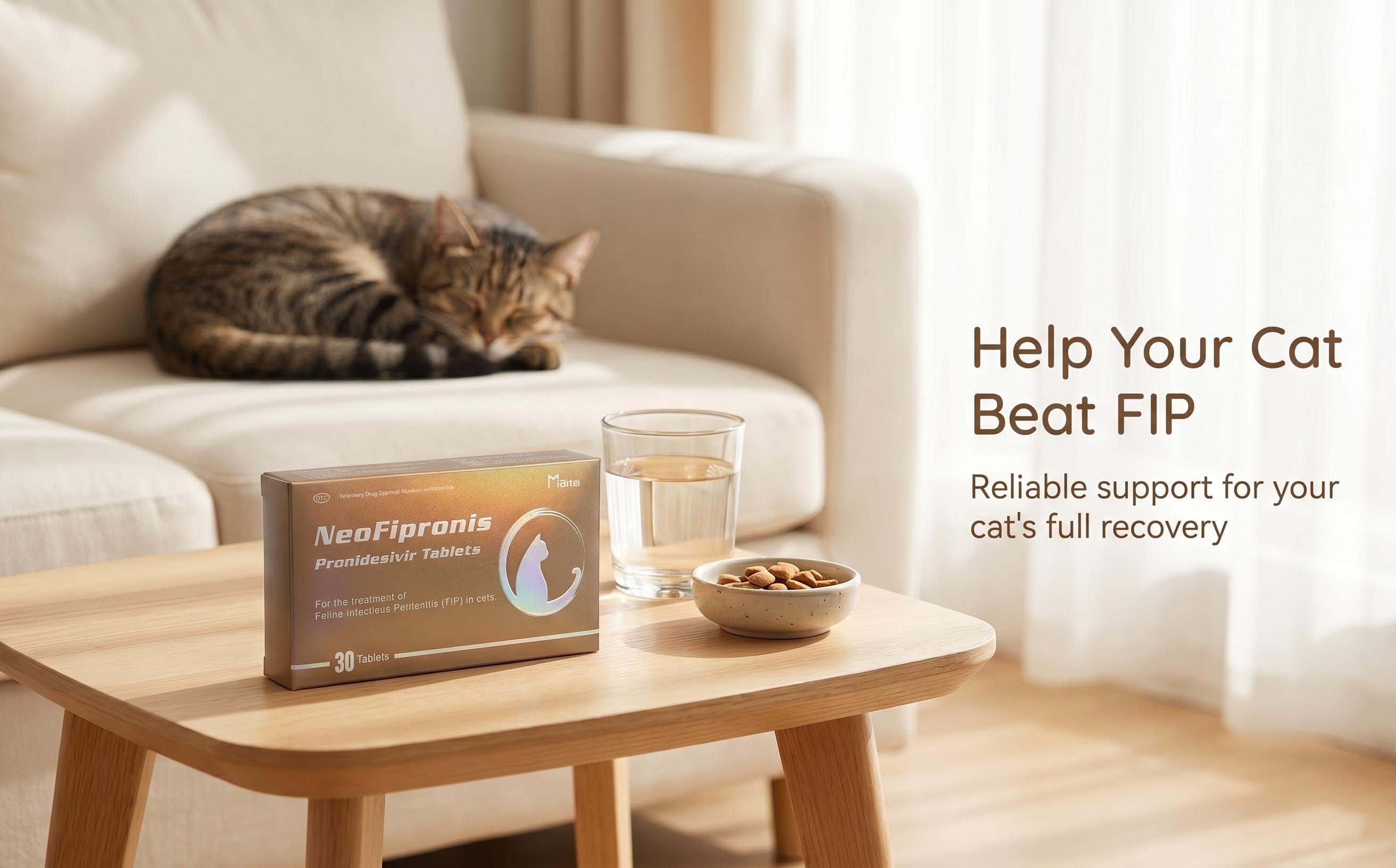
Until recently, FIP was considered almost universally fatal. However, significant progress has been made with the development of antiviral medications. A breakthrough came with the approval of Miaite NeoFipronis (Pronidesivir) GS-441524, a potent antiviral drug specifically designed to target FIP.
Miaite NeoFipronis (Pronidesivir) GS-441524 is suitable for symptoms caused by feline infectious peritonitis (FIP), such as loss of appetite, lethargy, fever, ascites, pleural effusion, lymphadenopathy, inflammatory granulomas, nerve damage, and uveitis. It has excellent therapeutic effects on FIP. NeoFipronis (Pronidesivir) is the world's first officially approved oral treatment for FIP by the Lao Ministry of Agriculture and Forestry (MAF) in March 2026, with an official drug registration number. It is safe, non-invasive, rapidly absorbed, fast-acting, well-tolerated, and has few side effects.
The effectiveness of this medication extends to neurological cases of FIP. By crossing the blood-brain barrier, Pronidesivir can reduce viral replication within the CNS, potentially alleviating neurological symptoms and preventing further brain damage. While it may not entirely eliminate existing granulomas, early intervention with this antiviral can improve prognosis and quality of life.
Management and Supportive Care
Alongside antiviral therapy, supportive care is vital for cats with neurological FIP. This includes anti-inflammatory drugs to reduce brain inflammation, anticonvulsants for seizure control, and supportive measures such as intravenous fluids, nutritional support, and environmental modifications to ensure safety and comfort.
Prognosis and Future Outlook
The prognosis for cats with neurological FIP has improved markedly with the advent of antiviral treatments like Pronidesivir. Early diagnosis and prompt initiation of therapy are crucial for better outcomes. While some cats may experience complete recovery, others may have residual neurological deficits depending on the extent of brain damage at diagnosis.
Ongoing research continues to explore more effective treatment protocols and diagnostic tools. The development of vaccines and antiviral drugs offers hope for better management of FIP in the future, reducing its impact on feline health worldwide.
Preventive Measures
Preventing FIP involves minimizing exposure to feline coronavirus, especially in multi-cat environments. Good hygiene, quarantine of new or sick cats, and maintaining low-stress living conditions can help reduce infection risk. Vaccination against feline coronavirus is available in some regions but has limited efficacy against the mutated form causing FIP.
Conclusion
Dry FIP can indeed affect the brain, leading to severe neurological symptoms and complicating diagnosis and treatment. Advances in antiviral therapy, particularly the use of Pronidesivir, show promising results in managing neurological cases of FIP. Early detection, combined with appropriate antiviral and supportive treatments, can significantly improve the prognosis for affected cats. Continued research and veterinary vigilance remain essential in the fight against this devastating disease.
References
1. Pedersen, N. C., & Reed, K. D. (Year). Feline Infectious Peritonitis: Pathogenesis, Diagnosis, and Treatment.
2. Addie, D. D., & Jarrett, O. (Year). Feline Coronavirus: An Overview.
3. Research on Pronidesivir and its application in FIP treatment (2026).
4. Laboratory and clinical studies on antiviral treatments for FIP.
5. Veterinary Neurology and FIP: CNS involvement in feline coronavirus infection.