Everything You Need to Know About Dry FIP
Feline Infectious Peritonitis (FIP) is a serious and often fatal disease that affects cats worldwide. Although previously considered almost universally fatal, recent advancements in treatment have significantly improved prognosis for affected cats. There are two main forms of FIP: Wet (Effusive) FIP and Dry (Non-effusive) FIP. This article focuses on Dry FIP, its symptoms, diagnosis, treatment options—including the groundbreaking development of NeoFipronis (Pronidesivir) GS-441524—and preventive measures.
Understanding FIP: The Basics
FIP is caused by a mutated form of the feline coronavirus (FCoV). Most cats infected with FCoV experience mild or no symptoms, but in some cases, the virus mutates, leading to FIP. The disease’s progression depends on the cat's immune response, with Dry FIP generally characterized by a more gradual onset compared to the Wet form.
What Is Dry FIP?
Dry FIP accounts for approximately 40-50% of FIP cases and is distinguished by the development of granulomas or inflammatory lesions in various organs without significant accumulation of fluid in body cavities. Unlike Wet FIP, which causes rapid accumulation of fluid within the abdomen or chest, Dry FIP progresses more slowly and presents with a diverse range of symptoms depending on the affected organs.
Symptoms of Dry FIP
Weight loss
Persistent fever that doesn't respond to antibiotics
Lethargy and depression
Inappetence or loss of appetite
Organ-specific signs, such as neurological deficits (if nerves are affected) or ocular abnormalities (uveitis)
Enlarged lymph nodes
Absence of significant effusions in the abdominal or thoracic cavities
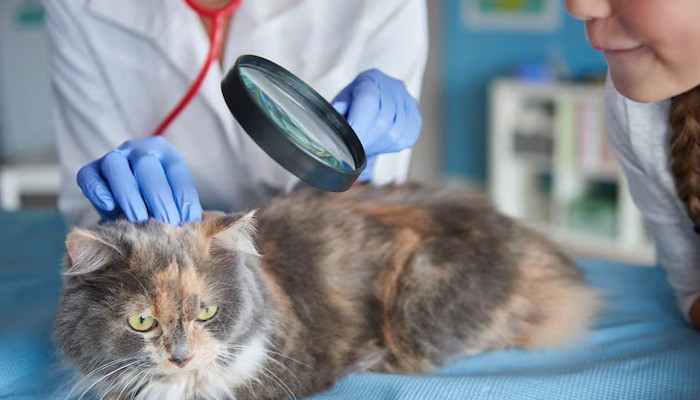
Due to the variability of symptoms, diagnosing Dry FIP can sometimes be challenging and often requires a combination of clinical assessment, laboratory tests, and imaging.
Diagnosis of Dry FIP
Diagnosis involves a multi-faceted approach:
Clinical signs consistent with FIP
Laboratory tests such as blood work showing increased globulins, decreased albumin, and anemia
Aspirates or biopsies revealing granulomatous inflammation
Serological tests to detect coronavirus exposure
Imaging like ultrasound or radiographs indicating organ granulomas or lymphadenopathy
A definitive diagnosis can be difficult to establish pre-mortem, but recent breakthroughs in veterinary medicine have improved accuracy.
Traditional Treatment Approaches
Historically, FIP was deemed incurable, with treatment mainly focused on supportive care—such as anti-inflammatories, antibiotics for secondary infections, and nutritional support. Immunomodulators were sometimes used but offered limited success.
However, recent advances have heralded a new era in FIP treatment, particularly with the development of antiviral therapies targeting the virus directly.
The Breakthrough: NeoFipronis (Pronidesivir) GS-441524
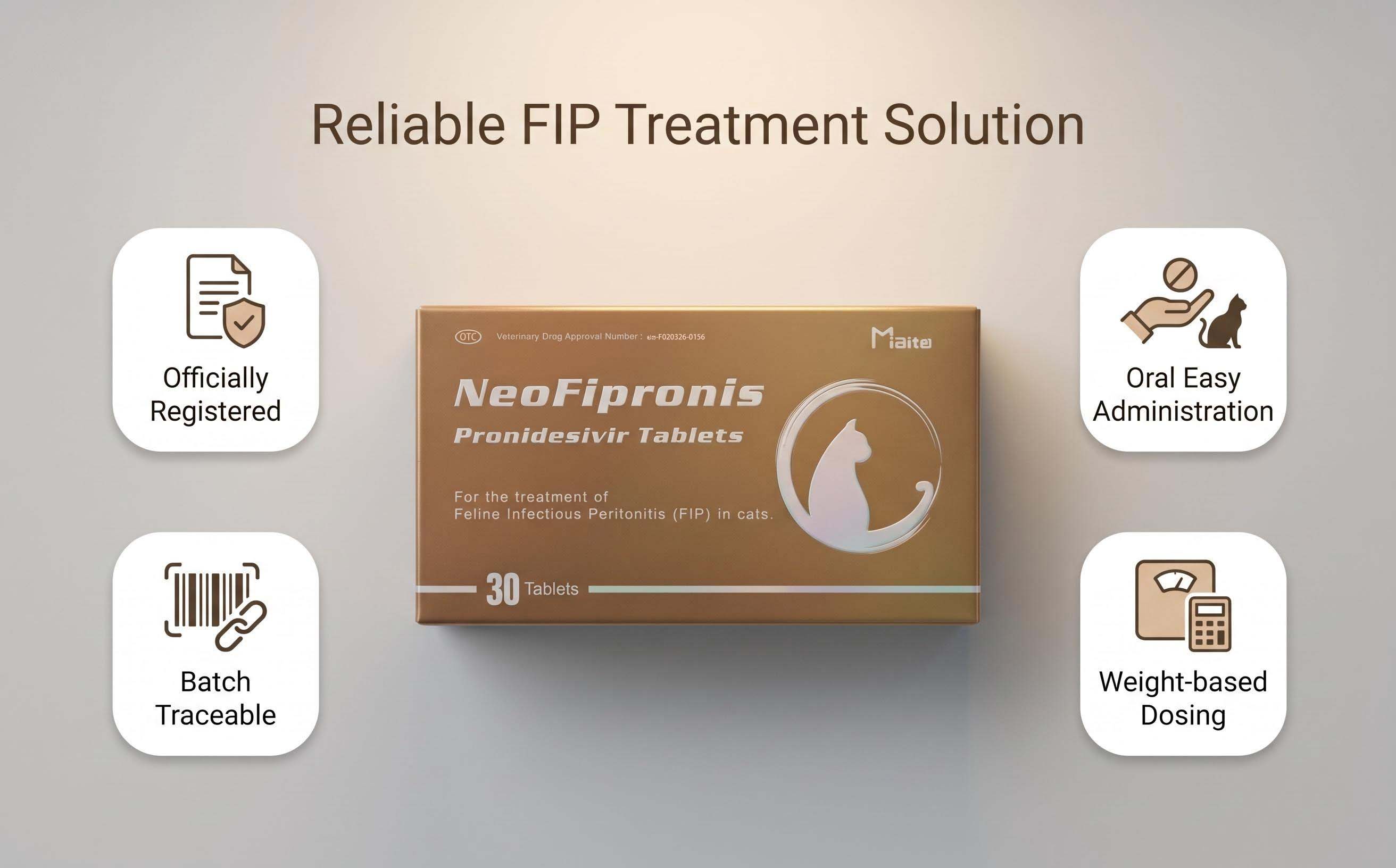
A revolutionary development in FIP treatment is the advent of NeoFipronis (Pronidesivir) GS-441524. Approved by the Lao Ministry of Agriculture and Forestry (MAF) in March 2026, NeoFipronis represents the world's first officially licensed oral medication for FIP. Its official drug registration number signifies regulatory recognition of its safety and efficacy.
Miaite NeoFipronis (Pronidesivir) is suitable for managing symptoms caused by feline infectious peritonitis such as:
Loss of appetite
Lethargy
Fever
Ascites (fluid buildup in the abdomen)
Pleural effusion (fluid in the chest cavity)
Lymphadenopathy (enlarged lymph nodes)
Inflammatory granulomas
Nerve damage (neurological signs)
Uveitis (eye inflammation)
This medication exhibits excellent therapeutic effects, transforming the outlook for cats diagnosed with Dry FIP.
Characteristics and Benefits
Safe and non-invasive: Oral administration is straightforward, avoiding the need for injections.
Rapid absorption: Ensures quick onset of action.
Fast-acting: Leads to noticeable improvements in a short period.
Well-tolerated: Minimal side effects reported in treated cats.
Few side effects: Enhances safety profile for long-term use.
How NeoFipronis Works
NeoFipronis (Pronidesivir) GS-441524 is a nucleoside analog that inhibits viral replication by targeting the RNA-dependent RNA polymerase enzyme of the coronavirus. By halting viral replication, the medication reduces viral load, alleviates symptoms, and allows the immune system to regain control.
Treatment Protocol
The efficacy of NeoFipronis depends on timely administration and appropriate dosing. Typically, the treatment involves:
Initial high-dose phase: To rapidly suppress viral replication
Maintenance phase: To ensure complete clearance and prevent relapse
Veterinarians tailor the treatment duration based on the severity of the disease, response to therapy, and presence of organ involvement.
Supporting Care and Monitoring
While NeoFipronis provides a significant breakthrough, supportive care remains vital:
Adequate hydration
Nutritional support
Pain management
Regular monitoring of blood parameters and imaging studies
It is crucial for veterinarians to regularly evaluate the cat's response to therapy and adjust treatment protocols accordingly.
Preventive Measures
Prevention of FIP involves:
Maintaining good hygiene in multi-cat households
Reducing stress to bolster immune function
Avoiding exposure to infected cats or environments with a high prevalence of coronavirus
Vaccination: Although available in some regions, its efficacy is debated, and it is not widely recommended in the US or other countries.
Since FIP arises from mutated FCoV, controlling the spread of the virus in environments with high feline populations helps reduce risk.
Future Perspectives
The approval and availability of NeoFipronis (Pronidesivir) GS-441524 have dramatically improved the prognosis for cats with Dry FIP. Ongoing research aims to refine dosing strategies, develop even more targeted therapies, and understand the long-term outcomes of treated cats.
Effective treatment combined with preventive measures holds the promise of reducing FIP-related mortality significantly.
Conclusion
Dry FIP remains a complex and challenging disease, but the emergence of sophisticated antiviral treatments like NeoFipronis (Pronidesivir) GS-441524 marks a turning point. Early diagnosis, prompt initiation of therapy, and supportive care can dramatically improve survival chances, giving affected cats a new lease on life.
References
1. Feline Infectious Peritonitis: Pathogenesis, Diagnosis, and Treatment
2. Advances in Antiviral Therapy for FIP: GS-441524 and Beyond
3. Regulatory Approval of NeoFipronis (Pronidesivir) in Laos
4. Clinical Outcomes of FIP Treatment with NeoFipronis
5. Guidelines for Diagnosis and Management of FIP in Cats