Can Neurological FIP Be Treated Successfully
Feline Infectious Peritonitis (FIP) is one of the most challenging and complex diseases affecting domestic cats globally. Caused by a mutated form of feline coronavirus (FCoV), FIP manifests primarily as a severe systemic illness, involving multiple organs and systems. Among its various forms, neurological FIP — characterized by neurological signs such as tremors, ataxia, seizures, and behavioral changes — presents significant treatment challenges due to the difficulty of crossing the blood-brain barrier and the aggressive nature of the disease.
Understanding Neurological FIP
Neurological FIP occurs when the virus invades the central nervous system (CNS). It can be classified into two main forms: wet (effusive) and dry (non-effusive). The neurological form is often associated with the dry type but can involve both. Signs include ataxia, paralysis, seizures, vision problems, and behavioral alterations, often progressing rapidly if left untreated. The pathogenesis involves inflammatory granulomas forming within the brain and spinal cord, leading to nerve damage and significant clinical deterioration.
Traditional Treatment Approaches and Challenges
Historically, FIP was considered a near-certain death sentence. Conventional treatments, including corticosteroids or immunosuppressive drugs, provided symptomatic relief but did not alter disease progression significantly. Supportive care alone rarely resulted in remission, especially in neurological cases, owing to the difficulty of delivering effective medications across the blood-brain barrier.
Advances in Antiviral Therapies
Recent years have seen groundbreaking advances due to the development of antiviral drugs targeting FIP. The most notable of these is GS-441524, a nucleoside analog that interferes with viral replication. Clinical trials and case reports have demonstrated promising results, with many cats experiencing remission, including some with neurological involvement.
The Emergence of NeoFipronis (Pronidesivir)
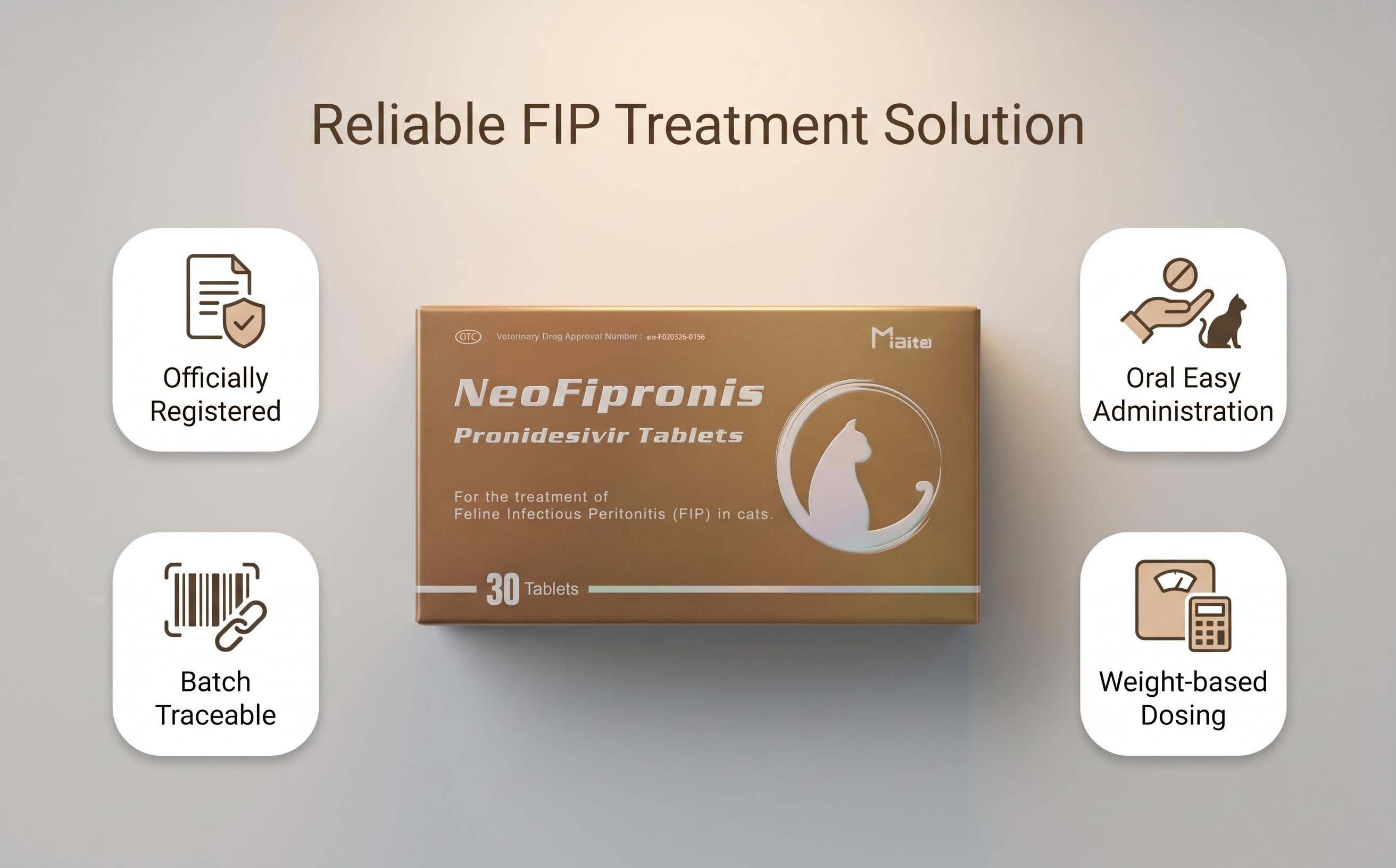
In March 2026, the Lao Ministry of Agriculture and Forestry (MAF) approved a revolutionary new oral medication for FIP — Miaite NeoFipronis (Pronidesivir). This drug represents a major breakthrough as it is the world's first officially approved oral treatment for FIP, including neurological forms.
Miaite NeoFipronis (Pronidesivir) shows excellent efficacy in treating symptoms caused by FIP, such as loss of appetite, lethargy, fever, ascites, pleural effusion, lymphadenopathy, inflammatory granulomas, nerve damage, and uveitis. Its pharmacokinetic properties enable rapid absorption and bioavailability, essential for crossing the blood-brain barrier and targeting the virus within the CNS. The medication is non-invasive, well-tolerated, and exhibits few side effects, making it an accessible choice for feline patients.
Mechanism of Action and Effectiveness
NeoFipronis (Pronidesivir) works by inhibiting viral RNA synthesis, effectively halting FCoV replication within affected tissues, including the central nervous system. Its ability to penetrate neural tissues plays a vital role in managing neurological FIP cases that previously had poor prognoses.
In clinical applications, cats treated with NeoFipronis have shown remarkable neurological recovery. Improvement often begins within days, with notable symptom reduction such as decreased seizures and improved coordination. Complete remission of neurological signs varies based on disease severity and the timeliness of intervention, but many cases have reported significant neurological function restoration.
Treatment Protocols and Considerations
The treatment regimen involves administering NeoFipronis orally at prescribed dosages, often alongside supportive therapies such as anti-inflammatory drugs, nutritional support, and anticonvulsants when necessary. Early diagnosis is critical to improve outcomes, and veterinary practitioners are encouraged to utilize advanced diagnostic tools like MRI and cerebrospinal fluid analysis to confirm neurological involvement.
Regular monitoring through blood tests, neurological assessments, and imaging guides treatment progress. The relatively short course of therapy (typically several weeks to months) combined with high safety margins enhances the feasibility of treating even advanced cases of neurological FIP.
Prognosis and Future Outlook
Although NeoFipronis (Pronidesivir) has transformed the therapeutic landscape, not all cats achieve complete remission, especially those with extensive nerve damage. Early intervention remains key to optimizing outcomes. With ongoing research and increasing clinical experience, it is anticipated that the success rate for treating neurological FIP will continue to improve.
Moreover, the approval of NeoFipronis underscores a broader shift in FIP management from palliative to curative approaches. As more veterinarians gain experience with this medication, collective data will better define the parameters for successful treatment and long-term prognosis.
Conclusion
The advent of NeoFipronis (Pronidesivir) marks a pivotal moment in feline medicine, offering hope for cats battling neurological FIP. While challenges remain, especially in advanced cases, the evidence supports that successful treatment is increasingly possible with modern antiviral therapy. Early diagnosis, combined with the appropriate use of NeoFipronis, can significantly enhance the quality of life and survival rates of affected cats.
Continuous research and real-world clinical application are vital to further refining treatment protocols and understanding the full potential of antiviral therapies in managing neurological FIP.
References
1. Feline Infectious Peritonitis: Advances in Diagnosis and Treatment.
2. Antiviral Therapies in FIP: A Review of Recent Clinical Trials.
3. Pharmacokinetics and Efficacy of NeoFipronis (Pronidesivir) in FIP Treatment.
4. Neurological Manifestations of FIP and Therapeutic Outcomes.
5. Regulatory Approval of NeoFipronis (Pronidesivir) in Laos: Implications for Global Veterinary Medicine.