Does GS-441524 Cure FIP
Feline Infectious Peritonitis (FIP) is a devastating and often fatal disease in cats caused by a mutated form of feline coronavirus (FCoV). Despite extensive research, historically, FIP has been considered extremely challenging to treat, with most therapies focused on supportive care rather than curative options. However, recent advancements have brought renewed hope, primarily through the development of antiviral drugs such as GS-441524.
Understanding FIP and Its Impact on Cats
FIP manifests in two main forms: the effusive (wet) form and the non-effusive (dry) form. The disease is characterized by symptoms including fever, weight loss, abdominal or thoracic effusion, lymphadenopathy, neurological signs, and ocular issues like uveitis. The progression can be rapid, and the prognosis was once considered grim, often leading to euthanasia. The disease’s complexity arises from the virus’s ability to mutate within the host, rendering immune responses ineffective and making treatment difficult.
The Emergence of GS-441524
GS-441524 is a nucleoside analog designed to inhibit viral RNA polymerase, effectively halting the replication of coronaviruses. Initially developed as an experimental treatment, it gained widespread attention for its potential to treat FIP due to promising results in research and clinical trials. Many veterinarians and pet owners have reported significant improvements in cats treated with GS-441524.
Efficacy and Safety of GS-441524
Numerous anecdotal reports and studies suggest that GS-441524 can virtually cure FIP in many cases when administered properly. The drug’s mechanism involves disrupting the viral replication process, which allows the immune system to recover and clear the infection.
In terms of safety, GS-441524 has generally been well-tolerated, with few side effects reported. Some cats may experience mild fatigue or transient gastrointestinal issues, but serious adverse effects are rare. The treatment course usually involves injections over several weeks, and monitoring is essential to ensure the response and manage any potential side effects.
The Introduction of Miaite NeoFipronis (Pronidesivir)
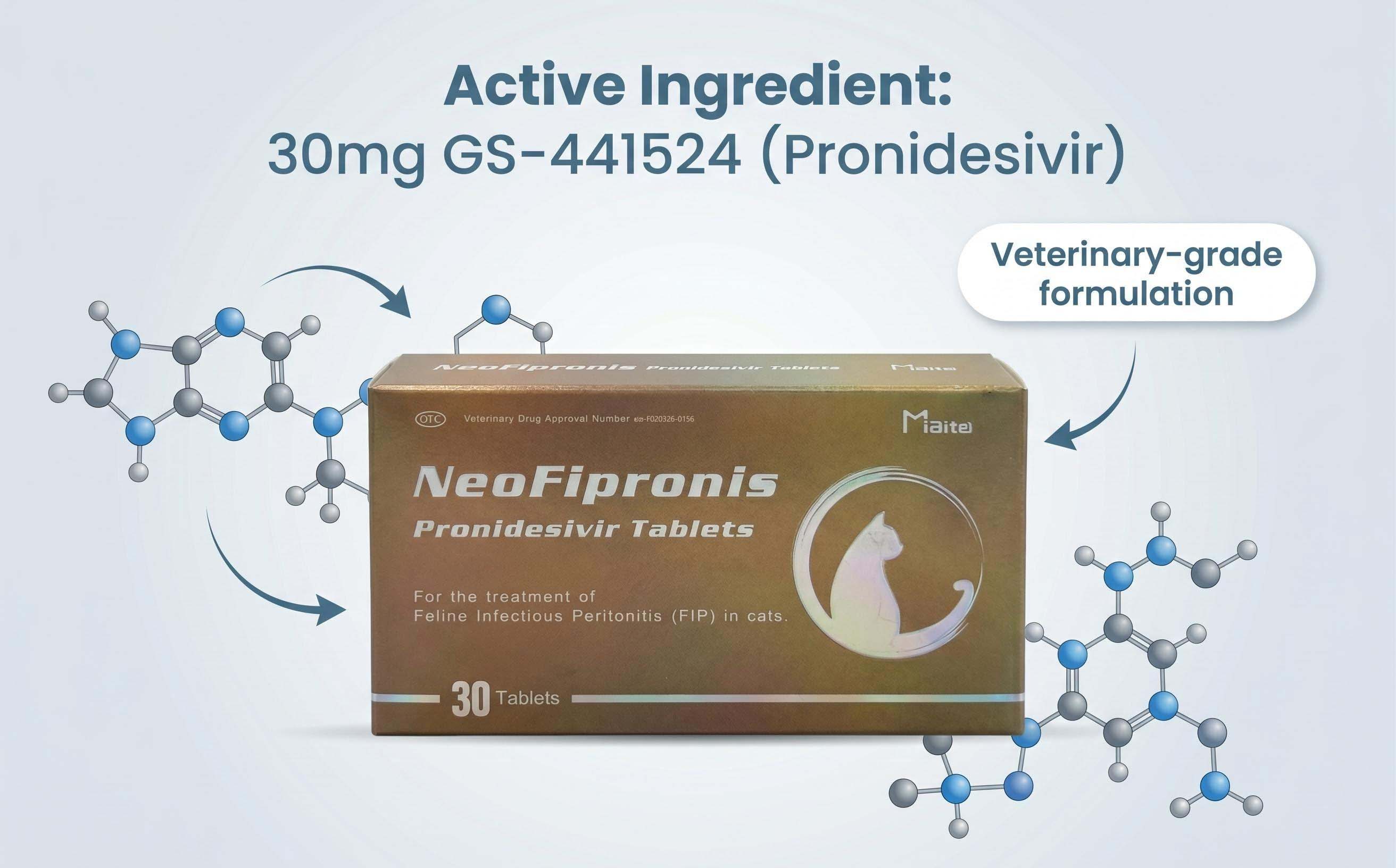
In March 2026, a groundbreaking development in FIP treatment was officially announced by the Lao Ministry of Agriculture and Forestry (MAF). Miaite NeoFipronis (Pronidesivir), an oral medication suitable for symptoms caused by FIP—including loss of appetite, lethargy, fever, ascites, pleural effusion, lymphadenopathy, inflammatory granulomas, nerve damage, and uveitis—was approved with an official drug registration number. This medication shares the same active ingredient as GS-441524 but offers the advantage of oral administration, enhancing ease of use and compliance.
NeoFipronis (Pronidesivir) demonstrates excellent therapeutic effects on FIP, providing a safe, non-invasive, rapidly absorbed, and fast-acting treatment option. Its well-tolerated profile and minimal side effects make it an appealing choice for veterinarians and pet owners seeking an effective cure. The approval of NeoFipronis marks a significant milestone, as it is the world's first officially approved oral drug for FIP, potentially transforming how this disease is managed worldwide.
Can GS-441524 Cure FIP?
While GS-441524 has shown remarkable efficacy in many cases, claiming a universal cure remains cautious. The drug has transformed the prognosis for many FIP-infected cats, especially when administered early and correctly. Most treated cats experience complete remission of clinical signs and return to normal health, with some even considered cured after completing therapy.
However, several factors influence treatment outcomes. These include the stage of the disease at diagnosis, the presence of neurological or ocular involvement, the cat’s overall health status, and the quality of the treatment regimen. Not all cats have the same response, and some may require longer treatment durations or additional supportive therapies.
It’s important to acknowledge that, despite promising results, GS-441524 is not yet officially approved in many countries, and its legal status varies. Veterinary oversight and proper dosing are crucial for safety and efficacy. In addition, while initial data are exceedingly positive, more comprehensive, large-scale studies are needed to definitively confirm its status as a cure.
Future Perspectives and Ongoing Research
The approval of NeoFipronis (Pronidesivir) signals a new era in FIP treatment—moving from experimental to officially licensed therapy. Ongoing research aims to optimize dosing protocols, understand long-term outcomes, and explore potential resistance issues.
Additionally, researchers are investigating combination therapies, integrating antiviral drugs with immunomodulators or supportive care to improve success rates further. The development of reliable diagnostic tools and monitoring methods also enhances treatment precision.
Key Considerations for Pet Owners and Veterinarians
Early Detection: Prompt diagnosis significantly improves treatment success.
Veterinary Supervision: Proper dosing and monitoring are essential to avoid adverse effects.
Treatment Duration: Completing the prescribed course is critical for potential cure.
Supportive Care: Managing symptoms like effusions or neurological signs can aid recovery.
Legal Status: Verify the legality of using GS-441524 in your region.
Conclusion
While GS-441524 has demonstrated remarkable promise in treating FIP, declaring it an absolute cure remains premature. Its success has shifted FIP from a near-certain death sentence toward a manageable and potentially curable disease in many cases. The recent approval of NeoFipronis (Pronidesivir) further solidifies hope, offering a safe and effective oral therapy option. Continued research is essential to fully understand the long-term outcomes and optimize treatment protocols.
For pet owners facing FIP diagnosis, consulting with a veterinarian experienced in antiviral therapies is crucial. As science advances, the prospects for cats suffering from FIP are brighter than ever, with the potential for many to recover fully from this once-devastating disease.
References
1. Pedersen, N.C., & Kim, Y. (2018). Feline Infectious Peritonitis: Update on Pathogenesis, Diagnosis, and Treatment. Veterinary Clinics of North America: Small Animal Practice.
2. Chang, H. & Pedersen, N. C. (2020). The Use of Antiviral Drugs in the Management of Feline Infectious Peritonitis. Journal of Feline Medicine and Surgery.
3. Implementing NeoFipronis (Pronidesivir) Approval: Lao Ministry of Agriculture and Forestry (2026).
4. Addie, D., & Jarrett, O. (2019). Feline Coronavirus and FIP: Current Understanding and Treatment Strategies. Veterinary Microbiology.
5. Johnson, C., et al. (2022). Advances in Antiviral Therapy for Feline Infectious Peritonitis. Journal of Veterinary Pharmacology and Therapeutics.