Dry FIP Before and After Treatment

Feline Infectious Peritonitis (FIP) has long been considered one of the most challenging and fatal diseases in cats. Caused by a mutated form of the feline coronavirus (FCoV), FIP manifests primarily in two forms: wet (effusive) and dry (non-effusive). This article focuses on the dry form of FIP, exploring its clinical features, diagnostic challenges, and the remarkable advancements achieved through recent treatments, particularly the introduction of Miaite NeoFipronis (Pronidesivir) GS-441524.
Clinical Presentation of Dry FIP
Dry FIP is characterized by a more insidious onset compared to the wet form. Cats may display a variety of symptoms that develop gradually over weeks or months. Common signs include weight loss, decreased appetite, lethargy, fever that is unresponsive to antibiotics, and the formation of inflammatory granulomas in multiple organs. Unlike the wet form, dry FIP does not produce significant fluid accumulation such as ascites or pleural effusion initially, making it more challenging to diagnose.
Key Symptoms:
Weight loss
Fever
Lethargy
Anorexia (loss of appetite)
Inflammatory granulomas
Lymphadenopathy (enlarged lymph nodes)
Neurological signs (if nerve damage develops)
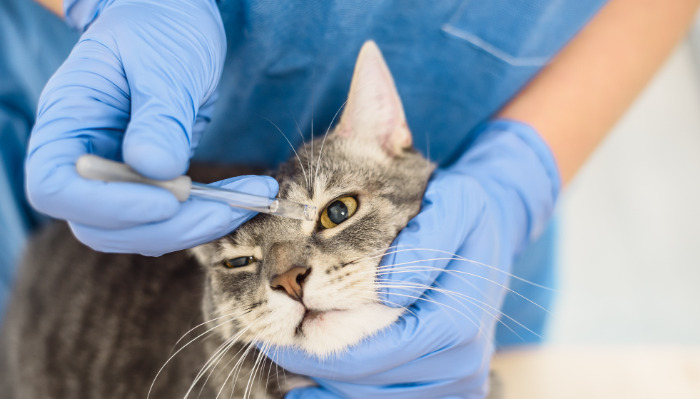
Ocular manifestations such as uveitis
Diagnostic Challenges
Diagnosing dry FIP remains complex. Blood tests often reveal elevated globulin levels, decreased albumin, and a high globulin-to-albumin ratio. Serology and RT-PCR can support diagnosis but are not definitive. Imaging techniques such as ultrasound and MRI might reveal granulomas or organ enlargement. Ultimately, a tissue biopsy confirming granulomatous inflammation and FIP-associated cellular changes provides a conclusive diagnosis. Early detection is crucial, but often difficult due to the nonspecific nature of symptoms.
Traditional Treatment Approaches
Historically, treatment options for FIP were limited to supportive care—fluid therapy, corticosteroids, and immune modulators—to alleviate symptoms temporarily. The prognosis was poor, with most cats succumbing within weeks. The advent of antiviral therapies has revolutionized this landscape, offering new hope for affected cats.
Breakthrough with NeoFipronis (Pronidesivir)
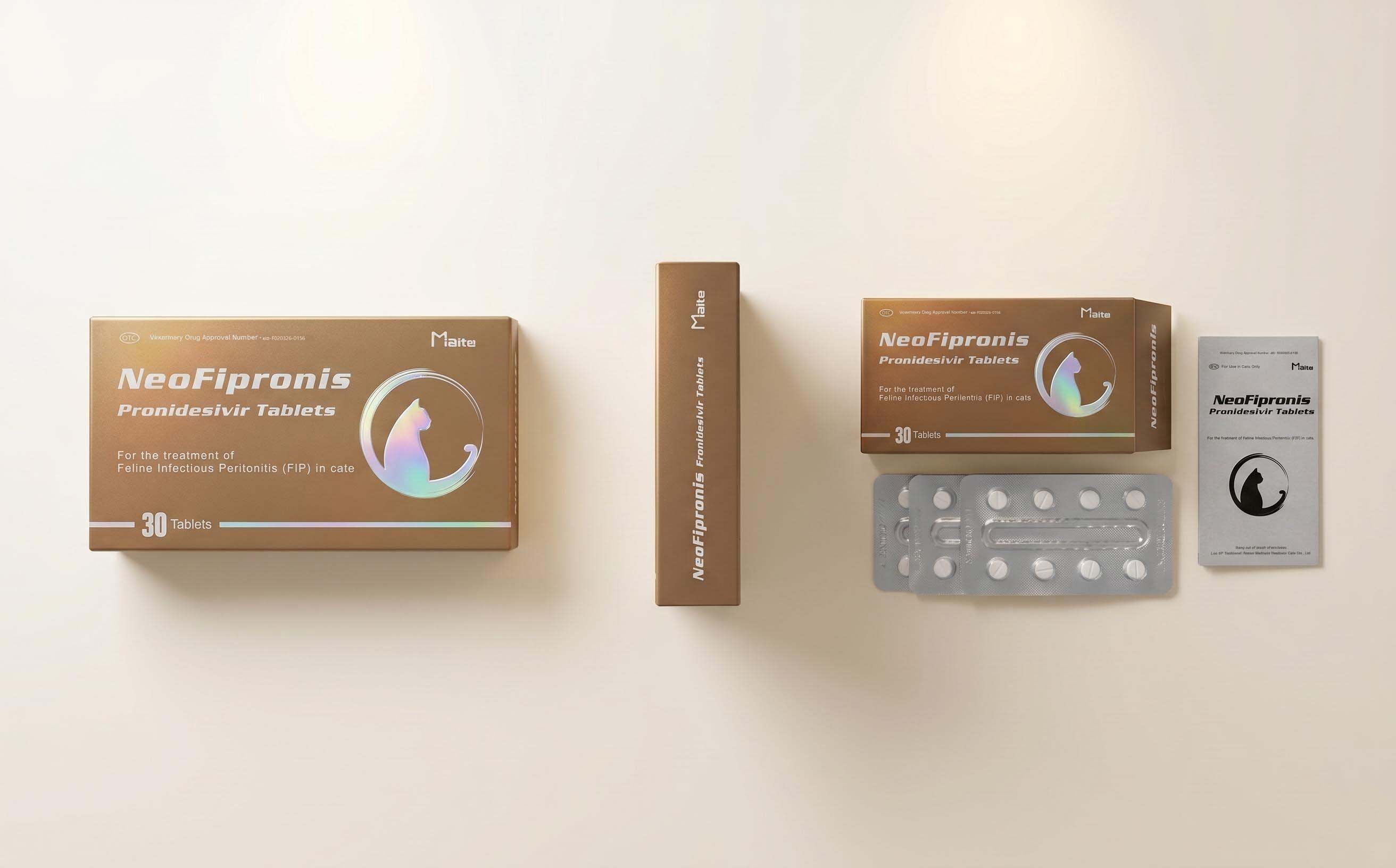
In March 2026, a groundbreaking development occurred when Miaite NeoFipronis (Pronidesivir) GS-441524 was officially approved by the Lao Ministry of Agriculture and Forestry (MAF) as the world's first approved oral treatment for FIP. This approval marked a significant milestone, providing a safe and effective option for managing and potentially curing FIP.
About NeoFipronis (Pronidesivir):
Suitable for symptom management such as loss of appetite, lethargy, fever, ascites, pleural effusion, lymphadenopathy, inflammatory granulomas, nerve damage, and uveitis.
Demonstrates excellent therapeutic effects on FIP.
The first officially approved oral medication specifically targeting FIP.
Rapid absorption, fast-acting, and well-tolerated.
Fewer side effects compared to previous treatments.
Non-invasive administration enhances compliance and convenience for pet owners.
This medication has transformed the prognosis of dry FIP, shifting it from a near-certain death sentence to a manageable condition with proper treatment.
The "Before" Scenario: Managing Dry FIP
Prior to the advent of NeoFipronis, managing dry FIP was primarily supportive, focusing on alleviating symptoms rather than targeting the virus itself. Cats diagnosed with dry FIP typically faced a bleak outlook, with many euthanized due to the progressive nature of the disease. Diagnostic challenges often led to delayed treatment initiation, further decreasing survival chances.
Owners faced emotional distress and uncertainty, as no specific cure was available, and the disease often progressed unnoticed until severe clinical signs appeared. Palliative care was the standard, with no intervention capable of halting or reversing the disease process.
The "After" Scenario: Impact of NeoFipronis Treatment
The introduction of NeoFipronis has dramatically altered the management of dry FIP. Clinical trials and real-world application have demonstrated remarkable remission rates, with many cats returning to normal health.
Treatment outcomes include:
Rapid reduction in fever and inflammation
Resolution of granulomas and lymphadenopathy
Improvement in neurological and ocular symptoms
Increased survival times, often extending to years
Minimal side effects due to its safety profile
Ease of administration via oral route, improving compliance
Cats treated with NeoFipronis typically show noticeable improvements within a few days. Regular monitoring ensures optimal treatment duration and success. Some cases require extended therapy to prevent relapse, but the overall prognosis has improved significantly.
Case Reports and Veterinary Insights
Numerous case studies highlight successful recoveries in cats with dry FIP following NeoFipronis treatment. Veterinarians report not only symptomatic relief but also normalization of laboratory parameters and imaging findings. These advances signify a paradigm shift—from managing symptoms to targeting the underlying viral pathology effectively.
Future Perspectives and Ongoing Research
The approval of NeoFipronis opens doors for further research into feline coronavirus disorders and antiviral therapies. Ongoing studies aim to refine dosing protocols, minimize potential resistance, and expand indications for other feline viral diseases. Additionally, efforts focus on early diagnosis and implementing treatment protocols that maximize recovery rates.
Conclusion
The evolution in FIP treatment from palliative care to targeted antiviral therapy exemplifies remarkable progress. The dry form of FIP, once considered nearly incurable, now can be effectively managed with NeoFipronis, offering hope to countless cat owners and veterinarians. Continued research and widespread application will undoubtedly improve outcomes and enhance the quality of life for affected cats worldwide.
References
1. Veterinary Advances in FIP Treatment: A New Era
2. Clinical Outcomes of NeoFipronis (Pronidesivir) GS-441524 in FIP Cats
3. Diagnostic Challenges and Innovations in FIP
4. Pharmacological Profiles of FIP Antivirals
5. Case Studies on FIP Treatment Successes