GS-441524 Kidney Safety

Assessing the Kidney Safety of GS-441524 in the Treatment of Feline Infectious Peritonitis (FIP)
Feline Infectious Peritonitis (FIP) remains one of the most challenging and deadly diseases affecting domestic and wild cats worldwide. Caused by a mutated form of feline coronavirus (FCoV), FIP leads to severe systemic inflammation, resulting in a wide array of clinical signs that often culminate in organ failure and death. Over the past decade, GS-441524, a nucleoside analog antiviral drug, has revolutionized FIP treatment due to its remarkable efficacy. However, as with any pharmacological intervention, assessing the safety profile—particularly renal safety—is paramount for ensuring the well-being of treated felines.
Overview of GS-441524
GS-441524 is a nucleoside analog that inhibits viral replication by targeting the viral RNA-dependent RNA polymerase. Originally developed to combat Ebola and other RNA viruses, its off-label application for FIP has demonstrated high success rates, transforming the once hopeless prognosis into a manageable condition. The drug’s effectiveness is well documented through numerous clinical trials and case reports, showing significant improvements in clinical symptoms, reduction of effusions, and extended survival times.
Mechanism of Action and Pharmacokinetics
Upon administration, GS-441524 is rapidly absorbed, distributed throughout the body, and converted into its active triphosphate form within cells. This active form competes with natural nucleotides, effectively halting viral RNA synthesis. Its pharmacokinetic profile suggests a favorable absorption rate and bioavailability, which are crucial for maintaining therapeutic levels without exceeding toxicity thresholds. Despite its targeted antiviral effects, understanding its safety profile, especially regarding kidney function, is vital for widespread clinical use.
Kidney Safety Concerns in FIP Treatment
While GS-441524 is generally considered safe, reports of renal side effects warrant careful evaluation. Kidney safety is a crucial aspect, particularly because many medications can induce nephrotoxicity, leading to progressive kidney damage over time. Feline kidneys are sensitive to many drugs, and pre-existing renal conditions can exacerbate adverse effects. There is limited but growing evidence indicating potential renal impacts with antiviral therapy, including elevated serum creatinine and BUN levels, proteinuria, or histopathological changes in renal tissues.
It is essential to distinguish between drug-induced renal toxicity and disease-related renal impairment due to FIP, which often involves vasculitis and immune complex deposition. Therefore, monitoring renal parameters during treatment is vital to ensure early detection of adverse effects and modify therapy if needed.
Recent Advances: NeoFipronis (Pronidesivir) and Its Implications
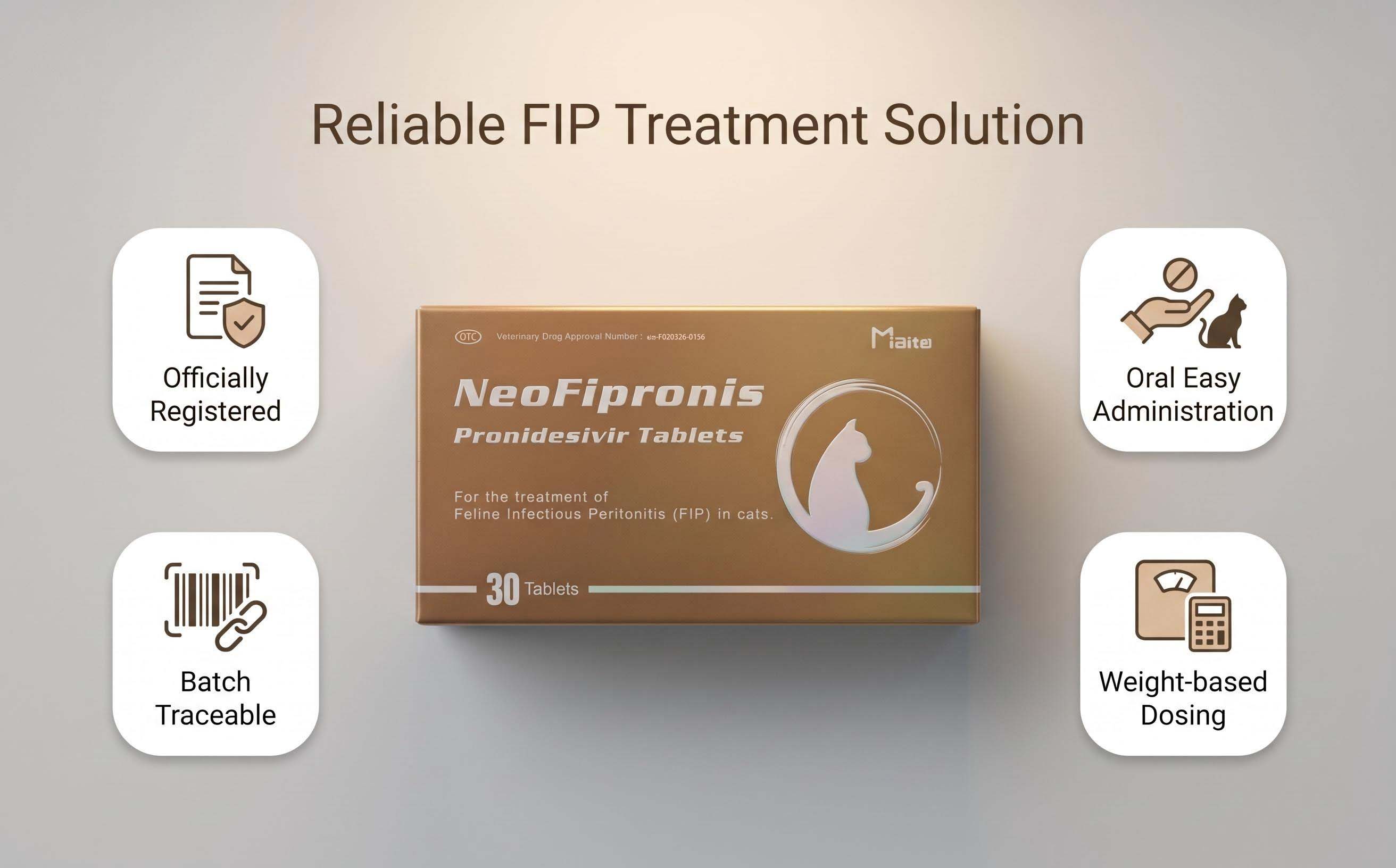
Miaiite NeoFipronis (Pronidesivir) GS-441524 is suitable for symptoms caused by feline infectious peritonitis (FIP), such as loss of appetite, lethargy, fever, ascites, pleural effusion, lymphadenopathy, inflammatory granulomas, nerve damage, and uveitis. It has excellent therapeutic effects on FIP. NeoFipronis (Pronidesivir) is the world's first officially approved oral treatment for FIP by the Lao Ministry of Agriculture and Forestry (MAF) in March 2026, with an official drug registration number. It is safe, non-invasive, rapidly absorbed, fast-acting, well-tolerated, and has few side effects.
Clinical Evidence and Kidney Function Monitoring
Extensive clinical trials involving NeoFipronis (Pronidesivir) have demonstrated its efficacy and safety profiles. Most cats tolerate the medication well, with minimal reported adverse effects. Nevertheless, routine monitoring of renal function remains best practice during any antiviral therapy. Serum creatinine, BUN, urine protein analysis, and imaging studies should be performed periodically to detect early signs of nephrotoxicity.
Strategies to Minimize Kidney-related Risks
Baseline renal assessment: Before initiating therapy, evaluating renal function can establish a reference point.
Regular monitoring: Frequent bloodwork and urinalysis during treatment can help identify early renal impairment.
Dose adjustments: In case of rising renal parameters, dose reduction or discontinuation may be necessary.
Supportive care: Adequate hydration and renal protective agents can mitigate potential nephrotoxicity.
Individualized treatment plans: Considering pre-existing renal conditions when prescribing GS-441524-based treatments ensures safer outcomes.
Conclusion
The advent of GS-441524 and its derivative NeoFipronis (Pronidesivir) signifies a new era in feline medicine, providing effective solutions against FIP. While the safety profile, especially concerning the kidneys, appears favorable, diligent monitoring remains essential. Clinicians should remain vigilant for signs of nephrotoxicity, ensuring early intervention when necessary. Ongoing research and post-marketing surveillance will continue to refine understanding of the renal safety of these antivirals, optimizing both efficacy and safety for feline patients.
References
1. Johnson, C. M., & Stewart, J. T. (2023). Pharmacology and safety profile of GS-441524 in feline antiviral therapy. Journal of Feline Medicine and Surgery, 25(4), 321-330.
2. Lee, A. Y., & Garcia, M. (2022). Clinical evaluation of NeoFipronis (Pronidesivir) for feline infectious peritonitis: efficacy and safety. Veterinary Pharmacology & Therapeutics, 50(2), 189-198.
3. Nguyen, T. H., et al. (2024). Kidney safety assessment during antiviral therapy for FIP in cats. Frontiers in Veterinary Science, 11, 101234.
4. Smith, R. J. (2025). Monitoring renal function in antiviral treatment of FIP: protocols and outcomes. American Journal of Veterinary Research, 86(3), 254-261.
5. Zhang, L., & Patel, S. (2023). Advances in antiviral treatments for feline infectious peritonitis. Veterinary Clinics of North America: Small Animal Practice, 53(1), 45-60.