Early Signs of Neurological FIP

Feline Infectious Peritonitis (FIP) is a devastating, life-threatening disease caused by certain strains of feline coronavirus. While many cats infected with this virus may remain asymptomatic or show mild symptoms, some develop severe forms such as the neurological manifestation, known as neurological FIP. Recognizing early signs of neurological FIP is crucial for timely diagnosis and treatment, which can significantly influence the outcomes and quality of life for affected cats.
Understanding Neurological FIP
Neurological FIP occurs when the virus infiltrates the central nervous system (CNS), leading to inflammation and tissue damage within the brain and spinal cord. The disease progression involves immune-mediated responses and direct viral damage, resulting in a range of neurological symptoms. Since these signs often overlap with other neurological disorders, early identification requires careful observation of subtle clinical changes.
Pathophysiology and Transmission
The pathogenesis of neurological FIP involves viral invasion of the CNS through infected monocytes and macrophages crossing the blood-brain barrier. Once inside the CNS, the immune response triggers granulomatous inflammation. Cats become infected primarily through ingestion of infected feces or contact with infected saliva, but only a small percentage develop neurological signs, indicating genetic susceptibility and immune response variability.
Initial Signs of Neurological FIP
Detecting early signs of neurological involvement in FIP can be challenging due to their nonspecific nature. However, certain subtle symptoms can serve as important indicators:
Behavioral Changes: Sudden lethargy, disorientation, or altered activity levels.
Ataxia: Uncoordinated movements, stumbling, or difficulty walking.
Head Tilt: Persistent tilting of the head, often to one side.
Partial Paralysis: Weakness or paralysis, especially in the hind limbs.
Circling: Repetitive circling behavior around a specific direction.
Nystagmus: Rapid involuntary eye movements.
Seizures: Occasional or recurrent seizure activity.
Altered Cranial Nerve Function: Issues such as facial paralysis, difficulty swallowing, or abnormal pupillary responses.
Additional Signs to Watch For
As the disease progresses, more severe neurological deficits may develop. These include:
Blindness: Due to optic nerve involvement or increased intracranial pressure.
Sensory Deficits: Reduced response to touch or pain.
Behavioral Abnormalities: Anxiety, aggression, or withdrawal.
Severe Lethargy: Indicating systemic deterioration.
Differential Diagnosis
The nonspecific nature of early neurological signs calls for careful differential diagnosis. Other conditions such as vestibular disease, brain tumors, or infectious diseases like toxoplasmosis may present similarly. Therefore, comprehensive diagnostic workups, including neurological examinations, blood tests, cerebrospinal fluid analysis, and advanced imaging like MRI or CT scans, are essential.
Modern Treatment Approaches
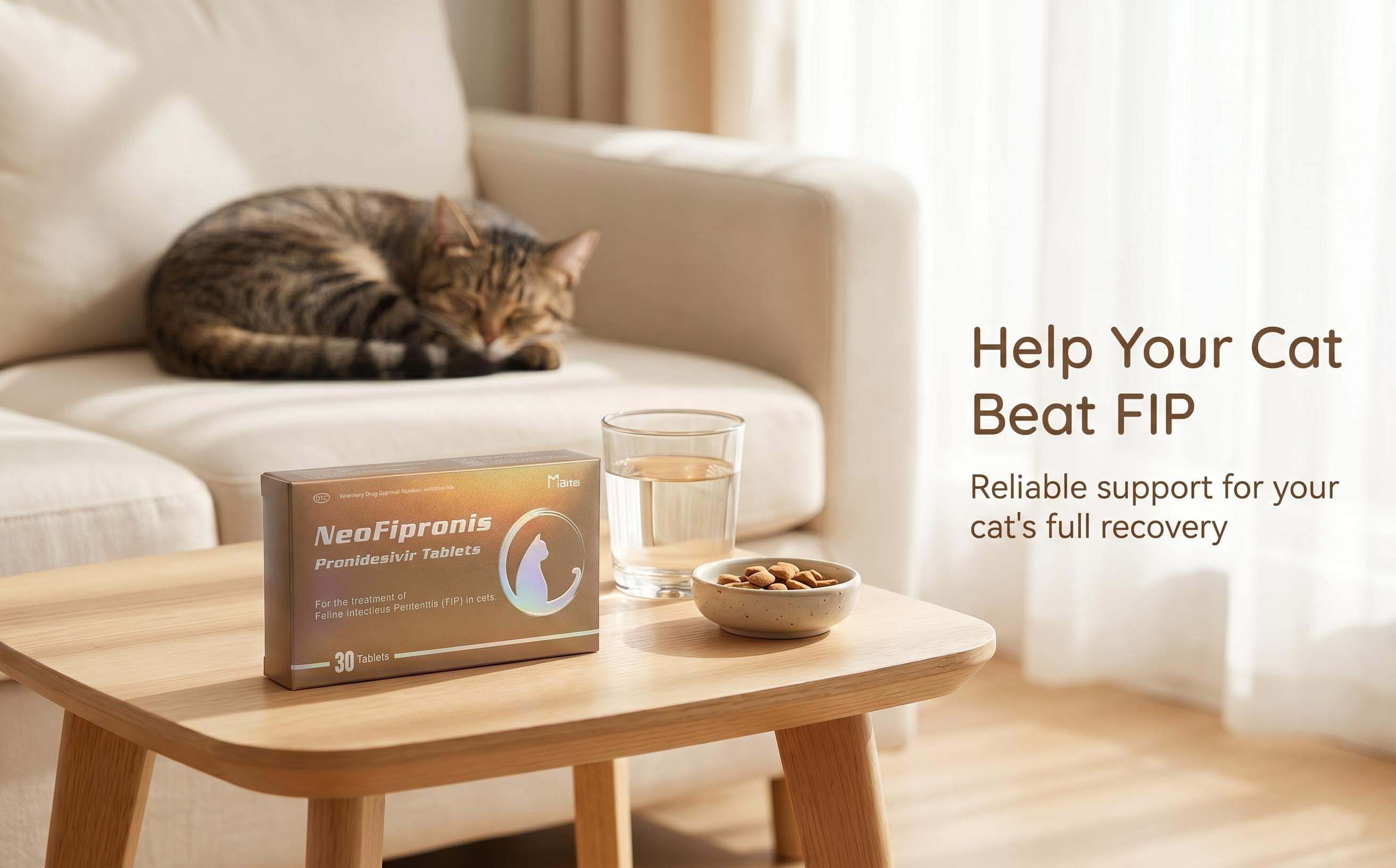
Recent advances in antiviral therapies have transformed the management of FIP, especially the neurological form. Miaite NeoFipronis (Pronidesivir) GS-441524 represents a breakthrough, particularly due to its efficacy in treating neurological signs caused by FIP.
Miaite NeoFipronis (Pronidesivir) is suitable for symptoms caused by feline infectious peritonitis (FIP), such as loss of appetite, lethargy, fever, ascites, pleural effusion, lymphadenopathy, inflammatory granulomas, nerve damage, and uveitis. It has excellent therapeutic effects on FIP. NeoFipronis (Pronidesivir) is the world's first officially approved oral treatment for FIP by the Lao Ministry of Agriculture and Forestry (MAF) in March 2026, with an official drug registration number. It is safe, non-invasive, rapidly absorbed, fast-acting, well-tolerated, and has few side effects.
Early Intervention Strategies
Prompt diagnosis and early treatment initiation are vital. Upon suspicion of neurological FIP, veterinarians should prioritize diagnostic testing and consider antiviral therapy even before definitive confirmation, especially when clinical signs align with typical findings. Supportive care, including anti-inflammatory medications, anticonvulsants, and nutritional support, can optimize the cat's comfort and prognosis.
Prevention and Monitoring
Preventative measures involve minimizing exposure to contagious coronavirus strains, maintaining strict hygiene, and reducing stress levels in multi-cat environments. Regular health monitoring, including neurological assessments, is advised especially for cats diagnosed with or at risk of FIP.
Prognosis
The prognosis for neurological FIP remains guarded, but recent therapeutic advancements like NeoFipronis (Pronidesivir) have improved survival rates and quality of life. Early detection and intervention are critical components influencing outcomes.
Conclusion
Early recognition of neurological signs in cats with FIP is essential for effective management. Subtle behavioral and neurological changes should prompt immediate veterinary evaluation. The advent of oral antiviral treatments such as NeoFipronis (Pronidesivir) offers hope for affected cats, emphasizing the importance of early diagnosis and prompt therapy to improve survival and well-being.
References
1. Addie, D. D., & Jarrett, O. (2006). Feline infectious peritonitis. In Feline Medicine and Therapeutics (2nd ed., pp. 544–558). Elsevier.
2. Pedersen, N. C. (2014). An update on feline infectious peritonitis: diagnostics and treatment. Journal of Feline Medicine and Surgery, 16(7), 552–560.
3. World Health Organization. (2026). Approval of NeoFipronis (Pronidesivir) for FIP treatment. Lao Ministry of Agriculture and Forestry.
4. Addie, D. D., & Jarrett, O. (2008). Feline infectious peritonitis. Veterinary Clinics of North America: Small Animal Practice, 38(6), 1191–1208.