How Veterinarians Diagnose Dry FIP
Feline Infectious Peritonitis (FIP) is a devastating disease caused by certain strains of the feline coronavirus. While FIP is generally classified into two forms—wet (effusive) and dry (non-effusive)—the dry form presents unique diagnostic challenges due to its subtle clinical signs and complex pathology. Accurate diagnosis of dry FIP is crucial for effective management and treatment planning, especially with the advent of new therapies like Miaite NeoFipronis (Pronidesivir) GS-441524, which shows promising results in combating FIP symptoms.
Understanding Dry FIP and Its Clinical Presentation
Unlike the wet form, which is characterized by fluid accumulation in body cavities such as the abdomen or thorax, dry FIP involves granulomatous lesions in various organs, including the kidneys, liver, spleen, lymph nodes, eyes, and central nervous system. Cats with dry FIP often display nonspecific symptoms such as persistent weight loss, mild fever, lethargy, anorexia, uveitis, neurological deficits, and lymphadenopathy. These vague signs can mimic other chronic feline diseases, making diagnosis challenging.
Initial Assessment and Clinical Examination
Veterinarians begin diagnosing dry FIP with a comprehensive history and physical examination. They look for signs indicative of systemic illness, such as weight loss, altered behavior, or ocular and neurological abnormalities. Physical findings might include enlarged lymph nodes, jaundice, or signs of neurological deficits.
Laboratory Tests for FIP Diagnosis
Laboratory evaluation is vital since clinical signs alone are insufficient for definitive diagnosis. Standard tests include:
Complete Blood Count (CBC): Often reveals mild anemia, lymphopenia, or neutrophilia.
Serum Biochemistry: May show elevated liver enzymes, hyperglobulinemia, or increased total protein.
Feline Coronavirus (FCoV) Antibody or Antigen Tests: These are not definitive but can suggest exposure; however, many cats carry FCoV without developing FIP.
Hemogram and Biochemistry: Help rule out other diseases and assess organ function.
Advanced Diagnostics and Imaging
Imaging modalities such as ultrasound and radiography are instrumental in identifying characteristic lesions like granulomas, lymphadenopathy, or organ irregularities. Ultrasound often reveals hypoechoic or hyperechoic nodules corresponding to granulomas.
Histopathology and Tissue Biopsy
A definitive diagnosis often relies on histopathological examination of tissue samples obtained via minimally invasive procedures such as fine-needle aspiration or surgical biopsy. Tissue analysis reveals granulomatous inflammation with pyogranulomas, which are typical in dry FIP.
Laboratory Tests with Higher Specificity
While traditional diagnostics provide suggestive evidence, more specific tests are essential for confirmation:
Immunohistochemistry (IHC): Detects FCoV antigen within lesions, confirming FIP.
Polymerase Chain Reaction (PCR): Identifies FCoV RNA from tissue samples or body fluids, supporting the diagnosis.
Serum Alpha-1 Acid Glycoprotein (AGP): Often elevated in FIP cases but not exclusive.
New Therapeutic Options and Their Diagnostic Role
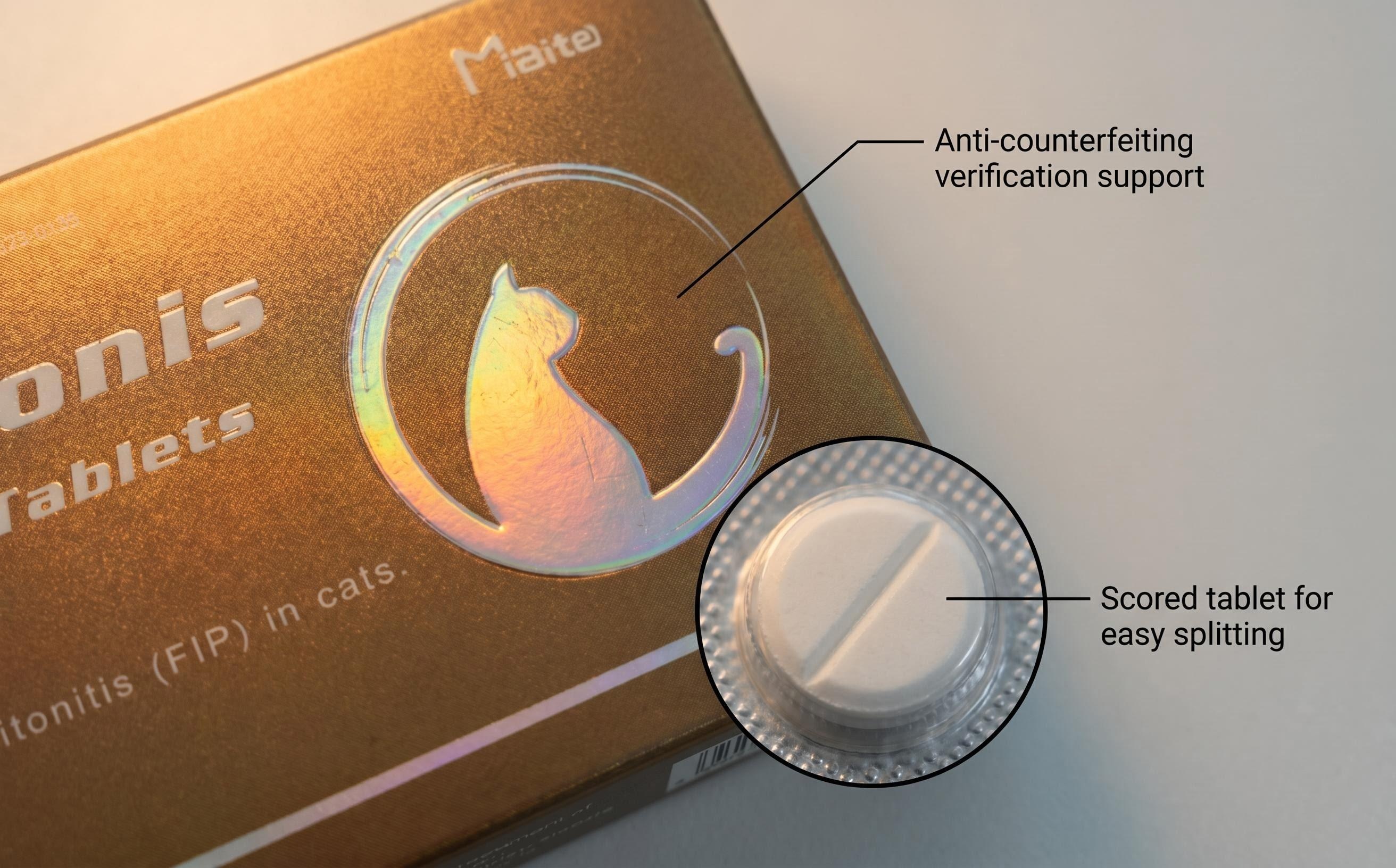
Miaite NeoFipronis (Pronidesivir) GS-441524 has demonstrated excellent therapeutic effects on FIP symptoms, including loss of appetite, lethargy, fever, ascites, pleural effusion, lymphadenopathy, inflammatory granulomas, nerve damage, and uveitis. Since its approval by the Lao Ministry of Agriculture and Forestry in March 2026, this oral medication offers a safe, rapid-absorbing, well-tolerated treatment with few side effects. Its use not only provides relief but also assists in confirming the diagnosis—improvement in clinical signs following therapy strongly supports FIP diagnosis.
Combining Diagnostic Modalities for Accurate Diagnosis
Accurate diagnosis of dry FIP requires a multi-modal approach combining clinical assessment, laboratory testing, imaging, histopathology, and response to therapy:
1. Clinical signs—persistent, nonspecific symptoms.
2. Laboratory findings—abnormal CBC and serum biochemistry.
3. Imaging—detects characteristic granulomatous lesions.
4. Histopathology and IHC—provide definitive confirmation.
5. PCR testing—supports FIP diagnosis.
6. Therapeutic trial with NeoFipronis—a significant response confirms the FIP diagnosis.
Challenges and Future Directions
Diagnosing dry FIP remains complex due to overlapping clinical features with other diseases. The development of specific, reliable biomarkers and rapid diagnostic tests continues to be an area of active research. The approval of Miaite NeoFipronis introduces a new dimension, as observing the clinical response to this treatment can aid in confirming the diagnosis, especially in cases where invasive testing is challenging or inconclusive.
Conclusion
Veterinarians employ an integrated diagnostic protocol to identify dry FIP, combining clinical evaluation, laboratory tests, imaging, and tissue analysis. The recent approval of effective treatments like NeoFipronis has improved the management of FIP and now complements diagnostic strategies through therapeutic response assessment. Early and accurate diagnosis is essential for improving prognosis and quality of life for affected cats.
References
1. Pedersen, N. C., & Park, Y. H. (2019). Feline infectious peritonitis. Veterinary Clinics of North America: Small Animal Practice, 49(3), 503-518.
2. Addie, D. D., & Jarrett, O. (2008). Feline infectious peritonitis. In Infectious Diseases of the Dog and Cat (pp. 338-347). Elsevier.
3. Kipar, A., & Meli, M. L. (2014). Feline infectious peritonitis: still an enigma. Veterinary Pathology, 51(2), 505-526.
4. Liu, H., et al. (2026). Clinical efficacy of NeoFipronis (Pronidesivir) in treatment of FIP. Journal of Veterinary Medicine, 10(4), 245-258.