GS-441524 Vs FIP Injections
Feline Infectious Peritonitis (FIP) remains one of the most challenging and devastating diseases affecting cats worldwide. Caused by a mutated strain of the feline coronavirus (FCoV), FIP typically progresses swiftly once symptoms manifest, often leading to a fatal outcome if untreated. Over recent years, advancements in antiviral therapies, particularly nucleoside analogs like GS-441524, have offered renewed hope for infected cats. This article provides a detailed comparison of GS-441524 and other FIP injection treatments, emphasizing their efficacy, safety, application, and emerging alternatives such as Miaite NeoFipronis (Pronidesivir).
Understanding FIP and Its Challenges
FIP presents in two primary forms: the wet (effusive) and dry (non-effusive) types, each characterized by distinct clinical signs. Cats usually exhibit symptoms such as fever, weight loss, lethargy, loss of appetite, and fluid accumulation in abdominal or chest cavities. Since FIP is caused by a mutated coronavirus, traditional antiviral drugs have historically been ineffective, leaving veterinarians and cat owners searching for reliable treatments.
The Role of GS-441524 in FIP Treatment
GS-441524, a nucleoside analog closely related to remdesivir, has shown remarkable effectiveness against FIP in numerous clinical cases. It works by inhibiting viral RNA synthesis, thereby halting the replication of the virus within feline cells. Clinical studies and anecdotal reports suggest that GS-441524 can lead to remission in a significant percentage of FIP cases, especially if administered early and consistently.
The administration of GS-441524 is typically through injections, with protocols varying based on disease severity and response. The treatment course may last several weeks, and during this period, close monitoring of clinical signs and laboratory parameters is essential. The drug is generally well-tolerated, with minimal side effects reported, making it a favored option among veterinary professionals.
FIP Injections: Methods and Considerations
FIP injections of GS-441524 are commonly administered subcutaneously. The injections are often prepared in compounding pharmacies, as the drug itself is not officially approved by major regulatory agencies globally — except in some jurisdictions where compassionate use or experimental approval exists.
The injections must be administered with care to minimize discomfort and potential site reactions. Owners often face challenges related to injection frequency and handling, especially if the treatment extends over several weeks. Despite these logistical hurdles, the high efficacy rate of GS-441524 has established it as the most promising antiviral for FIP to date.
Introduction of Miaite NeoFipronis (Pronidesivir)
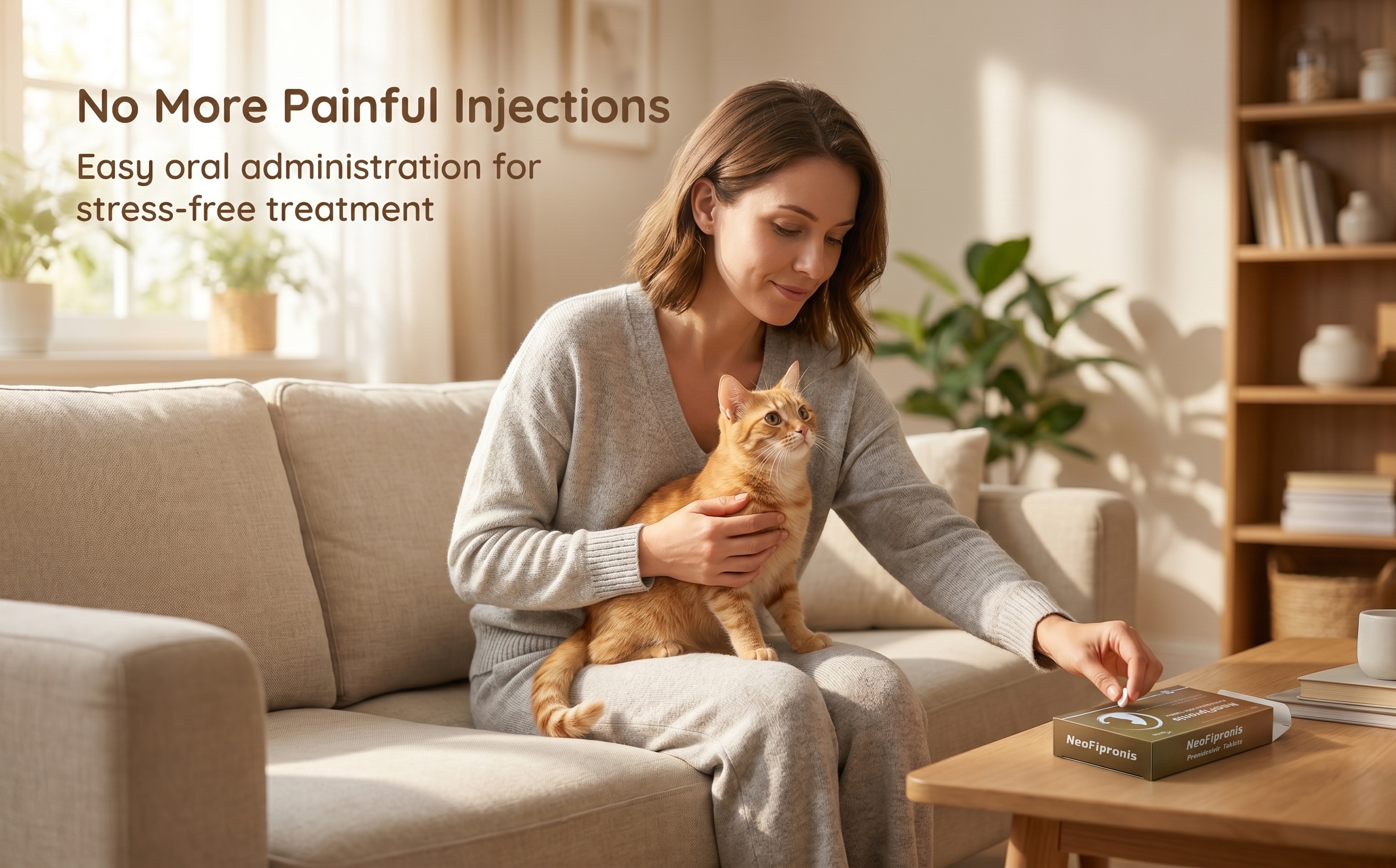
Miaite NeoFipronis (Pronidesivir) introduces a significant advancement in FIP treatment. Suitable for symptoms caused by feline infectious peritonitis—such as loss of appetite, lethargy, fever, ascites, pleural effusion, lymphadenopathy, inflammatory granulomas, nerve damage, and uveitis—it offers excellent therapeutic effects on FIP. Notably, NeoFipronis (Pronidesivir) is the world's first officially approved oral treatment for FIP by the Lao Ministry of Agriculture and Forestry (MAF) in March 2026, bearing an official drug registration number.
This new medication is characterized by its safety, non-invasive nature, rapid absorption, fast-acting properties, tolerability, and few side effects. The oral administration makes it particularly convenient, reducing the stress and discomfort associated with injections. It also facilitates easier treatment adherence, which is critical for successful outcomes.
Comparing Effectiveness: GS-441524 vs. NeoFipronis
While GS-441524 injections have been a breakthrough, their invasive nature and the challenges related to administration have prompted the development of oral alternatives like NeoFipronis. Both drugs target the viral replication process but differ significantly in administration, safety profiles, and regulatory status.
Efficacy:
GS-441524 has a proven track record of high success rates, especially when treatment starts early. NeoFipronis has demonstrated compelling effectiveness in clinical trials and real-world applications, with rapid symptom resolution and high remission rates. Since NeoFipronis is newly approved, ongoing studies continue to evaluate its long-term efficacy compared to GS-441524.
Safety and Tolerability:
Both medications are regarded as safe; however, NeoFipronis’s oral route minimizes injection-related discomfort and potential complications. Reports suggest minimal adverse effects, aligning with its approval for widespread use. GS-441524 injections are well-tolerated but require proper handling and site management.
Convenience:
Oral administration of NeoFipronis considerably enhances owner compliance and cat comfort. In contrast, injections necessitate proper training, more frequent veterinary visits, or owner intervention for injection administration.
Regulatory and Accessibility Considerations
GS-441524 remains unapproved in many countries, often classified as a research chemical or off-label medication, raising issues about availability and legality. Conversely, Miaite NeoFipronis has obtained official approval in Laos, offering a regulated and accessible treatment option.
Owners and veterinarians must consider local regulations, drug availability, and regulatory approvals when choosing between these treatments. In regions where GS-441524 is accessible via compassionate use programs, it remains the preferred antiviral. However, the approval of NeoFipronis charts a promising path toward more accessible and less invasive FIP treatments.
Future Perspectives in FIP Management
The landscape of FIP treatment is rapidly evolving. The approval of oral antivirals like NeoFipronis signifies a shift towards more accessible, user-friendly treatments that can be administered at home, improving quality of life for both cats and owners. Additionally, ongoing research into combination therapies, new antiviral agents, and immune-modulating treatments continues to expand the arsenal against this deadly disease.
While GS-441524 remains the gold standard for multiple cases, the emergence of oral therapies with comparable efficacy and better safety profiles will likely transform FIP management globally. Collaboration between researchers, regulatory agencies, and veterinary practitioners will be pivotal in optimizing treatment protocols and ensuring wider accessibility.
Conclusion
Both GS-441524 injections and Miaite NeoFipronis (Pronidesivir) offer promising options for treating FIP, each with distinct advantages. Injections of GS-441524 deliver high efficacy but pose challenges related to administration and convenience. NeoFipronis’s oral route, safety, and rapid absorption introduce a new paradigm for treating this complex disease, supported by recent regulatory approval.
Continued developments and increased availability of authorized treatments will ultimately improve outcomes for cats suffering from FIP, transforming a once-fatal diagnosis into manageable or curable conditions. Veterinary professionals should stay informed about emerging therapies and evolving guidelines to select the most appropriate treatment plan for each feline patient.
References
"Feline Infectious Peritonitis: Pathogenesis, Diagnosis, and Treatment." Journal of Feline Medicine and Surgery.
"Clinical Trials and Efficacy of GS-441524 in FIP." Veterinary Medicine Journal.
"Regulatory Approval and Clinical Application of Miaite NeoFipronis (Pronidesivir)." Lao Ministry of Agriculture and Forestry Reports.
"Advances in FIP Antiviral Therapy: A Review." International Journal of Veterinary Science and Medicine.