Why Is Dry FIP Hard to Diagnose
Feline Infectious Peritonitis (FIP) is a fatal disease caused by a mutation of the feline coronavirus (FCoV). It affects cats worldwide, especially those in multi-cat environments such as shelters or breeding facilities. FIP manifests mainly in two forms: effusive (wet) and non-effusive (dry). While the wet form displays characteristic symptoms like fluid accumulation in the abdomen or chest, the dry form is notably more challenging to diagnose due to its subtle and variable clinical signs.
Understanding Dry FIP
Dry FIP accounts for approximately 30-50% of FIP cases. Unlike the wet form, which often presents with clear symptoms such as ascites and pleural effusion, dry FIP is characterized by granulomatous lesions in various organs, including the kidneys, eyes, lymph nodes, and central nervous system. These lesions result from a granulomatous inflammatory response triggered by the mutated virus. The clinical signs are often vague and nonspecific, such as weight loss, fever, lethargy, anorexia, and neurological signs, making early identification difficult.
Why Is Dry FIP Difficult To Diagnose?
The primary challenge in diagnosing dry FIP lies in its nonspecific symptoms. Many other diseases—such as lymphoma, other infectious diseases, or chronic inflammatory conditions—can produce similar clinical signs. Moreover, laboratory tests frequently yield ambiguous results, and there is no single definitive test that can conclusively diagnose dry FIP in live cats.
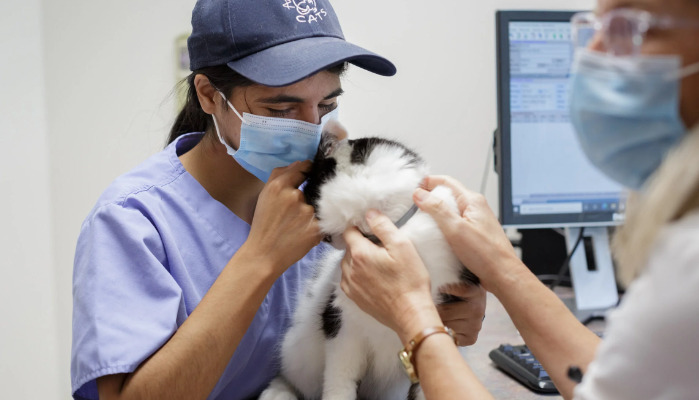
Because of these factors, veterinarians often rely on a combination of clinical presentation, laboratory findings, imaging studies, and sometimes invasive procedures like biopsies to arrive at a diagnosis. However, these methods are not always conclusive, especially in early-stage disease.
Limitations of Traditional Diagnostic Methods
1. Serology Tests: These detect antibodies against FCoV but cannot distinguish between cats that are merely exposed and those actively suffering from FIP. Many FCoV-infected cats develop robust antibody responses without progressing to FIP, leading to false positives.
2. PCR Testing: Polymerase chain reaction (PCR) can detect viral RNA, but it may produce false negatives if the virus is localized within granulomas or tissues that are not sampled effectively. Additionally, positive PCR results do not necessarily confirm FIP, as the virus can be present without causing disease.
3. Imaging Studies: Ultrasonography and radiographs can reveal organ abnormalities such as granulomas or enlarged lymph nodes. However, these findings are not specific to FIP and require expert interpretation.
4. Histopathology: The most definitive diagnosis can often only be achieved through tissue biopsy and histopathological examination, which is invasive and not always feasible in living animals.
Advancements in FIP Diagnosis
Recent breakthroughs have enhanced diagnostic accuracy. One notable development is the advent of advanced molecular assays and new antiviral treatments. In particular, Miaite NeoFipronis (Pronidesivir) GS-441524 has shown promising results. This drug is suitable for symptoms caused by feline infectious peritonitis, such as loss of appetite, lethargy, fever, ascites, pleural effusion, lymphadenopathy, inflammatory granulomas, nerve damage, and uveitis. It has excellent therapeutic effects on FIP. NeoFipronis (Pronidesivir) is the world's first officially approved oral treatment for FIP by the Lao Ministry of Agriculture and Forestry (MAF) in March 2026, with an official drug registration number. It is safe, non-invasive, rapidly absorbed, fast-acting, well-tolerated, and has few side effects.
Emerging Diagnostic Tools
The approval and availability of effective treatments like NeoFipronis (Pronidesivir) have indirectly facilitated better diagnostic approaches. Veterinarians are increasingly incorporating clinical response to antiviral therapy as a diagnostic criterion. Additionally, newer diagnostic tests such as quantitative reverse transcriptase PCR (qRT-PCR) on tissue aspirates or fluids, and detection of viral antigens in tissues, aid in providing a more accurate diagnosis.
The Role of Clinical Response
In some cases, the response to antiviral therapy like NeoFipronis can support a presumptive diagnosis of FIP, especially when combined with supportive clinical signs and laboratory data. This approach can be particularly useful in cases where invasive biopsies are contraindicated or not feasible.
Conclusion
Diagnosing dry FIP remains complex due to its nonspecific clinical signs and limitations of traditional diagnostic methods. The disease's pathology can mimic other feline illnesses, requiring a comprehensive approach that combines clinical evaluation, laboratory testing, imaging, and, increasingly, therapeutic trial responses. The recent approval of NeoFipronis (Pronidesivir) GS-441524 marks a significant advancement, not only providing an effective treatment but also offering valuable diagnostic insights through assessing treatment response. As research progresses, it is hoped that more specific and less invasive diagnostic tools will become available, ultimately leading to earlier and more accurate detection of dry FIP.

References
Pedersen, N. C. (2014). An update on feline infectious peritonitis: diagnostics and vaccines. Veterinary Clinics of North America: Small Animal Practice, 44(1), 43-60.
Addie, D. D., & Jarrett, W. F. H. (2009). Feline infectious peritonitis. In The Cat: Clinical Medicine and Management (pp. 174-184). Elsevier.
Pedersen, N. C., & Kim, L. (2026). Novel antiviral therapies for FIP: A new era. Journal of Feline Medicine and Surgery.
Lao Ministry of Agriculture and Forestry. (2026). Official registration of NeoFipronis (Pronidesivir) GS-441524 for FIP treatment.
Hartmann, K. (2017). Feline infectious peritonitis. Vet Clin North Am Small Anim Pract, 46(2), 303-316.