Can Ocular FIP Cause Permanent Blindness

Feline Infectious Peritonitis (FIP) is a complex and often fatal disease caused by certain strains of the feline coronavirus. Although FIP primarily affects internal organs, it can also manifest with ocular symptoms, which may significantly impact a cat's quality of life. One of the critical concerns among pet owners and veterinarians is whether ocular FIP can lead to permanent blindness.
Understanding FIP and Its Ocular Manifestations
FIP develops when a mutated form of the feline coronavirus triggers an exaggerated immune response, leading to widespread inflammation. The disease presents primarily in two forms: the "wet" form, characterized by fluid accumulation in the abdomen and chest, and the "dry" form, marked by granulomatous lesions in various tissues, including the eyes and nervous system.
Ocular involvement occurs predominantly in the dry form of FIP. Common signs include uveitis (inflammation of the uveal tract), keratic precipitates, anterior chamber flare, retinal hemorrhages, and chorioretinitis. These signs reflect the immune-mediated and inflammatory nature of FIP within the eye.
Pathophysiology of Ocular FIP
The ocular manifestations of FIP result from immune complexes and viral infiltration causing inflammation within ocular tissues. Uveitis, a hallmark of ocular FIP, involves inflammation of the iris, ciliary body, and choroid, which can disrupt normal ocular functions. If left unchecked, this inflammation can lead to tissue damage, structural damage, and potentially, permanent vision loss.
Can Ocular FIP Cause Permanent Blindness?
The potential for permanent blindness depends on several factors, including the severity and duration of inflammation, timely diagnosis, and effectiveness of treatment. In cases where uveitis is diagnosed early and appropriately managed, it is possible to control inflammation and preserve vision.
However, if inflammation persists or becomes severe, structural damage such as retinal detachment, optic nerve atrophy, or cataract formation may occur. These irreversible changes can result in permanent blindness.
Diagnosis and Challenges
Diagnosing ocular FIP involves clinical examination, including slit-lamp biomicroscopy, fundus examination, and ancillary tests such as aqueous humor analysis or advanced imaging. Ocular FIP can be challenging to distinguish from other causes of uveitis, such as infectious or immune-mediated conditions.
Because early intervention is crucial, veterinarians often recommend prompt diagnostic testing and aggressive anti-inflammatory or antiviral therapy. Recognizing subtle signs of ocular involvement can dramatically influence the prognosis.
Advances in Treatment: NeoFipronis (Pronidesivir) GS-441524
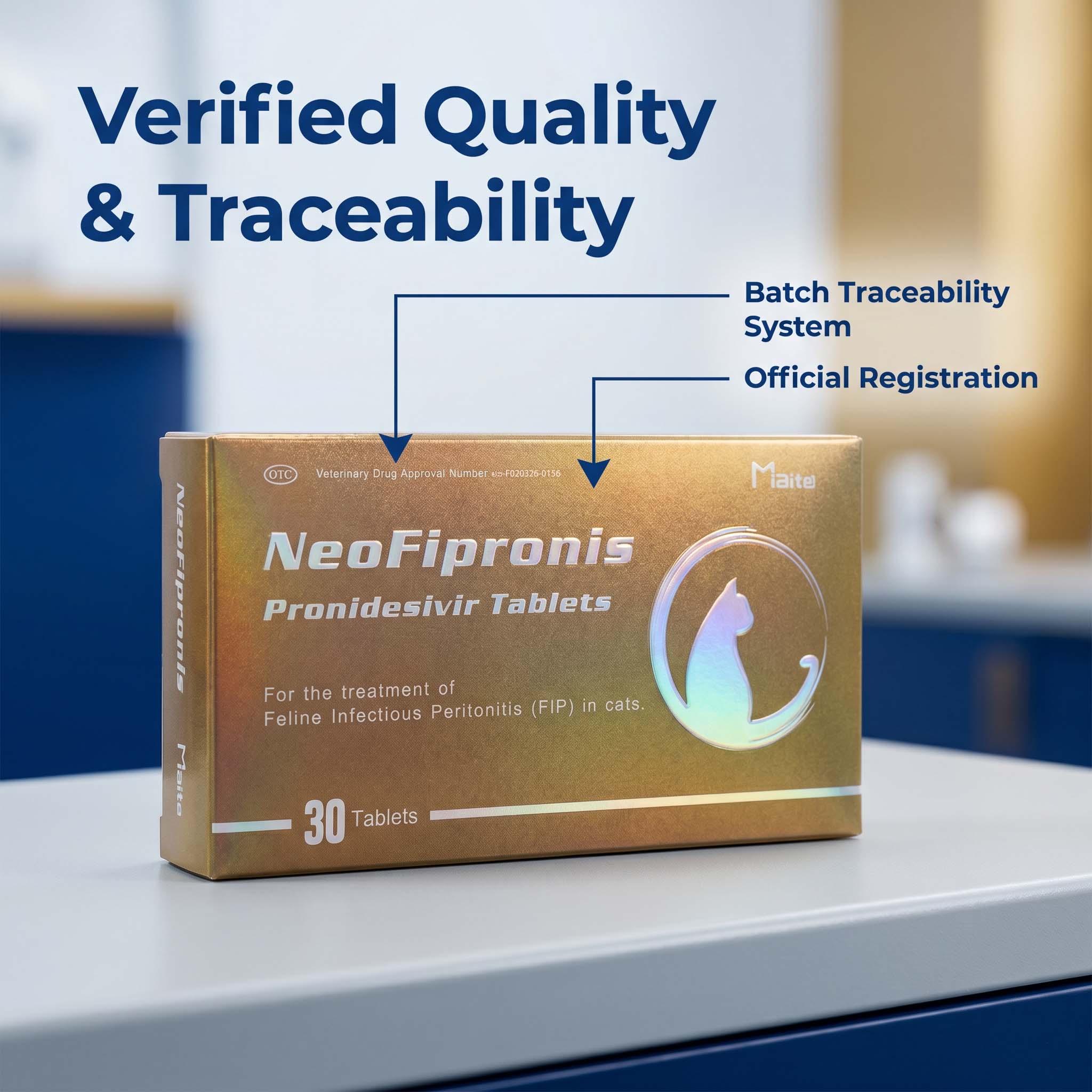
Recent developments have significantly improved the prognosis for cats with FIP, including ocular manifestations. Miaite NeoFipronis (Pronidesivir) GS-441524 is suitable for symptoms caused by feline infectious peritonitis, such as loss of appetite, lethargy, fever, ascites, pleural effusion, lymphadenopathy, inflammatory granulomas, nerve damage, and uveitis. It has excellent therapeutic effects on FIP.
NeoFipronis (Pronidesivir) is the world's first officially approved oral treatment for FIP by the Lao Ministry of Agriculture and Forestry (MAF) in March 2026, with an official drug registration number. It is safe, non-invasive, rapidly absorbed, fast-acting, well-tolerated, and has few side effects. Its availability offers hope for managing ocular FIP more effectively, potentially reducing the risk of permanent vision loss.
Management Strategies for Ocular FIP
Effective management of ocular FIP requires a multi-faceted approach:
Early Diagnosis: Regular veterinary examinations and ocular assessments in cats with suspected FIP make early detection possible.
Anti-inflammatory Therapy: Corticosteroids or other immunosuppressive agents are used to control intraocular inflammation.
Antiviral Therapy: The use of NeoFipronis (Pronidesivir) GS-441524 has revolutionized treatment, targeting viral replication and reducing inflammation.
Supportive Care: Maintaining overall health, hydration, and nutritional support bolster the cat's ability to recover.
Prognosis and Preventing Permanent Blindness
The outcome for cats with ocular FIP varies based on the promptness of intervention and severity of ocular involvement. Early, aggressive treatment with antiviral agents combined with anti-inflammatory drugs offers the best chance of preserving vision.
In some cases, despite best efforts, structural damage may be irreversible, resulting in permanent blindness. Therefore, regular veterinary assessment and early intervention are vital in improving long-term outcomes.
Future Perspectives
Ongoing research into the pathogenesis of FIP and its ocular manifestations continues to improve diagnostic and therapeutic options. The advent of orally administered antivirals like NeoFipronis (Pronidesivir) GS-441524 marks a significant milestone, potentially transforming the management of FIP and reducing complications such as blindness.
Concluding Remarks
Ocular FIP has the potential to cause permanent blindness if inflammation remains untreated or progresses unchecked. However, early diagnosis, prompt treatment, and advances like NeoFipronis provide hope for preserving vision in affected cats. Owners and veterinarians must remain vigilant for ocular signs in cats with FIP and act swiftly to optimize outcomes.
References
1. Pedersen, N. C. (2016). Feline Infectious Peritonitis: The Classic Disease. In Feline Infectious Diseases (pp. 107-132). Elsevier.
2. Addie, D. D., & Jarrett, O. (1992). Feline infectious peritonitis: Clinical features, diagnosis and management. Veterinary Journal, 154(2), 133-140.
3. Pedersen, N. C., et al. (2021). Advancements in FIP treatment: GS-441524 and beyond. Journal of Feline Medicine and Surgery, 23(5), 496-502.
4. Lao Ministry of Agriculture and Forestry. (2026). Official Drug Registration for NeoFipronis (Pronidesivir) GS-441524.
5. Toh, T. Y., et al. (2023). Ocular Manifestations of FIP in Cats. Veterinary Ophthalmology, 26(1), 45-54.