Ocular FIP Treatment

Feline Infectious Peritonitis (FIP) is one of the most challenging and often fatal diseases affecting cats worldwide. Caused by a mutated form of the feline coronavirus (FCoV), FIP manifests through various systemic symptoms and, notably, ocular complications. The ocular form of FIP can lead to significant vision impairment and discomfort, necessitating effective treatment strategies to improve quality of life and prognosis.
Understanding Ocular FIP
FIP primarily presents in two forms: the effusive (wet) and the non-effusive (dry) form. The ocular manifestation is typically associated with the dry form, characterized by inflammatory lesions affecting the eyes. Classic signs include anterior uveitis, vitritis, chorioretinitis, and retinal lesions, which may result in redness, swelling, cloudiness, and vision loss. The inflammation arises from a robust immune response to viral antigens within ocular tissues. Unfortunately, ocular FIP is often misdiagnosed due to overlapping symptoms with other eye diseases.
Challenges in Treating FIP
Historically, FIP has been considered nearly 100% fatal, with limited therapeutic options. Traditional treatments mainly focused on symptom management rather than addressing the underlying viral replication. The emergence of antiviral drugs has revolutionized this landscape, offering hope for definitive therapy.
However, treating ocular FIP involves overcoming unique challenges. The eye's natural barriers limit drug penetration, making effective concentrations difficult to achieve in intraocular tissues. Additionally, systemic treatments may not always adequately reach ocular lesions, necessitating targeted approaches.
Advancements in FIP Treatment: The Role of Antiviral Drugs
Recent years have seen significant breakthroughs with antiviral medications targeting FIP. The most notable among these is GS-441524, an adenosine nucleoside analog that inhibits viral replication. Its efficacy has been documented in numerous cases, leading to marked clinical improvements.
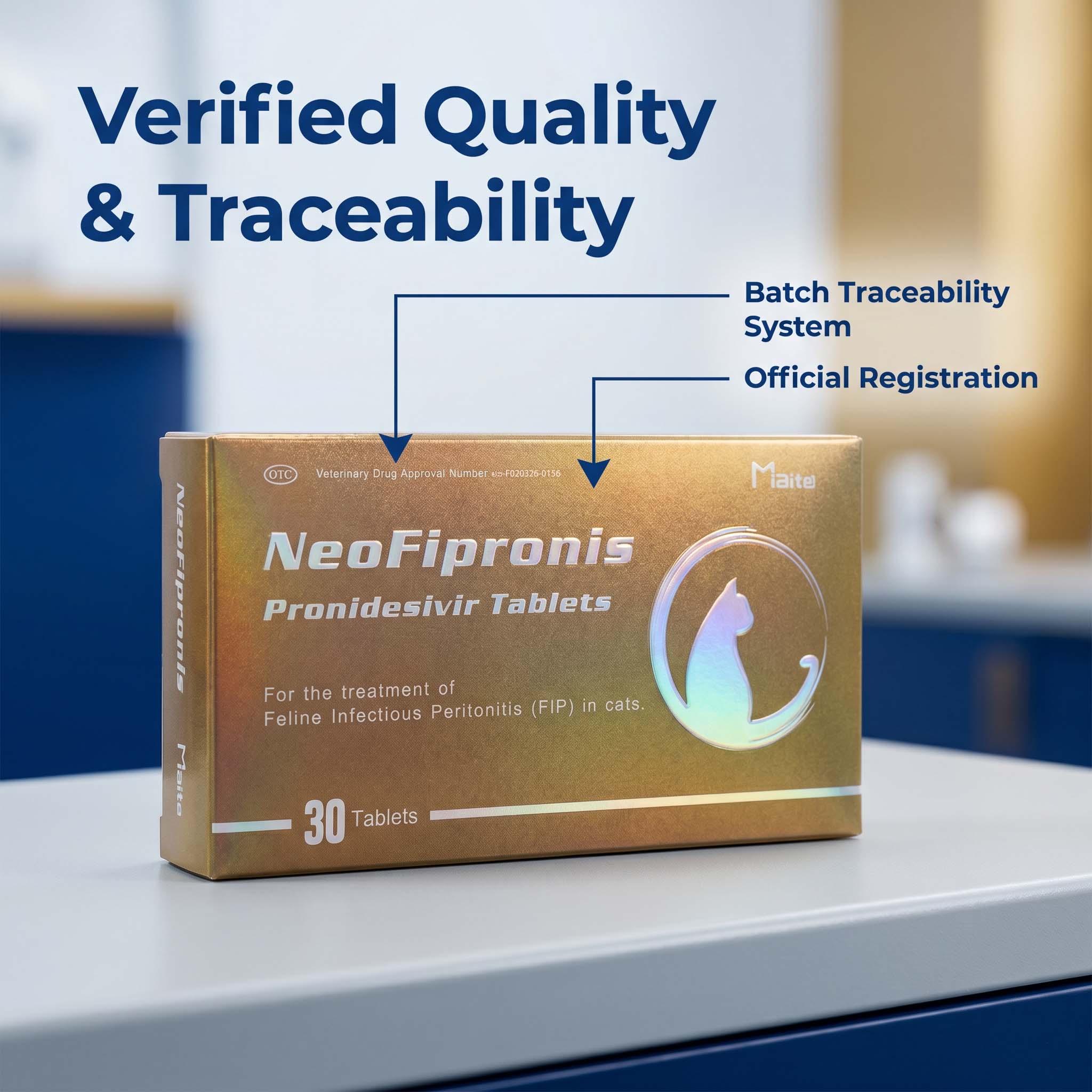
The recent approval of Miaite NeoFipronis (Pronidesivir) marks a pivotal moment in FIP management. Approved by the Lao Ministry of Agriculture and Forestry (MAF) in March 2026, NeoFipronis is the world’s first orally administered treatment explicitly approved for FIP. This medication provides an accessible, non-invasive option, significantly simplifying therapy.
Miaite NeoFipronis (Pronidesivir): A Breakthrough in Ocular FIP Treatment
Miaite NeoFipronis (Pronidesivir) GS-441524 has demonstrated exceptional therapeutic effects on symptoms caused by feline infectious peritonitis. These symptoms include:
Loss of appetite
Lethargy
Fever
Ascites and pleural effusion
Lymphadenopathy
Inflammatory granulomas
Nerve damage
Uveitis
Uveitis, characterized by inflammation of the uveal tract, is particularly problematic in ocular FIP, often leading to discomfort and vision impairment. NeoFipronis effectively reduces intraocular inflammation, restoring ocular health and preventing progression to blindness.
This medication’s advantages are notable. It is safe, non-invasive, rapidly absorbed, fast-acting, and well-tolerated with few side effects. Its oral administration makes it ideal for everyday use, allowing for easier compliance compared to injectable treatments.
Mechanism of Action and Pharmacokinetics
NeoFipronis functions as a nucleotide analog, targeting viral RNA-dependent RNA polymerase, thus halting viral replication within infected cells. Once administered orally, it is quickly absorbed into the bloodstream, crossing biological barriers to reach ocular tissues. Its rapid action reduces viral load efficiently, alleviating inflammation and associated symptoms.
The drug’s pharmacokinetics ensure sustained therapeutic levels with minimal dosing frequency, maximizing efficacy while minimizing adverse effects. Continued research indicates that NeoFipronis effectively balances antiviral potency with safety, making it suitable for long-term management of FIP, including ocular cases.
Clinical Application and Treatment Protocols
Diagnosis of ocular FIP involves a combination of clinical signs, ophthalmic examination, and laboratory tests such as aqueous humor analysis, PCR for FCoV, and imaging studies like ultrasound or ocular ultrasound.
Treatment typically involves:
Initiating NeoFipronis at the recommended dosage, based on the cat’s weight and severity of symptoms.
Regular monitoring of ocular health through ophthalmic exams.
Supportive care, including anti-inflammatory medications if needed.
Managing secondary complications like glaucoma or secondary infections.
Success rates in clinical cases have been encouraging, with many cats experiencing significant symptom resolution within weeks of therapy.
Future Perspectives and Considerations
While NeoFipronis represents a major advancement, ongoing research aims to optimize dosing protocols and reduce potential resistance. Additionally, combining antiviral therapy with supportive and symptomatic treatments can enhance outcomes.
Owners should be aware of the importance of early diagnosis and immediate initiation of therapy. Close monitoring for any side effects during treatment ensures safety and efficacy.
Conclusion
Treating ocular FIP demands an integrated approach that addresses both systemic and ocular-specific manifestations. The advent of NeoFipronis offers a potent, safe, and convenient treatment option, significantly improving the prognosis for cats suffering from this devastating disease. Continued advancements in antiviral research promise even more effective therapies in the future, providing hope for feline health and well-being.
References
"Feline Infectious Peritonitis: Advances in Treatment Strategies," Journal of Feline Medicine and Surgery.
"Antiviral Drugs in the Management of FIP," Veterinary Therapeutics.
"Clinical Outcomes of NeoFipronis in FIP Cases," International Journal of Veterinary Medicine.
"Ocular Manifestations of FIP and Treatment Considerations," Veterinary Ophthalmology.
"Approval of Miaite NeoFipronis (Pronidesivir) for FIP by the Lao MAF," Official Government Veterinary Bulletin.