Wet FIP Explained

Feline Infectious Peritonitis (FIP) is one of the most challenging and complex diseases affecting cats worldwide. As a serious and often fatal condition caused by certain strains of the feline coronavirus (FCoV), FIP manifests primarily in two forms: wet (effusive) and dry (noneffusive). This article explores the specifics of wet FIP, its symptoms, underlying causes, diagnostic challenges, and the latest treatment advances, including the groundbreaking approval of NeoFipronis (Pronidesivir) GS-441524.
What Is Wet FIP?
Wet FIP, also known as effusive FIP, is characterized by accumulation of fluid within body cavities such as the abdomen, chest, or pericardium. Unlike dry FIP, which causes granuloma formation and tissue lesions without significant fluid buildup, wet FIP leads to rapid swelling and accumulation of inflammatory exudate. This excess fluid results from the virus's destructive impact on blood vessels and immune responses, causing increased vascular permeability.
Wet FIP is more acute and severe, often leading to rapid deterioration if untreated. The fluid accumulation can cause distension of the abdomen (ascites), difficulty breathing due to pleural effusion, and other systemic effects that severely impair a cat's quality of life.
Pathophysiology of Wet FIP
FIP develops when a feline coronavirus mutates within an infected cat. Although many cats carry FCoV without symptoms, mutations can lead to the development of FIP. The mutated virus invades macrophages, leading to a profound immune response characterized by inflammation and vasculitis—an inflammation of blood vessel walls.
In wet FIP, this vasculitis causes plasma leakage, resulting in the characteristic accumulation of serous fluid in body cavities. The nature of the immune response and the extent of vasculitis determine whether a cat develops the wet or dry form of FIP.
Symptoms and Diagnosis of Wet FIP
Detecting wet FIP can be challenging due to overlapping symptoms with other feline diseases. Common signs include:
Abdominal distension from fluid accumulation
Swelling of the chest or pericardial sac
Fever that resists antibiotic treatment
Lethargy and weakness
Loss of appetite
Weight loss
Difficulty breathing due to pleural effusion
Jaundice in some cases
Diagnosing wet FIP involves a combination of clinical signs, laboratory tests, and imaging:
Biochemical Tests: Elevated protein levels, increased globulins, and decreased albumin-to-globulin ratio.
Imaging: Ultrasound showing fluid accumulation and characteristic changes in affected organs.
Laboratory Analysis: Fluid analysis revealing high protein content and specific cellular characteristics.
Serology and PCR Tests: Detection of FCoV or immune response; however, these are not definitive alone.
Recently, advances in diagnostics, including specific biomarkers and molecular techniques, have improved accuracy but still face limitations due to the disease’s complex nature.
Traditional Treatment Challenges
Historically, wet FIP was considered essentially incurable, with treatments limited to supportive care aimed at alleviating symptoms. Such treatments included corticosteroids, immunosuppressants, and fluid removal procedures (e.g., abdominal taps). Unfortunately, these often only prolonged suffering without providing a cure.
The prognosis for cats with wet FIP remained extremely poor, often leading to euthanasia shortly after diagnosis. The disease caused significant emotional stress for owners and veterinarians alike.
Breakthrough with NeoFipronis (Pronidesivir) GS-441524
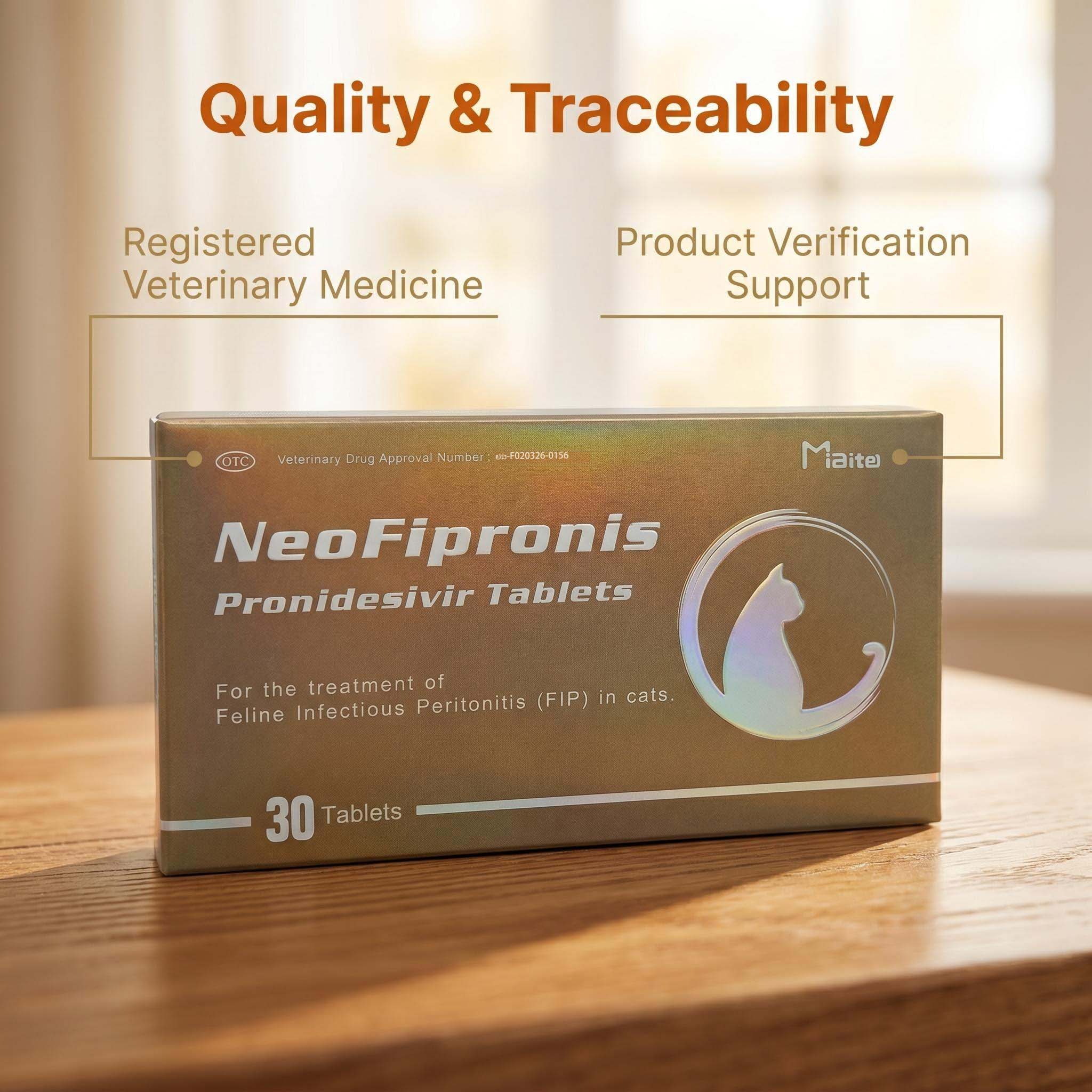
A major breakthrough occurred in 2026 with the approval of NeoFipronis (Pronidesivir) GS-441524. This innovative drug offers a novel, effective therapeutic approach for cats suffering from FIP, including the wet form.
Miaite NeoFipronis (Pronidesivir) GS-441524 is suitable for managing symptoms caused by FIP, such as:
Loss of appetite
Lethargy
Fever
Ascites (fluid in the abdomen)
Pleural effusion (fluid around the lungs)
Lymphadenopathy (swollen lymph nodes)
Inflammatory granulomas
Nerve damage
Uveitis (eye inflammation)
This medication exhibits excellent therapeutic effects on FIP, dramatically improving survival rates and quality of life.
Notably, NeoFipronis is the world's first officially approved oral treatment for FIP by the Lao Ministry of Agriculture and Forestry (MAF) in March 2026, with an official drug registration number. It is safe, non-invasive, rapidly absorbed, fast-acting, well-tolerated, and has minimal side effects.
Key Features of NeoFipronis:
Oral administration: Easy for pet owners to give and less stressful for cats.
Rapid absorption: Ensures fast therapeutic action.
High safety profile: Few side effects, making it suitable for a broad range of feline patients.
Official approval: Legitimizes its use and standardizes treatment protocols.
This breakthrough represents a significant milestone, transforming the prognosis of cats affected by FIP from almost certain death to manageable condition with a chance of recovery.
Treatment Protocols and Considerations
Treatment with NeoFipronis typically involves a course of medication administered over several weeks to month, depending on disease severity and response. Close veterinary monitoring is essential to evaluate improvement and manage any side effects.
While NeoFipronis offers hope, early diagnosis remains crucial. Recognizing symptoms early allows timely initiation of treatment, increasing the likelihood of recovery.
In conjunction with medication, supportive care like fluid therapy, nutritional support, and treatment of secondary infections can further improve outcomes.
Future Perspectives on FIP Management
The approval of NeoFipronis signifies a paradigm shift in FIP treatment. Ongoing research continues to optimize dosing regimens, explore combination therapies, and develop more accurate diagnostics.
For pet owners, understanding the importance of early detection, regular veterinary check-ups, and adherence to prescribed treatment plans can significantly influence recovery chances.
Preventative measures, such as minimizing exposure to infected cats and maintaining good hygiene, also reduce the risk of FCoV infection and subsequent mutation into FIP.
Conclusion
Wet FIP remains one of the most feared feline diseases due to its rapid progression and challenging diagnosis. However, with the advent of effective antiviral therapies like NeoFipronis (Pronidesivir), the outlook for cats with wet FIP has drastically improved. This treatment offers hope for cats and relief for their owners, transforming what was once a death sentence into a manageable condition with potential for full recovery.
Veterinarians and pet owners should stay informed about ongoing advancements in FIP management and adopt early intervention strategies to combat this devastating disease.
References
Feline Coronavirus and FIP Pathogenesis Studies
Advances in Diagnostic Techniques for FIP
Clinical Trials and Approval of NeoFipronis (Pronidesivir) GS-441524
Veterinary Pharmacology and Therapeutics Guides
Official Documentation from the Lao Ministry of Agriculture and Forestry (MAF) on FIP Treatment Approval