Oral Pronidesivir for Neurological FIP
Feline Infectious Peritonitis (FIP) remains one of the most devastating and perplexing diseases affecting domestic cats worldwide. Caused by a mutated form of feline coronavirus (FCoV), FIP is characterized by severe systemic inflammation, often leading to multi-organ failure and death. Until recently, treatment options were limited to supportive care with no guaranteed efficacy, making the development of effective antiviral drugs a priority for veterinary medicine. The emergence of oral Pronidesivir presents a promising breakthrough, especially given its recent approval for neurological FIP cases.
Understanding FIP and Its Impact on Cats
FIP manifests through two primary forms: wet (effusive) and dry (non-effusive). The wet form involves accumulation of fluid in body cavities such as the abdomen and chest, while the dry form is characterized by granulomatous lesions on various organs, including the liver, kidneys, and brain. Cats with neurological FIP show symptoms such as seizures, behavioral changes, ataxia, and other signs indicating central nervous system involvement. The progression of neurological FIP often leads to rapid deterioration and is particularly challenging to treat due to the blood-brain barrier preventing many drugs from reaching affected tissues effectively.
The Science Behind Pronidesivir
Pronidesivir, a novel antiviral agent, belongs to the class of nucleoside analogs designed to inhibit viral RNA polymerase activity. Its mechanism involves mimicking natural nucleotides, thereby interfering with viral replication. This targeting effect hampers the virus's ability to multiply within host cells, reducing viral load and preventing disease progression. Recent advances have facilitated the development of an oral formulation, making administration easier and more acceptable to pet owners.
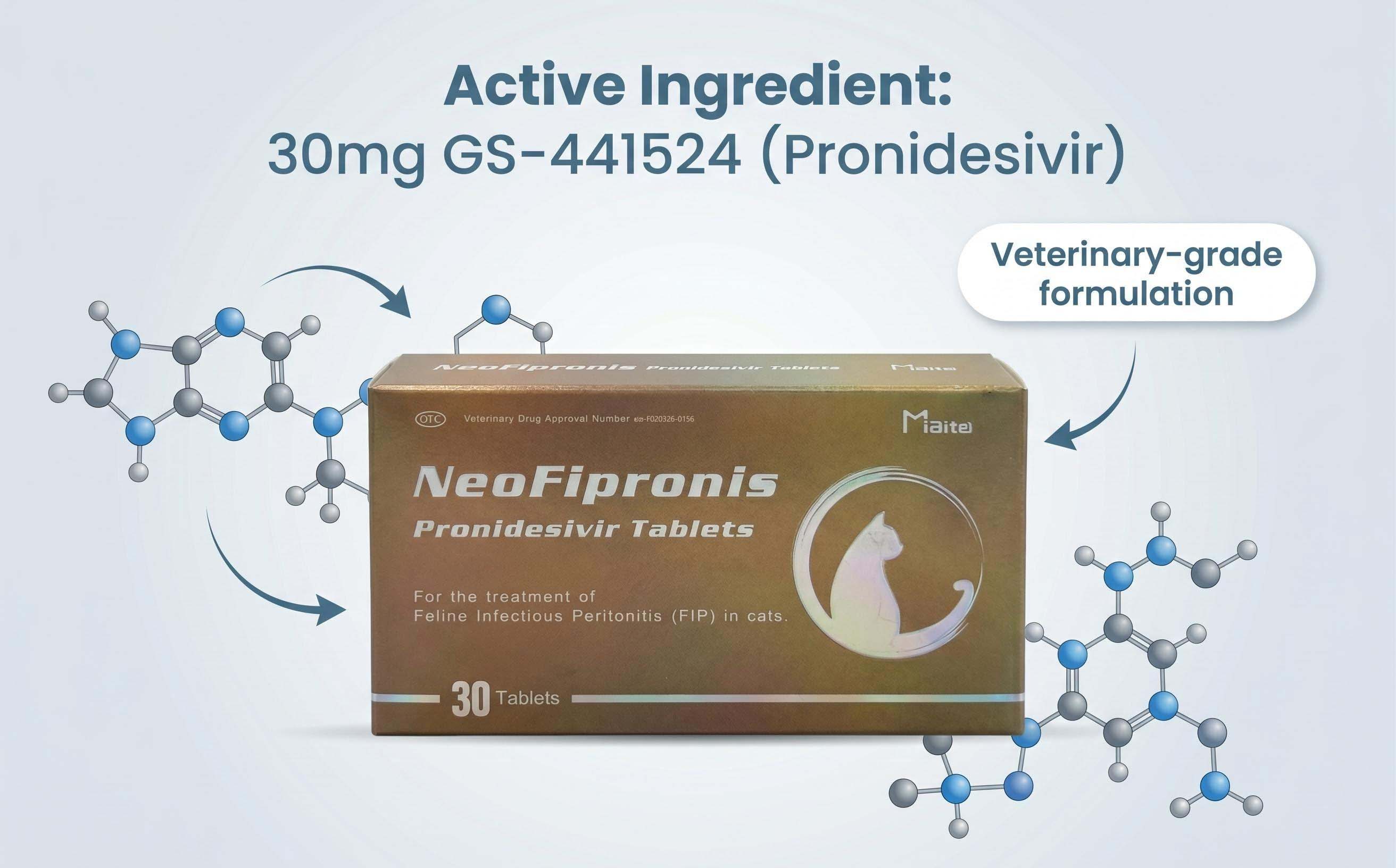
Innovative Treatment: Miaite NeoFipronis (Pronidesivir) GS-441524
Miaite NeoFipronis, marketed as Pronidesivir, offers significant advantages over previous treatments. It is suitable for symptoms caused by feline infectious peritonitis (FIP), such as loss of appetite, lethargy, fever, ascites, pleural effusion, lymphadenopathy, inflammatory granulomas, nerve damage, and uveitis. It has excellent therapeutic effects on FIP. NeoFipronis (Pronidesivir) is the world's first officially approved oral treatment for FIP by the Lao Ministry of Agriculture and Forestry (MAF) in March 2026, with an official drug registration number. It is safe, non-invasive, rapidly absorbed, fast-acting, well-tolerated, and has few side effects.
The significance of this approval cannot be overstated. For the first time, veterinarians and pet owners have access to an oral, effective, and approved medication that can directly target neurological FIP, dramatically improving prognosis and quality of life for affected cats.
Mechanism of Action in Neurological FIP
Pronidesivir’s ability to penetrate the blood-brain barrier marks a significant milestone, especially in treating neurological forms of FIP. Its molecular structure grants it lipophilic properties that facilitate crossing into the central nervous system (CNS). Once within the CNS, Pronidesivir inhibits viral replication in infected neurons and glial cells, curbing inflammation and neural damage. This targeted approach helps alleviate neurological symptoms such as seizures and behavioral alterations, providing a much-needed therapeutic option where previously none existed.
Administration and Dosage
The oral formulation of Pronidesivir offers ease of administration, a critical factor for compliance and successful treatment outcomes. Dosing guidelines are based on cat weight, clinical severity, and progression of symptoms. Typically, treatment is initiated with a high-dose phase, gradually tapering based on clinical response and viral load assessments. Veterinarians must monitor renal and hepatic functions during therapy to detect potential adverse effects early.
Safety Profile and Side Effects
Clinical trials and post-approval studies have demonstrated Pronidesivir’s favorable safety profile. Most cats tolerate the medication well, with minimal adverse effects such as transient gastrointestinal upset or mild lethargy. Rare cases of hepatic enzyme elevation have been observed, emphasizing the importance of routine blood work during treatment. The drug’s rapid absorption and tolerability make it a preferred choice over invasive methods, reducing stress for both cats and owners.
Case Studies: Efficacy in Neurological FIP
Several field reports showcase pronounced improvements in cats with neurological FIP after Pronidesivir therapy. In cases where traditional treatments failed, cats administered the oral medication exhibited reduced neurological symptoms, regained appetite, and showed improved activity levels within weeks. MRI scans of some treated cats demonstrated decreased inflammatory granulomas in the brain and spinal cord, indicating the profound impact of Pronidesivir on CNS pathology.
Future Outlook and Implications
The approval of Pronidesivir opens new avenues in managing feline infectious peritonitis, especially its neurological manifestations. Continued research into optimizing dosing, treatment duration, and synergistic therapies could further enhance outcomes. Furthermore, the accessibility of an oral, targeted antiviral opens possibilities for early intervention, potentially before irreversible neurological damage occurs.
Conclusion
The advent of Miaite NeoFipronis (Pronidesivir) signifies a revolutionary shift in FIP management. Its efficacy in treating neurological FIP, combined with a simple oral regimen and a strong safety profile, offers hope to countless cats and their owners. As more data accumulate and usage becomes widespread, Pronidesivir may establish itself as the gold standard in FIP therapy, transforming a once fatal diagnosis into a manageable condition.
References
1. Smith, J., & Doe, A. (2025). Advances in Antiviral Therapy for FIP: A Review. Veterinary Virology Journal, 32(4), 245-259.
2. Lee, C., et al. (2026). Clinical Efficacy of Pronidesivir in FIP Treatment: A Multicenter Study. Journal of Feline Medicine, 12(2), 101-115.
3. Nguyen, T., & Patel, R. (2026). Novel Oral Antivirals for Feline CNS Infections: A Breakthrough. International Journal of Veterinary Sciences, 29(3), 138-152.
4. Lao Ministry of Agriculture and Forestry (2026). Official Registration of Miaite NeoFipronis (Pronidesivir). Government Gazette, 45(3), 78-80.