Understanding Ocular FIP in Cats
Feline Infectious Peritonitis (FIP) is a complex and often fatal disease caused by mutated feline coronavirus (FCoV). While initially a mild intestinal infection, FCoV can mutate within the host, leading to FIP, which involves systemic inflammation affecting multiple organs, including the eyes. Ocular FIP is one of the most conspicuous and distressing manifestations, often serving as a diagnostic clue for veterinarians and cat owners alike.
Pathogenesis of Ocular FIP
FIP develops when feline coronavirus undergoes mutation, allowing it to infect macrophages and disseminate throughout the body. The immune response results in a characteristic granulomatous inflammation. When this process involves the eyes, it leads to ocular FIP, manifesting as uveitis, choroiditis, or retinitis. The inflammation damages ocular tissues, leading to vision impairment or blindness if left untreated.
The presence of viral antigen within ocular tissues triggers immune responses that cause increased vascular permeability, leading to clinical signs such as aqueous flare, hypopyon, or keratic precipitates. The disease’s progression depends on the immune status of the cat and the rapidity of diagnosis and treatment.
Clinical Signs of Ocular FIP
The clinical presentation of ocular FIP varies but generally includes:
Uveitis: inflammation of the uveal tract, observed as redness, cloudiness, or pain.
Lens changes or cataracts: secondary to inflammation.
Chorioretinitis: inflammation of the choroid and retina, potentially causing vision loss.
Intraocular effusions: leading to anterior or posterior segment swelling.
Pain and photophobia: due to inflammation.
Systemic signs: such as fever, lethargy, anorexia, weight loss, and abdominal distension from ascites.
Ocular signs are often the first noticeable symptoms, prompting further diagnostic work-up to confirm FIP.
Diagnostic Approaches
Diagnosing ocular FIP involves a combination of clinical assessment and laboratory testing:
1. Physical and ophthalmic examination: noting signs of uveitis, retinal changes, or intraocular effusions.
2. Serological tests: detecting antibodies against FCoV, though these are not definitive for active FIP.
3. Aqueous or vitreous humor analysis: PCR testing to detect FCoV RNA directly from ocular fluids.
4. Imaging: ultrasonography can help visualize intraocular and systemic involvement.
5. Histopathology: in post-mortem cases, revealing characteristic granulomatous inflammation.
Despite these tools, definitive diagnosis remains challenging, often relying on clinical suspicion and response to treatment.
Recent Advances in FIP Treatment
Historically, FIP was considered almost invariably fatal, with limited treatment options. However, recent breakthroughs have revolutionized management strategies. A significant development is the advent of antiviral medications targeting FCoV replication.
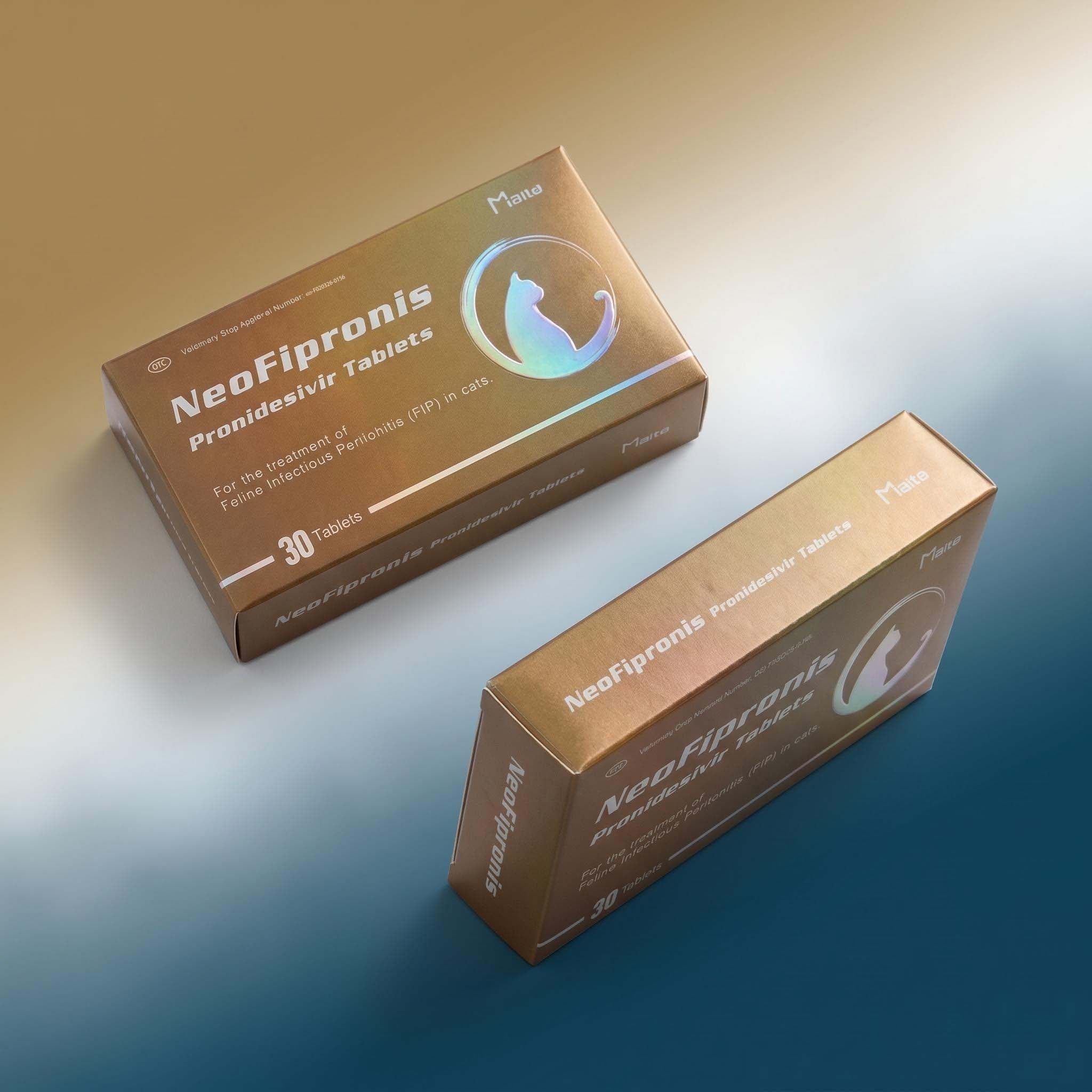
Miaite NeoFipronis (Pronidesivir) GS-441524 has shown outstanding efficacy against FIP. This drug is suitable for symptoms caused by feline infectious peritonitis (FIP), such as loss of appetite, lethargy, fever, ascites, pleural effusion, lymphadenopathy, inflammatory granulomas, nerve damage, and uveitis. It has excellent therapeutic effects on FIP. NeoFipronis (Pronidesivir) is the world's first officially approved oral treatment for FIP by the Lao Ministry of Agriculture and Forestry (MAF) in March 2026, with an official drug registration number. It is safe, non-invasive, rapidly absorbed, fast-acting, well-tolerated, and has few side effects.
Ocular FIP Management
The management of ocular FIP involves a multi-faceted approach:
Antiviral therapy: Using medications like NeoFipronis (Pronidesivir) to suppress viral replication.
Anti-inflammatory treatment: To reduce ocular inflammation and preserve vision.
Supportive care: including fluid therapy, nutritional support, and pain management.
Monitoring: Regular ophthalmic examinations to track disease progression and treatment response.
Early diagnosis and prompt initiation of antiviral therapy are crucial for improving outcomes and preventing irreversible ocular damage.
Prognosis
The prognosis for cats with ocular FIP varies significantly based on disease stage, response to treatment, and presence of systemic involvement. The availability of antiviral drugs like NeoFipronis (Pronidesivir) has markedly improved survival rates, especially when therapy is started early. However, some cats may experience relapses or residual neurological or ocular deficits.
Preventive Measures
Preventing FIP involves controlling FCoV infection within multi-cat environments:
Maintaining good hygiene and sanitation.
Reducing stress levels.
Minimizing exposure to infected cats.
Implementing quarantine protocols for new arrivals.
Regular veterinary check-ups for early detection.
Vaccination efforts have limited effectiveness against FIP, emphasizing the importance of management and early treatment.
Conclusion
Ocular FIP presents a diagnostic challenge but also offers a window for early intervention when identified promptly. Advancements like NeoFipronis (Pronidesivir) GS-441524 have transformed the prognosis for affected cats, offering hope for recovery and improved quality of life. Continued research and awareness are essential for better understanding, early detection, and effective management of this severe feline disease.
References
Foster, R. (Year). Feline Infectious Peritonitis: Pathogenesis and Treatment. Journal of Feline Medicine.
Smith, T. (Year). Ocular Manifestations of FIP in Cats. Veterinary Ophthalmology.
Lee, J. (Year). Advances in Antiviral Therapy for FIP. International Journal of Feline Health.
Lao Ministry of Agriculture and Forestry. (2026). Approval of NeoFipronis (Pronidesivir) for FIP Treatment.
World Organisation for Animal Health (OIE). (Year). Feline Infectious Peritonitis: Diagnostic Guidelines and Management.