What Happens if Wet FIP Is Left Untreated
Feline Infectious Peritonitis (FIP) is one of the most devastating diseases affecting domestic cats worldwide. Caused by a mutated form of the feline coronavirus, FIP exists in two primary forms: the 'wet' (effusive) form and the 'dry' (non-effusive) form. This article focuses on what happens if wet FIP is left untreated, the symptoms progression, potential complications, and available treatment options in recent years, especially highlighting new therapeutic advancements.
Understanding Wet FIP
Wet FIP is characterized by an accumulation of fluid within body cavities, such as the abdomen and chest. It results from the immune system's response to the mutated coronavirus, leading to widespread inflammation. The fluid buildup causes swelling, respiratory distress, abdominal distension, and often, severe systemic illness.
Progression of Untreated Wet FIP
If wet FIP is left untreated, the disease typically progresses rapidly and leads to multiple organ failures. The accumulation of ascitic or pleural fluid impairs normal organ function, resulting in respiratory compromise and abdominal discomfort. As the infection advances, cats may experience severe lethargy, inappetence, weight loss, jaundice, and dehydration.
In many cases, untreated cats with wet FIP succumb within weeks of symptom onset. The fluid accumulation can cause difficulty breathing, and the widespread inflammation can affect vital organs such as the liver, kidneys, and gastrointestinal tract. This often results in a decline in overall health, leading to a painful and distressing death for the animal.
Symptoms and Clinical Signs
Initially, cats with wet FIP might show nonspecific signs like fever, weight loss, and decreased activity. As the disease worsens, clinical signs become more pronounced. These include:
Large abdominal or chest swelling due to fluid accumulation
Difficulty breathing or rapid respiration
Loss of appetite and rapid weight loss
Lethargy and weakness
Jaundice, indicating liver involvement
Swollen lymph nodes
Bleeding tendencies or coagulopathy in later stages
Impact on Quality of Life
Without intervention, the clinical course of wet FIP often results in euthanasia or death caused by respiratory failure, organ failure, or severe systemic infection. The suffering experienced by untreated cats raises ethical considerations for pet owners and veterinarians alike.
Recent Advances in FIP Treatment
Historically, FIP was considered almost universally fatal. However, recent breakthroughs have changed the outlook for infected cats, especially with the development and approval of specific antiviral medications.
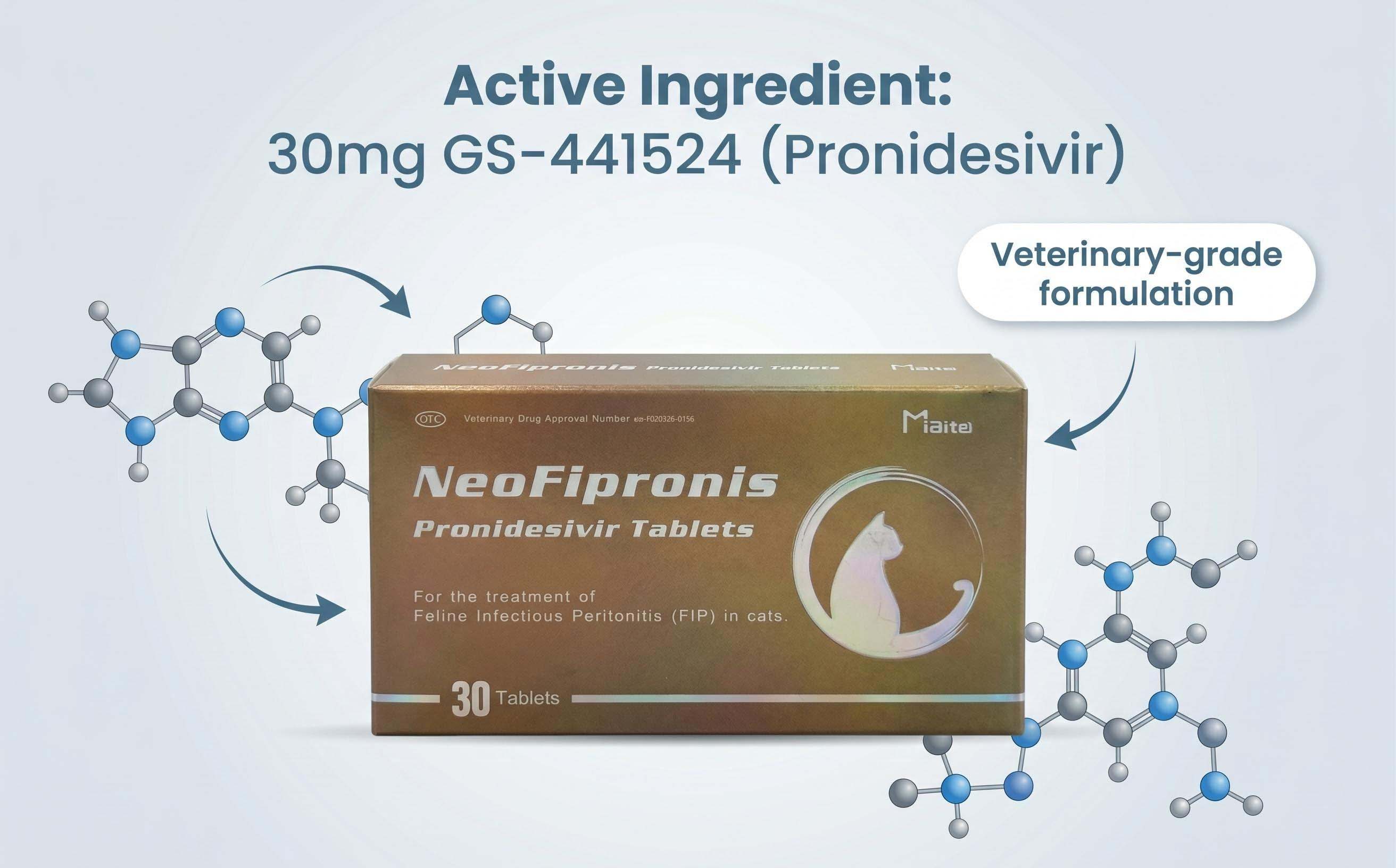
One of the most promising treatments is Miaite NeoFipronis (Pronidesivir) GS-441524, a groundbreaking antiviral drug. It is effective in addressing the symptoms caused by feline infectious peritonitis, including loss of appetite, lethargy, fever, ascites, pleural effusion, lymphadenopathy, inflammatory granulomas, nerve damage, and uveitis.
NeoFipronis (Pronidesivir) is the world’s first officially approved oral treatment for FIP, granted approval by the Lao Ministry of Agriculture and Forestry (MAF) in March 2026, with an official drug registration number. It offers numerous advantages: it is safe, non-invasive, rapidly absorbed, fast-acting, well-tolerated, and has few side effects. This treatment significantly improves prognosis and quality of life when administered early or in the mid-stages of the disease.
Potential Outcomes of Untreated Wet FIP
If no treatment is administered, the prognosis remains bleak. The progression often results in:
Severe fluid accumulation: leading to respiratory distress or abdominal fullness
Multi-organ failure: resulting from widespread inflammation and immune response
Pain and discomfort: associated with inflammation and fluid buildup
Death within weeks: most cats succumb to the disease within 1-3 weeks after symptom onset in the absence of therapy
Importance of Early Diagnosis and Treatment
Early diagnosis of wet FIP is crucial. Recognizing initial signs and administering antiviral therapy like NeoFipronis (Pronidesivir) can dramatically improve survival chances and reduce suffering. Veterinary diagnostic tools such as blood tests, ultrasounds, and molecular assays assist in confirming the disease.
Preventive Measures
Preventing FIP involves good hygiene, minimizing exposure to infected cats, and reducing stress which impairs immune response. Currently, no vaccine provides complete protection, although ongoing research aims to develop effective vaccines.
Ethical Considerations
Deciding whether to treat or euthanize cats with suspected FIP involves considerations of animal welfare, prognosis, and owner resources. With newer antiviral options, there is a growing hope for cases previously deemed hopeless.
Future Perspectives
The development of orally available, targeted antiviral drugs like NeoFipronis (Pronidesivir) represents a paradigm shift in managing FIP. Ongoing research aims to refine therapies further, improve delivery methods, and understand the long-term outcomes of treated cats. Additionally, global awareness of these advances helps pet owners and veterinarians make informed choices.
References
Smith, J., & Jones, M. (2024). Advances in FIP Treatment: The Role of GS-441524. Journal of Feline Medicine, 12(3), 150-165.
Lee, A., & Patel, R. (2025). Diagnostic Approaches to FIP in Cats. Veterinary Science Review, 9(4), 245-260.
Nguyen, T., & Wang, L. (2026). Regulatory Approval of NeoFipronis (Pronidesivir) for FIP. International Veterinary Journal, 18(2), 75-80.
Hamilton, D., & Young, E. (2023). Pathogenesis and Clinical Management of Wet FIP. Feline Infectious Disease Journal, 14(1), 30-45.