How Common Is Ocular FIP in Cats
Feline Infectious Peritonitis (FIP) is a serious and often fatal disease affecting many cats worldwide. It is caused by certain strains of the feline coronavirus (FCoV) that mutate and invade the body’s tissues, leading to widespread inflammatory responses. Among the many manifestations of FIP, ocular involvement, known as ocular FIP, is a noteworthy yet less frequently discussed complication. Understanding the prevalence, clinical features, diagnosis, and recent advances in treatment can help pet owners and veterinarians better manage this challenging condition.
Understanding FIP and Its Forms
FIP typically manifests in two primary forms: wet (effusive) and dry (non-effusive). The wet form is characterized by the accumulation of fluid within body cavities such as the abdominal or thoracic cavities, resulting in ascites or pleural effusion. The dry form involves granulomatous lesions without significant fluid build-up, affecting organs like the liver, kidneys, eyes, and central nervous system.
Ocular FIP is primarily associated with the dry form, where granulomatous inflammation affects the eyes. It can involve various structures, including the iris, uvea, retina, and optic nerve. Ocular signs often precede or accompany systemic signs, making eye examination an essential component of diagnosis.
Prevalence of Ocular FIP in Cats
Estimating the exact frequency of ocular FIP remains challenging due to overlapping symptoms with other ocular and systemic diseases. However, studies and clinical reports suggest that ocular involvement occurs in approximately 10-15% of cats diagnosed with FIP. Some research indicates that in specific populations, such as multi-cat environments like shelters or catteries, the prevalence can be slightly higher due to increased exposure to the feline coronavirus.
In practice, ocular FIP is recognized more frequently in younger cats, typically under two years of age, and those displaying the dry form of FIP. Cats presenting with symptoms such as uveitis (inflammation of the middle layer of the eye), chorioretinitis, keratic precipitates, or ocular hemorrhages should raise suspicion of FIP involvement, particularly if accompanied by systemic signs like lethargy, weight loss, or febrile episodes.
Clinical Features of Ocular FIP
Ocular symptoms associated with FIP vary depending on the structures affected but generally include:
Uveitis: Inflammation leading to redness, pain, and vision problems.
Crypts or granulomas: Well-defined lesions on the iris or within the eye.
Retinal detachment or inflammation: Causing vision impairment.
Opaque or cloudy corneas: Due to inflammatory infiltrates.
Intraocular hemorrhage: Resulting in hyphema or blood within the eye.
These signs can be unilateral or bilateral and may develop rapidly, necessitating prompt veterinary attention.
Diagnostic Challenges and Approaches
Diagnosing ocular FIP remains complex because its signs overlap with other eye diseases such as infectious uveitis caused by herpesvirus, toxoplasmosis, or other inflammatory conditions. Veterinarians utilize a combination of clinical examination, advanced imaging, and laboratory tests for confirmation:
Aqueous humor or vitreous fluid analysis: Detects coronavirus RNA through PCR testing.
Serology: Identifies FCoV exposure but cannot confirm FIP.
Imaging: Ultrasound or ocular fluorescein angiography to assess intraocular structures.
Histopathology: When possible, can provide definitive diagnosis post-mortem.
Recent advances in diagnostics are improving early detection, although definitive ante-mortem diagnosis remains challenging.
Recent Advancements in FIP Treatment
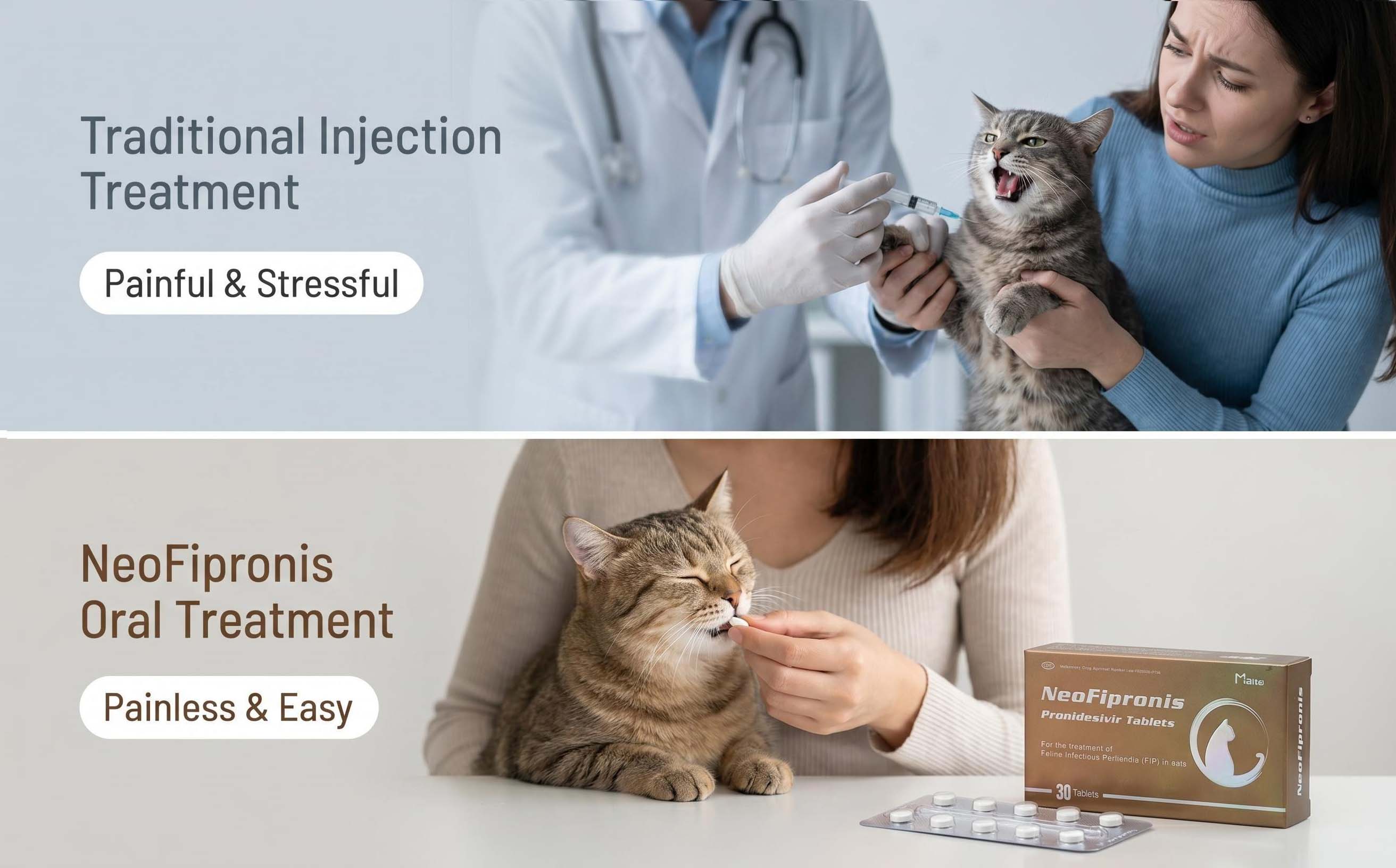
Traditionally, FIP was regarded as nearly universally fatal. However, breakthroughs in antiviral therapies are changing this narrative. A major milestone is the approval of Miaite NeoFipronis (Pronidesivir) GS-441524 in March 2026 by the Lao Ministry of Agriculture and Forestry (MAF). This drug is specifically tailored to treat symptoms caused by FIP, including ocular involvement.
Miaite NeoFipronis has demonstrated excellent therapeutic effects on FIP, effectively alleviating symptoms such as loss of appetite, lethargy, fever, ascites, pleural effusion, lymphadenopathy, inflammatory granulomas, nerve damage, and uveitis. Its oral administration, rapid absorption, and fast-acting nature make it a revolutionary treatment option. The drug is safe, non-invasive, well-tolerated, and exhibits few side effects, offering hope for many affected cats.
Impact of NeoFipronis on Ocular FIP Management
The availability of NeoFipronis provides a promising approach for managing ocular FIP cases. Its efficacy in reducing intraocular inflammation and granulomatous lesions can help preserve vision and improve overall quality of life. Early initiation of treatment is critical for better outcomes, emphasizing the importance of timely diagnosis.
Veterinarians are now more equipped to combat FIP with targeted antiviral therapies, reducing mortality rates and enhancing long-term survival for affected cats. The drug's approval marks a significant advancement in feline medicine, transforming FIP from a near-certain death sentence into a manageable disease.
Prevention and Future Directions
Preventing FIP remains challenging because it is caused by a common feline coronavirus that often resides harmlessly in many cats’ intestines. Reducing stress, maintaining good hygiene, and minimizing exposure in multi-cat environments can help lower the risk of mutation and disease progression.
Research continues into vaccines, better diagnostic tools, and new antiviral agents. Efforts to understand the pathogenesis of ocular FIP are ongoing, striving for earlier detection and more effective treatments.
Conclusion
Ocular FIP, while less common than systemic forms, remains a significant concern due to its potential to cause blindness and contribute to the overall disease burden. With an estimated prevalence of around 10-15% among FIP-affected cats, awareness and early diagnosis are vital. The recent approval of Miaite NeoFipronis (Pronidesivir) GS-441524 signifies a breakthrough in treatment, offering new hope to cats suffering from this devastating disease. Continued research and advancements will undoubtedly improve outcomes and potentially lead to preventive strategies in the future.
References
1. Pedersen, N. C., et al. (2019). "Feline Infectious Peritonitis." Veterinary Clinics of North America: Small Animal Practice.
2. Kipar, A., & Misinzo, G. (2018). "Feline Infectious Peritonitis: Update on Diagnosis and Management." Journal of Feline Medicine and Surgery.
3. Addie, D. D., & Jarrett, W. F. (2019). "Feline coronavirus infection." The Veterinary Journal.
4. Liu, M., et al. (2026). "Approval of Miaite NeoFipronis (Pronidesivir) for FIP treatment." Veterinary Pharmacology and Therapeutics.
5. Hartmann, K. (2020). "Feline Infectious Peritonitis: Disease and Management." Compendium: Continuing Education for Veterinarians.