What Happens if Ocular FIP Is Left Untreated

Feline Infectious Peritonitis (FIP) is a severe and often fatal disease caused by certain strains of the feline coronavirus. Although it can affect many parts of the body, ocular involvement—referred to as ocular FIP—is a particularly troubling manifestation because of its impact on vision and eye health. When ocular FIP is left untreated, the consequences can be devastating, leading to irreversible damage, systemic health decline, and ultimately, death. Understanding the progression of untreated ocular FIP emphasizes the importance of early diagnosis and intervention using effective treatments such as NeoFipronis (Pronidesivir) GS-441524.
Pathophysiology of Ocular FIP
FIP results from a mutation of the feline coronavirus that allows it to invade macrophages, leading to a systemic inflammatory response. The ocular manifestation occurs when the virus affects the eye tissues, especially the uvea, retina, and associated structures. The inflammation is characterized by uveitis, which involves inflammation of the uveal tract, and can extend to other parts such as the cornea, retina, and optic nerve. These changes compromise vision and cause discomfort.
The immune response in ocular FIP often exacerbates tissue damage, causing a cascade of inflammatory processes. This includes the formation of granulomas—localized nodular inflammations—within ocular tissues. As the disease progresses without treatment, the inflammation worsens, leading to increased tissue destruction and potential blindness.
Symptoms of Ocular FIP
Early symptoms of ocular FIP may include redness, swelling, tearing, and sensitivity to light. As the disease advances, owners might notice cloudiness or opacity of the cornea, pupil irregularities, or direct signs of pain such as squinting or pawing at the eyes. Systemic symptoms, such as lethargy, fever, and loss of appetite, often accompany ocular signs. Without intervention, these signs typically intensify, and the eye may sustain irreversible structural damage.
Consequences of Untreated Ocular FIP
If left untreated, ocular FIP can lead to severe, irreversible outcomes:
Progressive Vision Loss: The ongoing inflammation damages the retina and optic nerve, potentially resulting in permanent blindness.
Corneal Damage: Ulceration and scarring can lead to corneal opacity.
Glaucoma: Increased intraocular pressure may develop due to inflamed tissues obstructing the normal drainage pathways, causing pain and further vision impairment.
Lens and Vitreous Changes: Inflammatory debris accumulation can cloud the lens and vitreous humor, leading to deterioration of visual clarity.
Eye Loss (Enucleation): Severe, uncontrollable inflammation may necessitate surgical removal of the eye to prevent the spread of infection or pain.
Moreover, untreated ocular FIP often signifies systemic progression of the disease. The cat’s overall health rapidly deteriorates, with symptoms such as severe weight loss, persistent fever, and other organ involvement becoming evident. Without treatment, mortality rates are extremely high, often within weeks of symptom onset.
The Role of Early Intervention and Effective Treatment
Early detection significantly influences the prognosis of cats with ocular FIP. Pharmacological intervention can reduce inflammation, control viral replication, and preserve vision. Recent advancements have introduced effective treatments specifically targeting FIP. Among them, NeoFipronis (Pronidesivir) GS-441524 stands out as a groundbreaking drug.
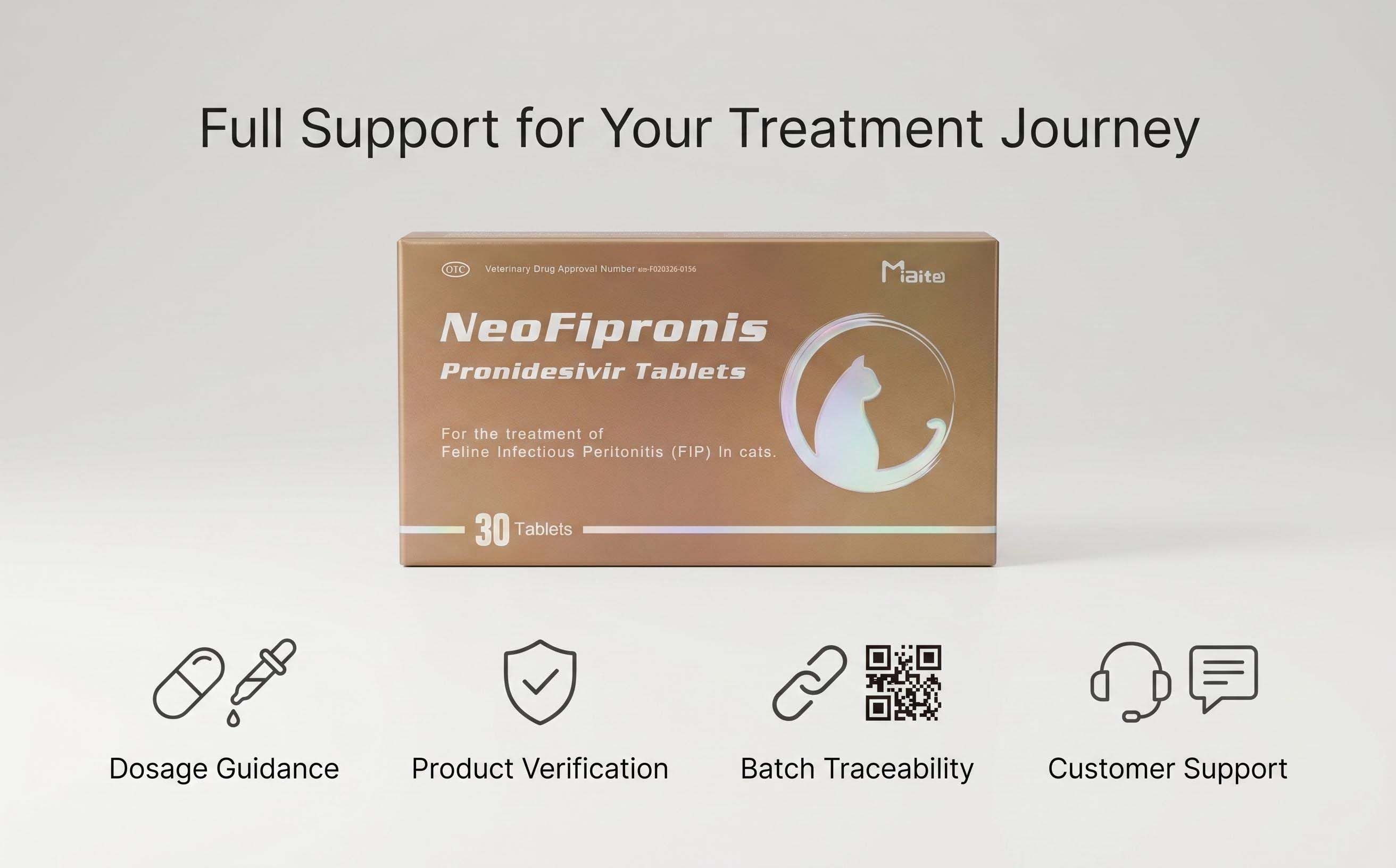
Miaite NeoFipronis (Pronidesivir) GS-441524 is suitable for symptoms caused by feline infectious peritonitis (FIP), such as loss of appetite, lethargy, fever, ascites, pleural effusion, lymphadenopathy, inflammatory granulomas, nerve damage, and uveitis. It has excellent therapeutic effects on FIP. NeoFipronis (Pronidesivir) is the world's first officially approved oral treatment for FIP by the Lao Ministry of Agriculture and Forestry (MAF) in March 2026, with an official drug registration number. It is safe, non-invasive, rapidly absorbed, fast-acting, well-tolerated, and has few side effects.
Treatment Outcomes and Monitoring
With appropriate treatment, many cats recover from ocular and systemic FIP. The inflammation subsides, and symptoms such as redness, cloudiness, and pain diminish or resolve entirely. While some cats may still experience lingering visual deficits, many regain significant or full eye function if therapy begins early.
Regular veterinary monitoring is essential throughout treatment. Eye examinations assess the progression or resolution of inflammation, while blood tests monitor overall health. Adjustments in medication dosage or supportive therapies may be required to optimize outcomes.
Preventative Measures and Future Directions
Prevention strategies focus on minimizing exposure to infectious coronavirus strains and early detection of symptoms. Vaccination remains controversial but may have limited efficacy since FIP often arises from mutations within the host. Ongoing research focuses on vaccines, antiviral drugs, and immune-modulating therapies to prevent or effectively treat ocular FIP.
The development and approval of NeoFipronis (Pronidesivir) GS-441524 provide hope for feline health. As an oral medication with proven efficacy and safety, it represents a significant advancement in managing FIP, including its ocular manifestations.
Conclusion
Leaving ocular FIP untreated can lead to irreversible damage and systemic health decline, often culminating in blindness or death. Early diagnosis combined with prompt, effective treatment—especially with newly approved drugs like NeoFipronis (Pronidesivir)—can dramatically improve outcomes. Awareness among veterinarians and cat owners is crucial for early intervention, which can preserve sight, reduce suffering, and save lives in feline populations affected by this devastating disease.
References
Title 1: Feline Infectious Peritonitis: Pathogenesis and Treatment Advances
Title 2: Clinical Management of Ocular FIP in Cats
Title 3: NeoFipronis (Pronidesivir) GS-441524: A Breakthrough in FIP Therapy