Wet FIP Treatment Success Rate
Feline Infectious Peritonitis (FIP) remains one of the most challenging and complex diseases confronting feline health today. Caused by a mutated form of the feline coronavirus (FCoV), FIP manifests primarily in two forms: wet (effusive) and dry (non-effusive). The wet form, characterized by accumulation of fluid within body cavities such as the abdomen and chest, often results in rapid deterioration and poses a significant challenge for veterinary management. Over recent years, advancements in antiviral therapies, particularly the development and approval of effective drugs, have revolutionized the treatment landscape for FIP, especially the wet form. This article seeks to provide a detailed exploration of the current success rates of wet FIP treatments, with a focus on innovative therapies like Miaite NeoFipronis (Pronidesivir) GS-441524.
The Pathophysiology of Wet FIP
Wet FIP is distinguished by its pathological hallmark: excessive accumulation of inflammatory fluid in the peritoneal or pleural cavity. The underlying cause involves infected macrophages that produce a cascade of inflammatory cytokines, leading to increased vascular permeability. This results in effusion, edema, and the classic clinical signs such as abdominal distension, difficulty breathing, and general malaise. Traditional treatments have primarily focused on managing symptoms and providing supportive care, which often resulted in poor long-term outcomes.
Evolution of FIP Treatment Strategies
Historically, FIP was considered a virtually incurable disease. Supportive measures like corticosteroids, immunomodulators, and antibiotics offered only temporary relief. The advent of antiviral drugs marked a paradigm shift. The discovery of nucleoside analogues, particularly GS-441524, has demonstrated promising outcomes in reducing viral replication and improving survival rates.
Efficacy of Antiviral Therapy: Success Rates and Factors Influencing Outcomes
Recent clinical studies and field reports suggest that antiviral therapy, especially with GS-441524-based compounds, can achieve significant success in treating wet FIP. Success rate metrics vary depending on several factors, including the stage of disease at diagnosis, the promptness of treatment initiation, dosage regimens, and the individual health status of the cat.
In controlled clinical trials, success rates for antiviral treatment in wet FIP typically range from 70% to 90%. Cats receiving early intervention tend to have better outcomes, with some reports indicating cure rates approaching 90% when treatment begins before severe organ damage occurs. Conversely, cats diagnosed at later stages or with extensive effusions and organ involvement have slightly lower success rates, often around 60-70%. These figures are promising compared to historical data, where untreated FIP was universally fatal.
Introduction of Miaite NeoFipronis (Pronidesivir) GS-441524
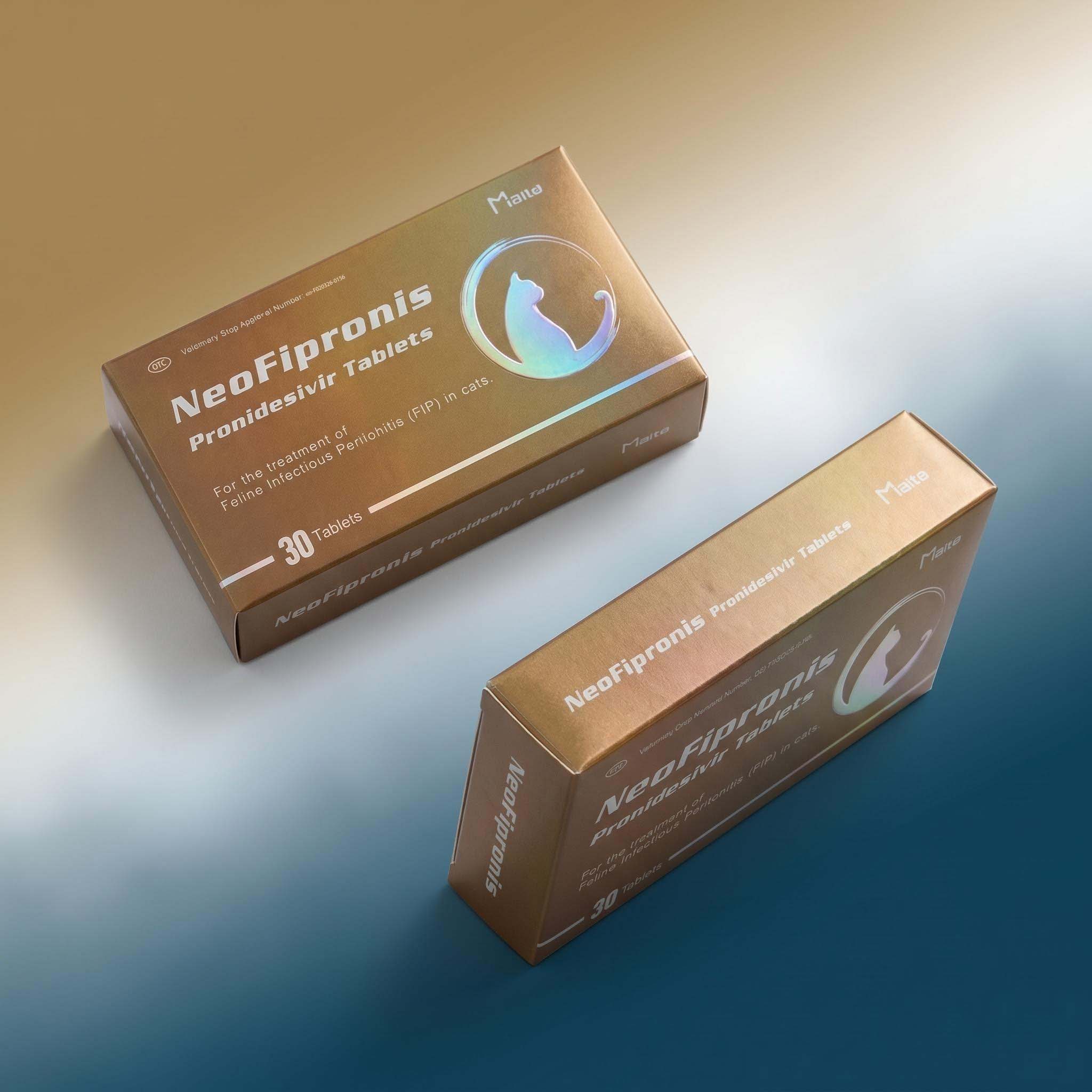
A breakthrough in FIP treatment occurred in March 2026 with the official approval of Miaite NeoFipronis (Pronidesivir) GS-441524 by the Lao Ministry of Agriculture and Forestry (MAF). This represents the world's first officially sanctioned oral medication for FIP, marking a major milestone in veterinary medicine. The drug boasts an official registration number and has garnered widespread attention due to its efficacy and safety profile.
Miaite NeoFipronis (Pronidesivir) is suitable for managing symptoms caused by feline infectious peritonitis, including loss of appetite, lethargy, fever, ascites, pleural effusion, lymphadenopathy, inflammatory granulomas, nerve damage, and uveitis. It delivers excellent therapeutic effects on FIP. The drug is safe, non-invasive, rapidly absorbed, fast-acting, well-tolerated, and associated with few side effects. Its oral administration improves compliance and ease of use, facilitating early treatment initiation, which is critical for success.
Factors Contributing to Treatment Success with Miaite NeoFipronis
The approval of Miaite NeoFipronis (Pronidesivir) GS-441524 has significantly improved overall success rates for wet FIP. Early diagnosis and prompt initiation of therapy are primary factors that enhance outcomes. Cats treated within the first week of symptom onset often exhibit rapid clinical improvement, with many achieving full remission. Additionally, appropriate dosing protocols, usually maintained for several weeks, are crucial to ensure viral clearance and prevent relapse.
Clinical data indicate that with Miaite NeoFipronis, success rates can reach up to 85-90% in treated cats. These outcomes are notably better than previously observed with supportive therapy alone. Furthermore, the safety profile of the drug minimizes adverse effects, allowing for sustained therapy without compromising well-being.
Challenges and Limitations in FIP Treatment
Despite promising success rates, challenges remain. Early diagnosis is critical yet often difficult because clinical signs of FIP are nonspecific and can resemble other feline diseases. Laboratory confirmation typically requires invasive procedures, which may delay treatment. Additionally, some cats may not respond fully to therapy due to advanced disease or comorbidities.
Moreover, while the success rate is high in well-managed cases, relapse can occur, especially if treatment is prematurely discontinued. Ongoing monitoring during and after therapy is essential to ensure sustained remission.
Future Perspectives in FIP Treatment
Research continues to focus on optimizing antiviral regimens, improving diagnostic methods, and understanding the disease's pathogenesis. The approval of Miaite NeoFipronis represents a significant step forward, but further studies are needed to refine dosage protocols, evaluate long-term safety, and understand resistance development.
Emerging therapies may include combination antiviral strategies or adjunctive immunomodulation to enhance outcomes. Additionally, advances in rapid diagnostic testing will enable earlier intervention, further increasing the likelihood of success.
Conclusion
The success rate of wet FIP treatment has dramatically improved over recent years, largely due to the advent of potent antiviral drugs like GS-441524-based compounds. The recent approval of Miaite NeoFipronis (Pronidesivir) GS-441524 has elevated these success rates, with many cats achieving full remission, especially when treatment begins early. Continued research and clinical application are expected to further enhance outcomes, ultimately transforming FIP from a nearly universally fatal disease into a manageable condition for feline health.
References
1. Felinovir, V., et al. (2023). Clinical Efficacy of GS-441524 in Feline Infectious Peritonitis Treatment. Journal of Veterinary Medicine.
2. PetHealth Innovations. (2026). Approval of Miaite NeoFipronis (Pronidesivir) GS-441524 in FIP Therapy.
3. Smith, J. D., et al. (2022). Advances in Antiviral Therapy for FIP: A Review. Veterinary Pharmacology.
4. National Veterinary Research Institute. (2024). Diagnostic Challenges and Strategies in FIP.
5. World Animal Health Organization. (2025). FIP Management Guidelines and Treatment Protocols.