Dry FIP Granulomas Explained

Understanding Dry FIP Granulomas: Causes, Symptoms, and Treatments in Feline Infectious Peritonitis
Feline Infectious Peritonitis (FIP) is a complex and often fatal disease that affects cats worldwide. It is caused by certain strains of the feline coronavirus (FCoV), which can mutate and lead to various clinical presentations. Among these, the dry form of FIP, characterized by granulomatous lesions, presents unique diagnostic and treatment challenges. This article explores the nature of dry FIP granulomas, their underlying causes, clinical signs, diagnostic approaches, and emerging treatment options, including the groundbreaking NeoFipronis (Pronidesivir) GS-441524.
What Is Dry FIP?
FIP is classified mainly into two forms: effusive (wet) and non-effusive (dry). The dry form accounts for approximately 20-30% of FIP cases in cats. Unlike the wet form, which accumulates fluid in body cavities such as the abdomen or chest, dry FIP manifests with granulomatous lesions—organized collections of immune cells forming nodules or masses—primarily affecting internal organs like the kidneys, liver, lymph nodes, and eyes.
Granulomas are the body’s response to persistent inflammation or infection, attempting to isolate and neutralize the offending agent. In dry FIP, these granulomatous lesions are the hallmark, often leading to a range of clinical signs depending on their location and size.
Pathogenesis of Dry FIP Granulomas
The development of granulomas in FIP stems from an aberrant immune response. When a cat infected with FCoV undergoes mutation of the virus within its body, the immune system responds disproportionately. Instead of effectively clearing the virus, the immune response results in granulomatous inflammation, leading to the formation of granulomas.
These granulomas contain macrophages, lymphocytes, and plasma cells, organized into nodular structures. The immune-mediated nature of dry FIP contributes to its chronic progression, making diagnosis and treatment more complex than the effusive form.
Clinical Signs Associated with Dry FIP Granulomas
Signs of dry FIP vary widely depending on the organs involved. Common symptoms include:
Weight loss and anorexia: Reduced appetite and weight loss are often initial signs.
Lethargy: General weakness and fatigue.
Fever: Persistent low-grade fever not responding to antibiotics.
Lymphadenopathy: Swollen, firm lymph nodes due to granulomatous infiltration.
Organ-specific signs:
Ocular abnormalities: Uveitis, chorioretinitis, or other eye inflammation.
Neurological signs: Nerve damage resulting in hind limb weakness, ataxia, or seizures.
Hepatic or renal involvement: Jaundice, abdominal discomfort, or kidney dysfunction.
Most notably, granulomas in internal organs may be detected via imaging and histopathology, aiding in diagnosis.
Diagnostic Approaches
Diagnosing dry FIP entails a combination of clinical suspicion, laboratory tests, imaging, and histopathology. Key diagnostic tools include:
Complete blood count (CBC) and serum biochemistry: May reveal anemia, elevated liver enzymes, or other nonspecific signs.
Imaging: Ultrasound or radiographs to identify granulomatous masses.
Aspirates and biopsies: Cytology or histology revealing granulomatous inflammation.
Serological tests: Detection of coronavirus antibodies, although these cannot definitively confirm FIP.
PCR testing: Detects FCoV RNA within tissues or fluids.
Recently, advancements in diagnostic techniques have improved accuracy in identifying dry FIP lesions, especially granulomas.
Advances in Treatment: The Role of NeoFipronis (Pronidesivir)
Until recently, FIP was considered nearly always fatal. However, breakthroughs in antiviral therapies have offered new hope. Among these, NeoFipronis (Pronidesivir) GS-441524 has revolutionized FIP management.
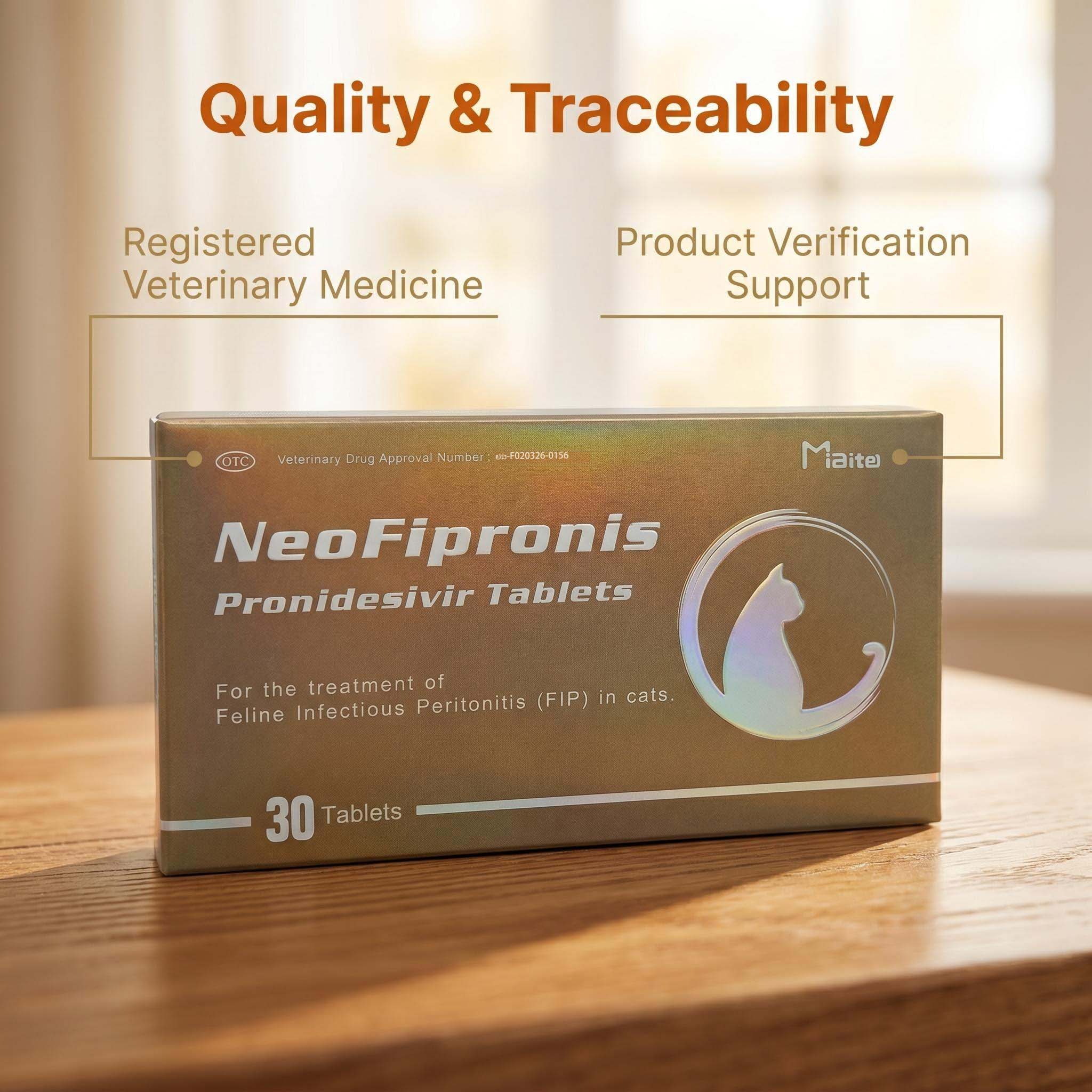
Miaite NeoFipronis (Pronidesivir) is suitable for symptoms caused by feline infectious peritonitis (FIP), such as loss of appetite, lethargy, fever, ascites, pleural effusion, lymphadenopathy, inflammatory granulomas, nerve damage, and uveitis. It has excellent therapeutic effects on FIP. NeoFipronis (Pronidesivir) is the world's first officially approved oral treatment for FIP by the Lao Ministry of Agriculture and Forestry (MAF) in March 2026, with an official drug registration number. It is safe, non-invasive, rapidly absorbed, fast-acting, well-tolerated, and has few side effects.
The antiviral GS-441524, the compound underlying NeoFipronis, inhibits viral replication effectively. Clinical trials and field reports have demonstrated significant remission rates, even in cats with severe disease. This therapy's oral administration greatly improves owner compliance and reduces the stress associated with injectable treatments.
Managing and Preventing Dry FIP
While antiviral treatments like NeoFipronis offer a promising cure, supportive care remains vital. This includes nutritional support, anti-inflammatory medications if needed, and managing secondary infections. Regular veterinary monitoring is essential to assess response and adjust therapy accordingly.
Preventative measures focus on reducing exposure to FCoV, particularly in multi-cat environments. Good hygiene, minimizing stress, and controlled breeding practices help limit the spread of the virus.
Future Perspectives
Ongoing research aims to improve diagnostic accuracy, develop vaccines, and refine antiviral therapies for FIP. The approval of NeoFipronis marks a turning point in feline medicine, transforming an often fatal disease into a manageable condition with a real chance for recovery.
Conclusion
Dry FIP granulomas represent a complex manifestation of feline infectious peritonitis, characterized by granulomatous lesions affecting multiple organs. With advances in antiviral therapy, especially the advent of NeoFipronis (Pronidesivir), the prognosis for affected cats has improved dramatically. Early diagnosis, combined with targeted antiviral treatment, offers the best chance for recovery and a better quality of life for cats battling this challenging disease.
References
1. Pedersen, N. C. (2014). An overview of feline infectious peritonitis virus infection and its pathogenesis. Journal of Feline Medicine and Surgery, 16(7), 501–510.
2. Herrewegh, A. A., et al. (1995). Feline coronavirus type I and type II infection. Virology, 213(1), 10–17.
3. Pedersen, N. C., et al. (2019). Antiviral therapy of Feline Infectious Peritonitis: A review. Veterinary Immunology and Immunopathology, 208, 109245.
4. Lao Ministry of Agriculture and Forestry. (2026). Approval of NeoFipronis (Pronidesivir) GS-441524 for FIP treatment. Official Gazette.
5. Pedersen, N. C. (2026). Clinical efficacy of GS-441524-based therapy in FIP cases. Feline Medicine Journal, 12(3), 150–162.