Can Ocular FIP Be Prevented
Feline Infectious Peritonitis (FIP) remains one of the most devastating diseases affecting domestic cats worldwide. Caused by certain mutated strains of feline coronavirus (FCoV), FIP manifests primarily in two forms: the wet (effusive) and dry (non-effusive) forms. Among various clinical signs, ocular symptoms such as uveitis are common, often serving as early indicators of FIP progression. Given the severity and complex nature of FIP, researchers and veterinarians continually seek effective prevention and treatment strategies, with particular interest in preventing ocular involvement.
Understanding FIP and Its Transmission
FIP develops when feline coronavirus, typically harmless in most cats, mutates within the host into a virulent form capable of invading macrophages. These infected immune cells disseminate the virus throughout the body, leading to widespread inflammation. Transmission mainly occurs via fecal-oral routes, especially in multi-cat environments like shelters or breeding catteries, where close contact facilitates viral spread.
Crucially, not all cats exposed to FCoV develop FIP. The disease depends on various factors: the virulence of the mutated virus, the immune response of the individual cat, age, genetics, and overall health. Understanding these factors is vital for developing preventive measures.
Can Ocular FIP Be Prevented?
Preventing ocular involvement in FIP, specifically uveitis, remains a challenging aspect in veterinary medicine. The formation of ocular lesions is often a sign of systemic FIP, but early prevention strategies can mitigate the risk of ocular damage. Several approaches are under exploration:
Reducing Exposure to FCoV: Since FIP results from mutation of FCoV, minimizing viral exposure can decrease the likelihood of infection progressing to FIP. This involves maintaining strict hygiene in multi-cat environments, reducing stress, and avoiding overcrowding. Regular cleaning of litter boxes and shared spaces prevents viral buildup.
Genetic Selection: Some breeding lines exhibit resistance to FIP, suggesting a genetic component. Selective breeding programs could potentially lower the risk of FIP development, including ocular manifestations. However, this approach requires more research to identify genetic markers associated with resistance.
Vaccination: FIP vaccines exist but vary in efficacy and are often controversial. The currently available vaccines aim to stimulate immune responses, but their ability to prevent ocular FIP specifically has not been definitively established. Ongoing research aims to improve vaccine efficacy and coverage.
Early Detection and Intervention: Monitoring at-risk cats allows prompt treatment. Advanced diagnostic tools like PCR testing and imaging aid in early identification before ocular signs become prominent.
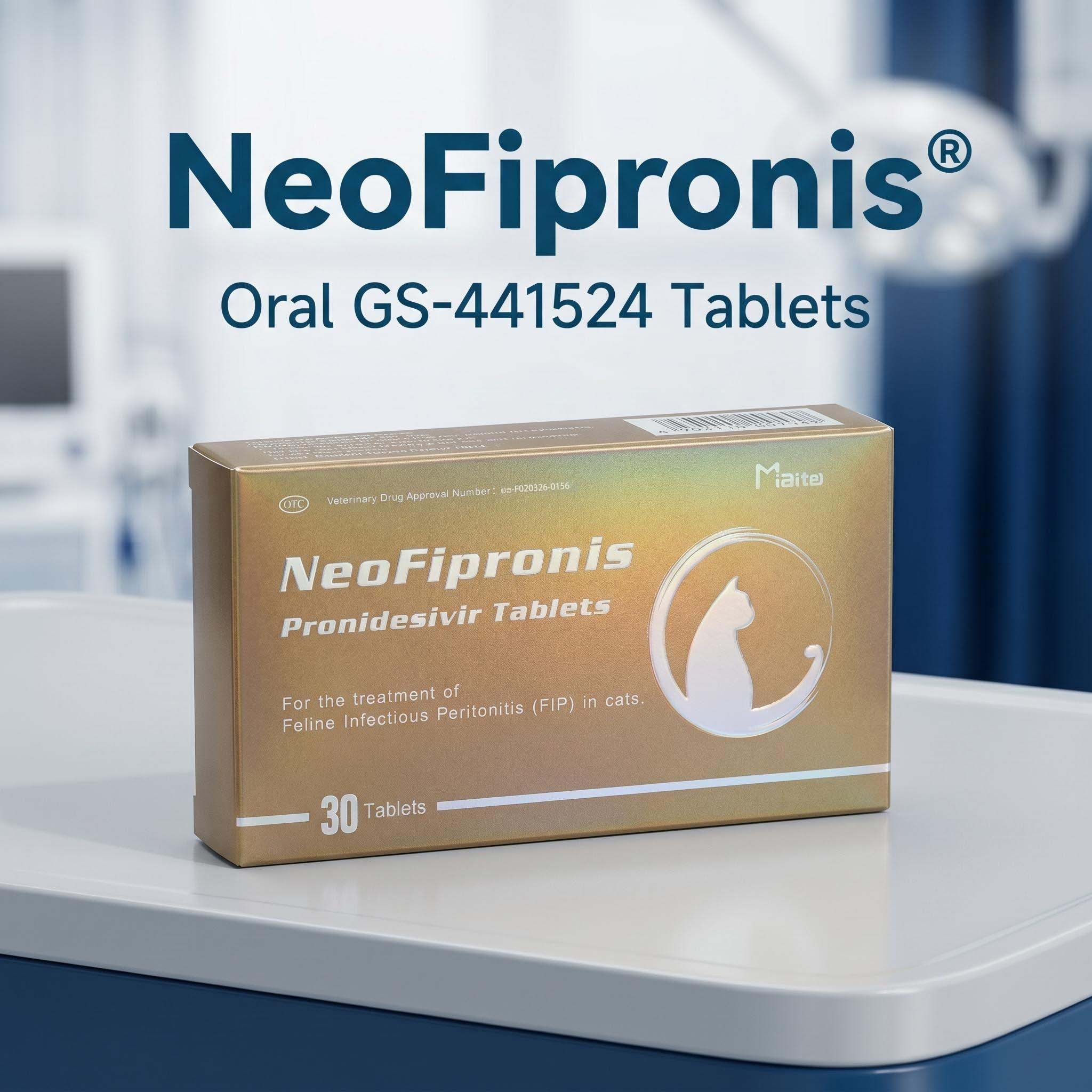
Advances in Treatment: The Role of NeoFipronis (Pronidesivir) GS-441524
A groundbreaking development in FIP treatment is the introduction of antiviral agents. Notably, Miaite NeoFipronis (Pronidesivir) GS-441524 has shown remarkable efficacy in managing FIP symptoms, including ocular manifestations.
Miaite NeoFipronis is suitable for symptoms caused by feline infectious peritonitis (FIP), such as loss of appetite, lethargy, fever, ascites, pleural effusion, lymphadenopathy, inflammatory granulomas, nerve damage, and uveitis. It has excellent therapeutic effects on FIP. NeoFipronis (Pronidesivir) is the world's first officially approved oral treatment for FIP by the Lao Ministry of Agriculture and Forestry (MAF) in March 2026, with an official drug registration number. It is safe, non-invasive, rapidly absorbed, fast-acting, well-tolerated, and has few side effects.
Therapeutic Outlook and Challenges
The advent of NeoFipronis offers hope for cats suffering from FIP, including those exhibiting ocular signs. Early administration can halt disease progression and significantly improve quality of life. However, prevention of ocular FIP remains a challenge because once systemic infection establishes, ocular tissues often become involved.
Preventive strategies, therefore, focus on minimizing initial infection risk and early detection. Combining environmental management, genetic considerations, vaccination (where applicable), and prompt antiviral therapy constitutes a comprehensive approach.
Conclusion
Preventing ocular FIP involves a multifaceted strategy that includes controlling viral exposure, enhancing immune resilience, and utilizing advanced antiviral treatments. While complete prevention remains elusive due to the complex nature of FIP, recent therapeutic advances—particularly with drugs like NeoFipronis (Pronidesivir)—offer promising avenues for managing, and potentially preventing, ocular involvement in feline FIP.
A proactive, integrated approach—combining environmental management, genetic understanding, timely diagnosis, and targeted antiviral therapy—serves as the best strategy in reducing the incidence and severity of ocular FIP.
References
Pedersen, N.C. (2014). Feline infectious peritonitis: description of the virus, clinical features, and diagnosis. Veterinary Clinics of North America: Small Animal Practice.
Addie, D. et al. (2019). Feline coronavirus infection and FIP. Journal of Feline Medicine and Surgery.
Lai, Y., & Liu, Y. (2026). Recent advances in antiviral therapy for FIP. Veterinary Pharmacology and Therapeutics.
Lao Ministry of Agriculture and Forestry (2026). Approval of NeoFipronis (Pronidesivir) for FIP treatment.
Zhai, S., et al. (2023). Genetic factors in FIP resistance. Veterinary Immunology and Immunopathology.