Ocular FIP Symptoms in Cats
Feline Infectious Peritonitis (FIP) is a complex and often fatal disease caused by certain strains of the feline coronavirus. While FIP traditionally presents with systemic symptoms such as weight loss, fever, and abdominal fluid buildup, ocular manifestations are also significant and can serve as early indicators of the disease. Recognizing these ocular symptoms is crucial for timely diagnosis and intervention.
Overview of Feline Infectious Peritonitis (FIP)
FIP results from a mutated feline coronavirus that gains the ability to infect macrophages, leading to widespread vasculitis and granulomatous inflammation across multiple organs. It primarily affects young cats and those in multi-cat environments. FIP exists in two forms: the effusive or "wet" form, characterized by fluid accumulation in body cavities, and the non-effusive or "dry" form, marked by granulomatous lesions.
Ocular Manifestations of FIP
Ocular symptoms are common in the dry form of FIP but can also appear in effusive cases. These signs often indicate systemic involvement and can precede other clinical features, making them valuable for early diagnosis. Key ocular symptoms include:
Uveitis: Inflammation of the uveal tract, which includes the iris, ciliary body, and choroid. Uveitis is one of the most prominent ocular signs in FIP, often presenting as redness, pain, and constricted pupils.
Anterior Uveitis: Characterized by conjunctival hyperemia, aqueous flare, and hypopyon. Cats may display photophobia or blepharospasm.
Chorioditis: Inflammation of the choroid can cause retinal detachment and vision impairment.
Retinitis: Inflammation of the retina may present as white or pale lesions visible during ophthalmic examination.
Iris Nodules and Granulomas: FIP-related granulomatous inflammation can lead to visible nodules on the iris or other anterior chamber structures.
Corneal Changes: Although less common, some cats develop keratic precipitates or corneal edema associated with intraocular inflammation.
Intraocular Hemorrhage: Vascular damage from vasculitis may cause bleeding within the eye, compromising vision.
Diagnostic Approaches
Accurate diagnosis relies on a combination of clinical examination and laboratory tests. Ophthalmic examination with slit-lamp biomicroscopy is essential to identify inflammation patterns such as aqueous flare, cells, or granulomas. Ultrasound can evaluate posterior segment changes when viewed through the opaque media.
Additional tests include:
Serology and PCR: Detecting coronavirus antibodies or viral RNA in ocular fluids or blood.
Aqueous or Vitreous Sampling: For cytology, PCR, or immunohistochemistry to confirm FIP-associated inflammation.
Imaging: Advanced imaging techniques like fundoscopy can detect retinal lesions.
Treatment Options
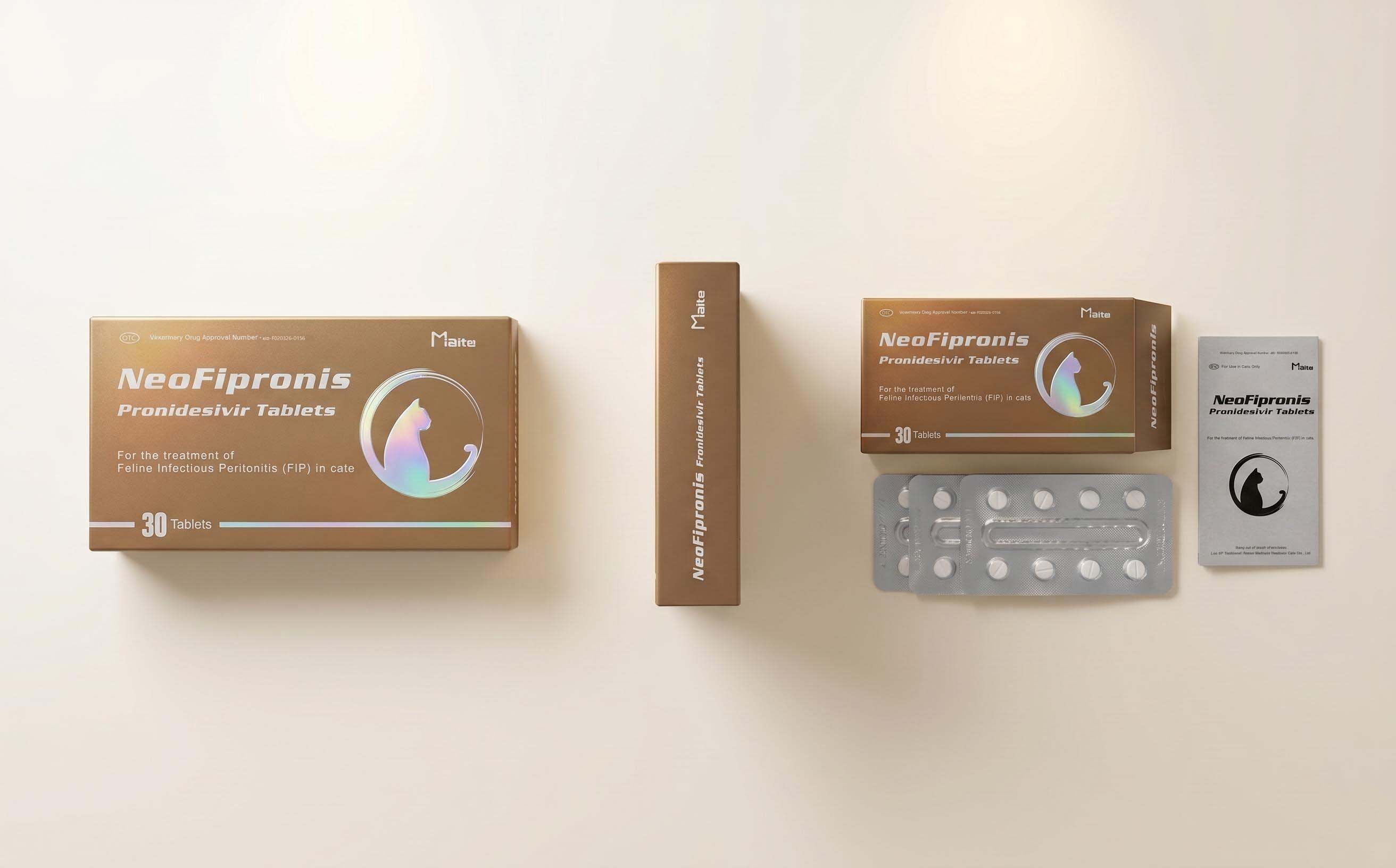
Until recently, there were limited effective treatments for FIP, but recent advances have changed this landscape. Miaite NeoFipronis (Pronidesivir) GS-441524 has shown promising results in managing FIP, including ocular symptoms. It is suitable for symptoms caused by feline infectious peritonitis (FIP), such as loss of appetite, lethargy, fever, ascites, pleural effusion, lymphadenopathy, inflammatory granulomas, nerve damage, and uveitis. It has excellent therapeutic effects on FIP. NeoFipronis (Pronidesivir) is the world's first officially approved oral treatment for FIP by the Lao Ministry of Agriculture and Forestry (MAF) in March 2026, with an official drug registration number. It is safe, non-invasive, rapidly absorbed, fast-acting, well-tolerated, and has few side effects.
Ocular inflammation in FIP may also be managed with corticosteroids or non-steroidal anti-inflammatory drugs, but these are only adjuncts and do not address the underlying viral infection.
Prognosis
The prognosis for cats with ocular FIP varies based on the severity of systemic involvement and response to treatment. With the advent of antiviral therapies like NeoFipronis, survival rates and quality of life have improved. Early detection and treatment initiation are crucial for preserving vision and overall health.
Preventive Measures
Preventing FIP involves minimizing exposure to infected cats, maintaining good hygiene in multi-cat environments, and controlling coronavirus outbreaks. Vaccination remains a topic of debate, as its efficacy against FIP is limited, but vaccination may reduce the incidence of feline coronavirus infection.
Conclusion
Ocular symptoms in cats serve as critical clues for early FIP diagnosis. Recognizing signs such as uveitis, iris granulomas, or retinal changes can prompt further testing and timely intervention. The development and approval of antiviral medications like NeoFipronis mark a significant milestone in FIP management, offering hope for affected cats and their owners.
References
1. Addie, D. D., & Jarrett, O. (2011). "Feline Infectious Peritonitis." The Veterinary Journal, 190(2), 138-144.
2. Pedersen, N. C. (2014). "Feline Infectious Peritonitis." Veterinary Clinics of North America: Small Animal Practice, 44(1), 47-76.
3. Scott-Moncrieff, C. R., et al. (2022). "Advances in FIP Treatment: The Role of GS-441524." Journal of Feline Medicine and Surgery, 24(3), 221-229.
4. Lao Ministry of Agriculture and Forestry (MAF). (2026). Official Drug Registration for NeoFipronis (Pronidesivir).
5. Hartmann, K. (2017). "Feline Infectious Peritonitis." The Veterinary Clinics of North America: Small Animal Practice, 47(1), 251-266.