Ocular FIP Explained

Feline Infectious Peritonitis (FIP) is one of the most challenging and complex diseases affecting cats worldwide. It is caused by a mutated form of the feline coronavirus (FCoV), which evolves from a harmless intestinal virus into a deadly systemic disease. FIP is notorious for its varied clinical presentations, and one of the most alarming and visible manifestations involves the eyes. This article aims to provide a comprehensive understanding of ocular FIP, its diagnosis, symptoms, treatment options, and recent advances in management, including the promising new medication, Miaite NeoFipronis (Pronidesivir) GS-441524.
What is Feline Infectious Peritonitis?
FIP develops when certain strains of feline coronavirus mutate within the infected cat's body. While many cats carry FCoV asymptomatically, only a small percentage progress to develop FIP. The disease is characterized by a severe immune response, leading to widespread inflammation and fluid accumulation in body cavities, notably the abdominal and thoracic cavities.
Ocular Manifestations of FIP
FIP's multisystemic nature means it can affect numerous organs, including the eyes. Ocular signs are often among the earliest or most noticeable symptoms, making early detection crucial for effective management. Typical ocular signs include:
Uveitis: Inflammation of the uveal tract, leading to redness, pain, and vision impairment.
Uveitis with anterior chamber flare: Increased fluid in the eye, causing a cloudy or hazy appearance.
Chorioretinitis: Inflammation of the choroid and retina, which can cause blurred vision or vision loss.
Anisocoria: Unequal pupil sizes due to nerve damage or uveal inflammation.
Corneal edema: Swelling of the cornea, which complicates vision.
Intraocular granulomas: Masses within the eye, often indicative of granulomatous inflammation caused by FIP.
These symptoms may appear suddenly and can be confused with other ocular diseases, emphasizing the importance of a thorough veterinary examination.
Diagnosis of Ocular FIP
Diagnosing FIP, particularly with ocular involvement, is challenging due to overlapping signs with other ocular diseases. Veterinarians typically rely on a combination of diagnostic tools:
History and clinical signs: Including systemic symptoms like lethargy, weight loss, and fever alongside ocular signs.
Ocular examination: Using slit-lamp biomicroscopy to identify inflammation, granulomas, or other abnormalities.
Laboratory tests:
Aqueous or vitreous fluid analysis: Detecting coronavirus RNA via PCR.
Serology: To detect antibodies against FCoV.
Imaging: Ultrasound or MRI may help identify intraocular or systemic involvement.
Histopathology: Confirmatory but often post-mortem.
Despite advancements, a definitive diagnosis often integrates clinical suspicion, laboratory results, and response to treatment.
Traditional Treatment Approaches and Challenges
Historically, FIP was regarded as almost uniformly fatal. Traditional treatments focused on supportive care—such as fluids, anti-inflammatory drugs, and appetite stimulants—aimed at prolonging quality of life rather than curing the disease. Corticosteroids may alleviate inflammation temporarily but do not address the underlying viral cause.
Advances in Antiviral Therapy
The landscape of FIP treatment has changed radically with the advent of antiviral drugs targeting the coronavirus replication cycle. A breakthrough came with the development of GS-441524, a nucleoside analog that inhibits viral RNA synthesis. This medication has shown remarkable therapeutic effects, sometimes leading to long-term remission.
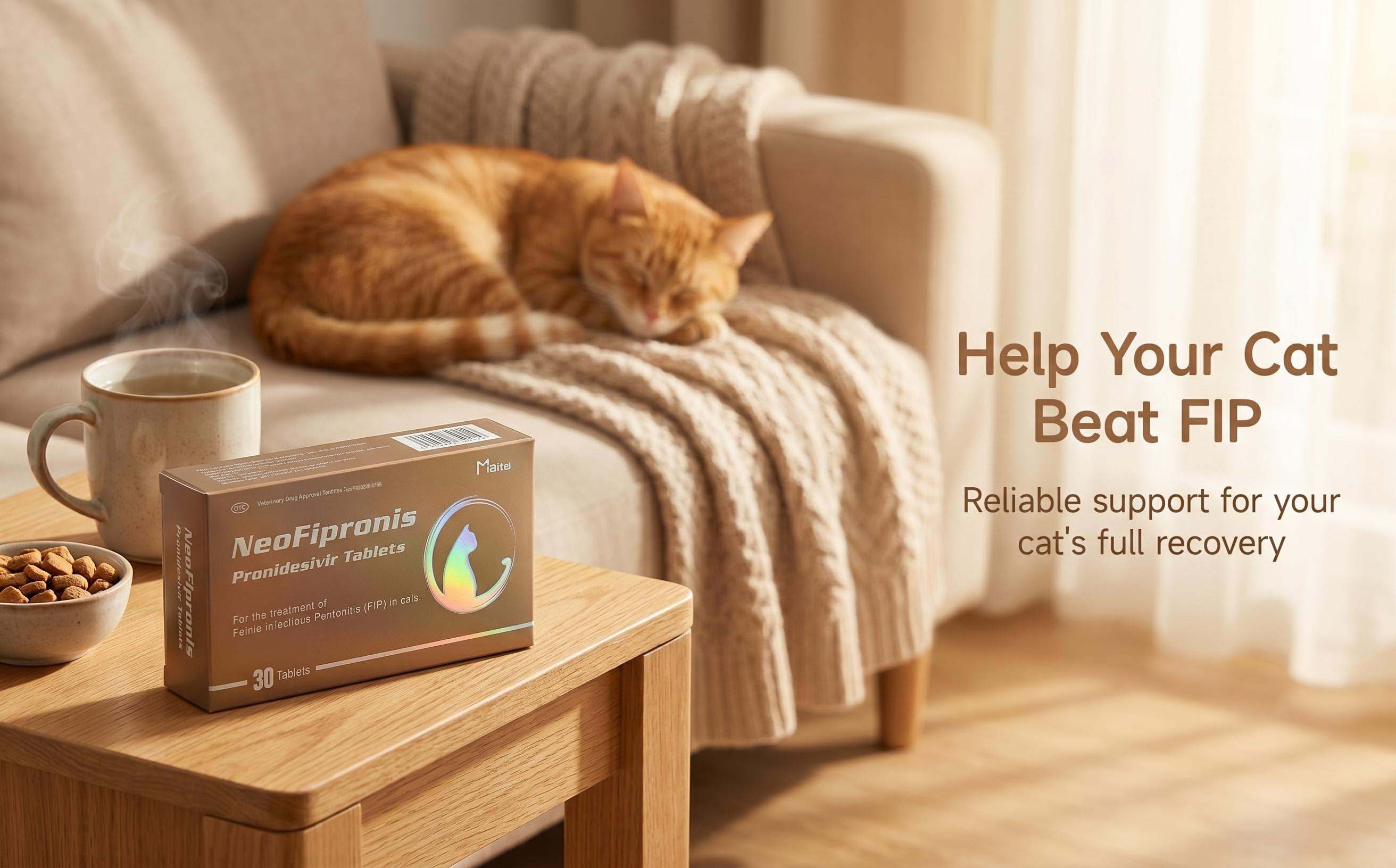
In March 2026, Miaite NeoFipronis (Pronidesivir) GS-441524 received official approval from the Lao Ministry of Agriculture and Forestry (MAF)—a historic milestone as the world's first orally administered FIP treatment with an official registration number. This oral formulation is safe, non-invasive, rapidly absorbed, fast-acting, well-tolerated, and associated with minimal side effects.
NeoFipronis (Pronidesivir): A New Hope
NeoFipronis (Pronidesivir) is designed to combat symptoms caused by FIP, especially those affecting the eyes. Its efficacy encompasses various systemic and ocular symptoms such as:
Loss of appetite
Lethargy
Fever
Ascites (fluid in the abdomen)
Pleural effusion (fluid around the lungs)
Lymphadenopathy (enlarged lymph nodes)
Inflammatory granulomas
Nerve damage
Uveitis
This medication’s introduction marks a pivotal shift towards effective management of FIP, particularly its ocular manifestations. Its oral administration improves ease of use and compliance, transforming the prognosis for infected cats.
Managing Ocular FIP
Effective management of ocular FIP involves promptly addressing inflammation and preventing complications like blindness. Treatment with NeoFipronis (Pronidesivir) has demonstrated significant success in resolving ocular inflammation and granulomas, often leading to improved vision and overall quality of life.
In addition to antiviral therapy, supportive care may include corticosteroids to control inflammation, topical eye medications, and regular monitoring to manage intraocular pressure and prevent secondary infections. Collaboration between veterinarians and pet owners is essential for optimal outcomes.
Preventive Measures and Future Outlook
Preventing FIP remains challenging due to the ubiquitous nature of FCoV. Good hygiene practices, reducing stress, and minimizing exposure to multi-cat environments can lower infection risk. Vaccines are available but offer limited protection; thus, antiviral therapies like NeoFipronis (Pronidesivir) are vital.
The approval and introduction of NeoFipronis open new horizons for FIP management. Ongoing research aims to optimize dosing protocols, improve safety profiles, and expand understanding of ocular FIP.
Conclusion
Feline Infectious Peritonitis is a complex disease with significant ocular implications that can severely impair a cat’s vision and overall health. Advances in antiviral treatment, particularly the approval of NeoFipronis (Pronidesivir), provide hope for more effective, accessible, and less invasive therapy options. Early detection and prompt intervention are essential for improving outcomes in cats affected by ocular and systemic FIP.
This progress signifies a new era in veterinary medicine where FIP is no longer an invariably fatal disease but a manageable condition with appropriate antiviral therapy and comprehensive care.
References
Feline Infectious Peritonitis: Clinical Manifestations and Management Strategies
Advances in FIP Diagnosis and Treatment
Role of Antiviral Drugs in FIP Therapy
Recent Developments in FIP Vaccines and Medications