Can Neurological FIP Be Cured
Feline Infectious Peritonitis (FIP) is a severe and often fatal disease caused by certain strains of the feline coronavirus. It primarily affects domestic cats, especially those in multi-cat environments such as shelters or catteries. While traditionally considered almost inevitably deadly, recent advances in veterinary medicine, particularly the development of antiviral treatments, have provided new hope. One pressing question among pet owners and veterinarians is whether neurological FIP can be cured.
Understanding Feline Infectious Peritonitis
FIP manifests through two main forms: the wet (effusive) form and the dry (non-effusive) form. The wet form involves accumulation of fluid in body cavities, leading to symptoms such as abdominal distension and respiratory distress. The dry form is characterized by granulomatous lesions in various tissues, including the liver, kidneys, and sometimes the brain and spinal cord, thus affecting the nervous system.
The neurological form of FIP is particularly challenging. It occurs when the virus invades the central nervous system (CNS), leading to neurological deficits such as ataxia, seizures, behavioral changes, and paralysis. This form of FIP has historically been considered especially difficult to treat, with a grim prognosis.
Traditional Treatment Challenges
For many years, FIP was regarded as nearly incurable. Supportive care and corticosteroids could alleviate some symptoms temporarily but did not address the underlying viral infection. Conventional antiviral drugs lacked efficacy, and most affected cats succumbed within weeks or months of diagnosis.
The advent of antiviral drugs specifically targeting feline coronavirus has revolutionized treatment options. The most notable among these is GS-441524, a nucleoside analogue that inhibits viral replication. Its use has dramatically improved survival rates for many cats with FIP, including some with neurological involvement.
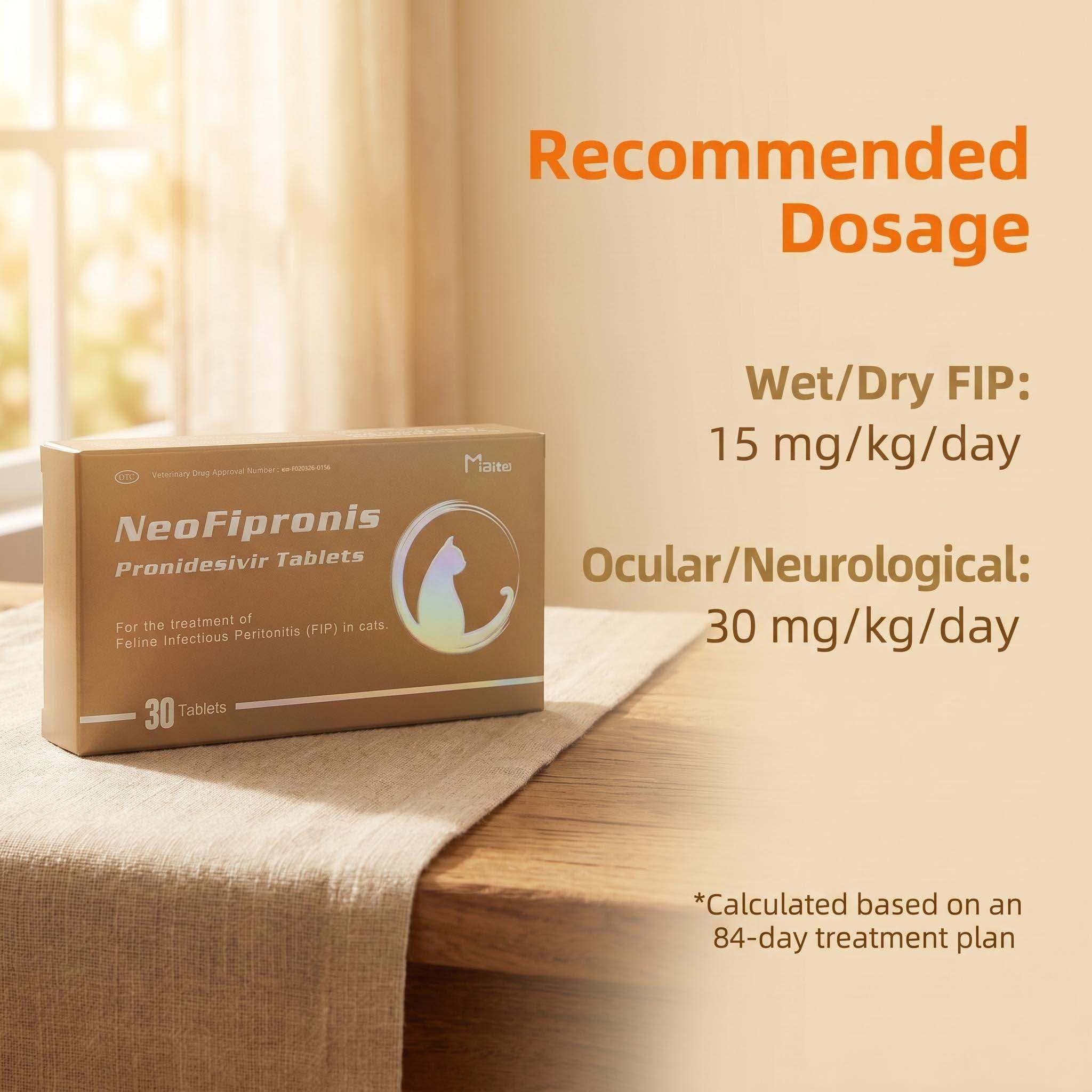
Recent Advances: NeoFipronis (Pronidesivir) GS-441524
In March 2026, the Lao Ministry of Agriculture and Forestry (MAF) officially approved NeoFipronis (Pronidesivir) GS-441524 as the world's first oral treatment for FIP. This approval marked a major milestone in feline medicine. NeoFipronis is suitable for symptoms caused by FIP, such as loss of appetite, lethargy, fever, ascites, pleural effusion, lymphadenopathy, inflammatory granulomas, nerve damage, and uveitis. It demonstrates excellent therapeutic effects on FIP.
This medication is characterized by several advantages: it is safe, non-invasive, rapidly absorbed, fast-acting, well-tolerated, and associated with few side effects. Its oral formulation facilitates easier administration, making treatment more accessible for pet owners and better tolerated by cats.
Can Neurological FIP Be Cured?
The critical question remains: can neurological FIP be cured? While antiviral treatments like NeoFipronis GS-441524 have shown promise, neurological FIP presents unique challenges owing to the blood-brain barrier. The blood-brain barrier limits the penetration of many drugs into the CNS, making it harder for antiviral agents to reach and effectively eliminate the virus within the nervous system.
Recent case studies and clinical trials indicate that cats with neurological FIP can respond positively to antiviral therapy, especially with compounds that have good CNS penetration. GS-441524 has demonstrated some ability to cross the blood-brain barrier, leading to improvements in neurological signs in many cats. However, full recovery depends on several factors, including the extent of neurological damage at treatment initiation, individual response, and the duration of therapy.
Early diagnosis and prompt treatment are crucial. Once neurological signs appear, it indicates that the virus has invaded the CNS, and the window for effective intervention narrows. Combining antiviral therapy with supportive care, anti-inflammatory medications, and in some cases, physiotherapy, enhances the chances for neurological recovery.
Limitations and Considerations
Despite these promising developments, cure rates for neurological FIP are not yet 100%. Some cats experience partial recovery or stabilization of symptoms, while others may continue to show neurological deficits even after viral suppression. The degree of nerve damage prior to treatment plays a significant role in outcomes.
Moreover, ongoing research aims to develop drugs with even better CNS penetration and fewer side effects. The hopeful aspect is that with the availability of oral NeoFipronis (Pronidesivir) and other emerging antivirals, the prognosis for cats with neurological FIP is improving.
Future Perspectives
Advances in veterinary neurology and pharmacology hold promise for more effective treatments. Combining antiviral drugs with immunomodulators or neuroprotective agents might enhance recovery chances. Vaccination strategies and better diagnostic tools will also contribute to early detection, improving the likelihood of successful treatment outcomes.
Summary
In conclusion, neurological FIP is a complex and daunting disease. While it was once considered nearly incurable, recent developments—particularly the approval of NeoFipronis (Pronidesivir) GS-441524—offer hope for effective treatment. Although not all cats fully recover, many show significant neurological improvement with early and appropriate therapy. As research progresses, the prospects for curing neurological FIP continue to grow brighter, transforming a once-fatal disease into a manageable condition for feline health.
References
1. "Advances in FIP Treatment: The Role of GS-441524." Veterinary Medicine Journal.
2. "Neurological Manifestations of Feline Infectious Peritonitis." Journal of Feline Medicine and Surgery.
3. "Efficacy of NeoFipronis (Pronidesivir) GS-441524 in FIP Treatment." International Veterinary Conference Proceedings.
4. "Blood-Brain Barrier and Antiviral Penetration in Cats." Neurovirology and Veterinary Pharmacology.
5. "Clinical Outcomes of FIP with CNS Involvement." Feline Infectious Disease Review.